

Motmot

Águila Cafre vs Azor Lagartijero Oscuro

Aquila verreauxii frente a Melierax metabates

Juega un quiz con Águila Cafre y Azor Lagartijero Oscuro
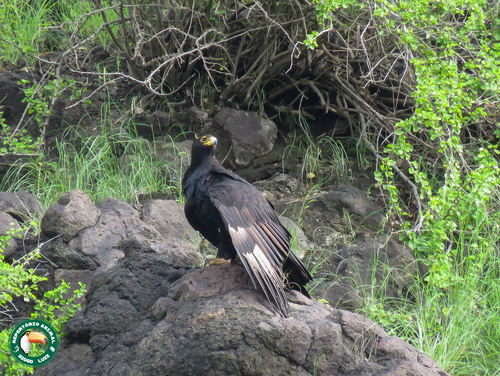
Águila Cafre (Aquila verreauxii) Águila Cafre
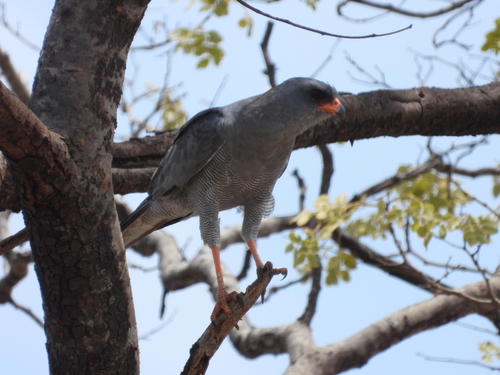
Azor Lagartijero Oscuro (Melierax metabates) Azor Lagartijero Oscuro

Medios

Cargando…

En breve

The most reliable way to separate Verreaux's Eagle from Dark Chanting-Goshawk is by overall structure and flight profile: even juvenile Verreaux's Eagles are massive, broad-winged birds with a unique dihedral (V-shaped) soar, while Dark Chanting-Goshawks are medium-sized, upright hawks with proportionally long legs and a more accipiter-like silhouette. In flight, juvenile Verreaux's Eagles show extensive white mottling on the underwings and a contrasting golden crown and rufous nape, while juvenile Dark Chanting-Goshawks are brownish above and barred below, lacking the eagle's bold white and gold contrasts. Adults are easily told apart by color: Verreaux's Eagle is all black with white patches, while Dark Chanting-Goshawk is dark grey above with white, finely barred underparts and orange-red legs. Size, shape, and wing pattern are your best field clues, especially for birds in flight.

Consejos de identificación

  1. Size and bulk: Verreaux's Eagle is enormous, with a wingspan and body mass far exceeding Dark Chanting-Goshawk. If the bird appears eagle-sized, it is not a goshawk. This applies to all ages.
  2. Flight profile: Verreaux's Eagle soars with wings held in a pronounced dihedral (V-shape), primaries upturned, and very broad outer secondaries, creating a paddle- or leaf-shaped wing. Dark Chanting-Goshawk flies with flatter wings and a more accipiter-like silhouette, never showing the eagle's deep dihedral. Use this in flight, especially for distant or backlit birds.
  3. Juvenile underwing pattern: Juvenile Verreaux's Eagles show extensive white mottling on the underwing and large white patches, while juvenile Dark Chanting-Goshawks are more uniformly brownish above and barred below, lacking bold white areas. This is a key mark for young birds in flight.
  4. Head and nape color in immatures: Immature Verreaux's Eagles have a golden crown and rufous or ginger nape and mantle, contrasting with the rest of the plumage. Juvenile Dark Chanting-Goshawks do not show this; their head and nape are brownish, blending with the rest of the plumage.
  5. Adult plumage: Adult Verreaux's Eagle is all black with distinctive white patches on the back and wings. Adult Dark Chanting-Goshawk is dark grey above, white below with fine black barring, black primaries, and a tail with broad black and white bars. The eagle's blackness and white wing patches are unique.
  6. Leg color: Adult Dark Chanting-Goshawk has orange-red cere and long legs, which are obvious when perched or in flight. Verreaux's Eagle has yellowish feet in immatures, but never the bright orange-red of the goshawk.
  7. Tail pattern: The goshawk's tail is barred black and white, while the eagle's tail is mostly dark, sometimes with brown and white streaks in immatures, but never as cleanly barred as the goshawk.
  8. Perched posture: Dark Chanting-Goshawk perches upright with long legs visible; Verreaux's Eagle is bulkier and sits more horizontally, with shorter-looking legs relative to body size.
  9. Habitat context: If seen in mountainous or rocky terrain, especially near cliffs, Verreaux's Eagle is more likely. In open woodland or savanna, especially away from cliffs, Dark Chanting-Goshawk is more probable.
  10. Behavior: Verreaux's Eagle is usually seen soaring high or perched on cliffs; Dark Chanting-Goshawk often hunts from a perch or follows animals to catch disturbed prey.
  11. Iris color in immatures: Immature Verreaux's Eagles have a dark brown iris, but this is rarely diagnostic in the field compared to other marks.
  12. Sexual dimorphism: Female Dark Chanting-Goshawks are larger than males, but both sexes are much smaller than any Verreaux's Eagle.
  13. Wing shape: Verreaux's Eagle has a relatively narrow 'pinch' at the base of the primaries and very broad outer secondaries, creating a unique wing shape. The goshawk's wings are broad but lack this paddle or spoon shape.
  14. Confusion with other raptors: No other black raptor in Africa approaches Verreaux's Eagle's size or white patterning. Goshawks may be confused with buzzards in juvenile plumage, but not with eagles if size and structure are noted.
  15. Overlap: In areas where both species occur, always check size, wing shape, and underwing pattern first, especially for birds in flight or at a distance.

Tamaño

Verreaux's Eagle is vastly larger and heavier, with an average mass of about 4012.5 g compared to the Dark Chanting-Goshawk's 758.5 g [wikidata]. The eagle is one of the heaviest Aquila species, with a wingspan and bulk that dwarfs the goshawk. In the field, the eagle's size is immediately apparent, especially when soaring; the goshawk is a medium-sized raptor, much smaller and more compact. The eagle's wings are broad and paddle-shaped, while the goshawk's wings are broad but not nearly as massive, and its long legs are distinctive when perched or flying.

Plumaje

Juvenile and immature Verreaux's Eagles are dark brown overall with a strongly contrasting golden crown and rufous nape, blackish wings with large white patches, and extensive whitish mottling on the underwing in flight. Their upper-tail and upper-wing coverts are brown with white streaks, and the underparts show a mix of brown, rufous, and cream. These contrasts are unique among African raptors. By comparison, juvenile Dark Chanting-Goshawks are browner, resembling buzzards in color and pattern, with a broad-winged, long-tailed silhouette but lacking the eagle's bold golden and white contrasts. Adults are unmistakable: Verreaux's Eagle is all black with distinctive white wing and back patches, while the goshawk is dark grey above, white below with fine black barring, black primaries, and a tail with broad black and white bars. The goshawk's orange-red cere and legs are also distinctive in adults.

Comportamiento

Verreaux's Eagle is a specialized predator of rock hyrax, often seen soaring in mountainous terrain with wings held in a pronounced dihedral. Its flight is powerful, with slow, deep wingbeats and long glides. Dark Chanting-Goshawk typically hunts from a perch, swooping down on prey on the ground or in the air, and may follow mammals or people to catch disturbed prey. The goshawk's flight is more accipiter-like, with bursts of flapping and gliding, and it often perches upright, showing off its long legs.

Hábitat

Verreaux's Eagle is found in hilly and mountainous regions of southern and eastern Africa, sometimes extending into arid rocky areas. It is closely associated with cliffs and rugged terrain. Dark Chanting-Goshawk is more widespread across sub-Saharan Africa and southern Arabia, favoring open woodlands, savannas, and sometimes semi-arid areas, but generally avoids the steep, rocky habitats preferred by the eagle. Overlap is limited, and context can help: eagles are rarely seen away from mountains or large rocky outcrops.

Enviar una descripción mejor

Usa las mismas secciones que la comparación. El texto se publica al momento.

The most reliable way to separate Verreaux's Eagle from Dark Chanting-Goshawk is by overall structure and flight profile: even juvenile Verreaux's Eagles are massive, broad-winged birds with a unique dihedral (V-shaped) soar, while Dark Chanting-Goshawks are medium-sized, upright hawks with proportionally long legs and a more accipiter-like silhouette. In flight, juvenile Verreaux's Eagles show extensive white mottling on the underwings and a contrasting golden crown and rufous nape, while juvenile Dark Chanting-Goshawks are brownish above and barred below, lacking the eagle's bold white and gold contrasts. Adults are easily told apart by color: Verreaux's Eagle is all black with white patches, while Dark Chanting-Goshawk is dark grey above with white, finely barred underparts and orange-red legs. Size, shape, and wing pattern are your best field clues, especially for birds in flight.

  1. Size and bulk: Verreaux's Eagle is enormous, with a wingspan and body mass far exceeding Dark Chanting-Goshawk. If the bird appears eagle-sized, it is not a goshawk. This applies to all ages.
  2. Flight profile: Verreaux's Eagle soars with wings held in a pronounced dihedral (V-shape), primaries upturned, and very broad outer secondaries, creating a paddle- or leaf-shaped wing. Dark Chanting-Goshawk flies with flatter wings and a more accipiter-like silhouette, never showing the eagle's deep dihedral. Use this in flight, especially for distant or backlit birds.
  3. Juvenile underwing pattern: Juvenile Verreaux's Eagles show extensive white mottling on the underwing and large white patches, while juvenile Dark Chanting-Goshawks are more uniformly brownish above and barred below, lacking bold white areas. This is a key mark for young birds in flight.
  4. Head and nape color in immatures: Immature Verreaux's Eagles have a golden crown and rufous or ginger nape and mantle, contrasting with the rest of the plumage. Juvenile Dark Chanting-Goshawks do not show this; their head and nape are brownish, blending with the rest of the plumage.
  5. Adult plumage: Adult Verreaux's Eagle is all black with distinctive white patches on the back and wings. Adult Dark Chanting-Goshawk is dark grey above, white below with fine black barring, black primaries, and a tail with broad black and white bars. The eagle's blackness and white wing patches are unique.
  6. Leg color: Adult Dark Chanting-Goshawk has orange-red cere and long legs, which are obvious when perched or in flight. Verreaux's Eagle has yellowish feet in immatures, but never the bright orange-red of the goshawk.
  7. Tail pattern: The goshawk's tail is barred black and white, while the eagle's tail is mostly dark, sometimes with brown and white streaks in immatures, but never as cleanly barred as the goshawk.
  8. Perched posture: Dark Chanting-Goshawk perches upright with long legs visible; Verreaux's Eagle is bulkier and sits more horizontally, with shorter-looking legs relative to body size.
  9. Habitat context: If seen in mountainous or rocky terrain, especially near cliffs, Verreaux's Eagle is more likely. In open woodland or savanna, especially away from cliffs, Dark Chanting-Goshawk is more probable.
  10. Behavior: Verreaux's Eagle is usually seen soaring high or perched on cliffs; Dark Chanting-Goshawk often hunts from a perch or follows animals to catch disturbed prey.
  11. Iris color in immatures: Immature Verreaux's Eagles have a dark brown iris, but this is rarely diagnostic in the field compared to other marks.
  12. Sexual dimorphism: Female Dark Chanting-Goshawks are larger than males, but both sexes are much smaller than any Verreaux's Eagle.
  13. Wing shape: Verreaux's Eagle has a relatively narrow 'pinch' at the base of the primaries and very broad outer secondaries, creating a unique wing shape. The goshawk's wings are broad but lack this paddle or spoon shape.
  14. Confusion with other raptors: No other black raptor in Africa approaches Verreaux's Eagle's size or white patterning. Goshawks may be confused with buzzards in juvenile plumage, but not with eagles if size and structure are noted.
  15. Overlap: In areas where both species occur, always check size, wing shape, and underwing pattern first, especially for birds in flight or at a distance.

Verreaux's Eagle is vastly larger and heavier, with an average mass of about 4012.5 g compared to the Dark Chanting-Goshawk's 758.5 g [wikidata]. The eagle is one of the heaviest Aquila species, with a wingspan and bulk that dwarfs the goshawk. In the field, the eagle's size is immediately apparent, especially when soaring; the goshawk is a medium-sized raptor, much smaller and more compact. The eagle's wings are broad and paddle-shaped, while the goshawk's wings are broad but not nearly as massive, and its long legs are distinctive when perched or flying.

Juvenile and immature Verreaux's Eagles are dark brown overall with a strongly contrasting golden crown and rufous nape, blackish wings with large white patches, and extensive whitish mottling on the underwing in flight. Their upper-tail and upper-wing coverts are brown with white streaks, and the underparts show a mix of brown, rufous, and cream. These contrasts are unique among African raptors. By comparison, juvenile Dark Chanting-Goshawks are browner, resembling buzzards in color and pattern, with a broad-winged, long-tailed silhouette but lacking the eagle's bold golden and white contrasts. Adults are unmistakable: Verreaux's Eagle is all black with distinctive white wing and back patches, while the goshawk is dark grey above, white below with fine black barring, black primaries, and a tail with broad black and white bars. The goshawk's orange-red cere and legs are also distinctive in adults.

Verreaux's Eagle is a specialized predator of rock hyrax, often seen soaring in mountainous terrain with wings held in a pronounced dihedral. Its flight is powerful, with slow, deep wingbeats and long glides. Dark Chanting-Goshawk typically hunts from a perch, swooping down on prey on the ground or in the air, and may follow mammals or people to catch disturbed prey. The goshawk's flight is more accipiter-like, with bursts of flapping and gliding, and it often perches upright, showing off its long legs.

Verreaux's Eagle is found in hilly and mountainous regions of southern and eastern Africa, sometimes extending into arid rocky areas. It is closely associated with cliffs and rugged terrain. Dark Chanting-Goshawk is more widespread across sub-Saharan Africa and southern Arabia, favoring open woodlands, savannas, and sometimes semi-arid areas, but generally avoids the steep, rocky habitats preferred by the eagle. Overlap is limited, and context can help: eagles are rarely seen away from mountains or large rocky outcrops.

¿Descartar los cambios?

Tienes ediciones sin guardar. Si sales ahora, se perderán.

Águila Cafre · Azor Lagartijero Oscuro · Mis aves difíciles