
Correlimos Tridáctilo vs Correlimos Menudo
Calidris alba frente a Calidris minuta
Juega un quiz con Correlimos Tridáctilo y Correlimos Menudo
 Correlimos Tridáctilo
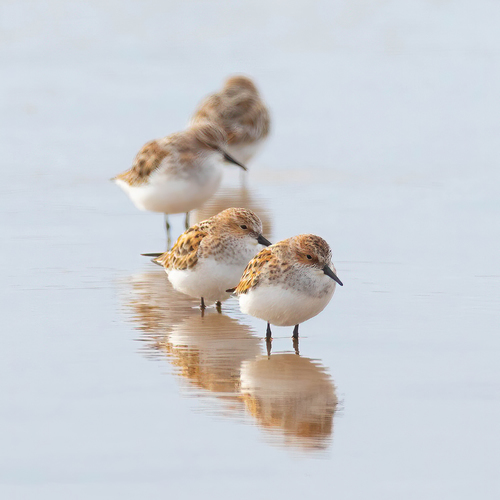 Correlimos Menudo
En breve
La marca de campo más confiable entre el Correlimos Tridáctilo y el Correlimos Menudo es la fuerte barra alar blanca del Correlimos Tridáctilo en vuelo, visible en todas las edades, contrastada con la falta de una barra alar tan prominente en el Correlimos Menudo. El Correlimos Tridáctilo también es notablemente más robusto, con un pico más grueso y una forma de correr distintiva en playas de arena abiertas, mientras que el Correlimos Menudo es más pequeño, más delicado, con un pico fino, patas oscuras y una proyección primaria más larga. Los Correlimos Menudos juveniles muestran franjas de corona pálidas y un pecho rosado, que los Correlimos Tridáctilos no tienen. En invierno, ambas especies pueden parecer similares, pero las diferencias estructurales y las preferencias de hábitat ayudan: el Correlimos Tridáctilo prefiere playas de arena abiertas, mientras que el Correlimos Menudo se encuentra más a menudo en bordes fangosos o vegetados.
Consejos de identificación
- Barra alar blanca en vuelo (todas las edades): El Correlimos Tridáctilo siempre muestra una fuerte barra alar blanca al volar, que el Correlimos Menudo no tiene. Usa esto como tu primera verificación para aves en vuelo.
- Tamaño y estructura: El Correlimos Tridáctilo es más voluminoso y robusto, con un pico más grueso y romo; el Correlimos Menudo es más pequeño, con un pico más fino y más delicado en general. Compara directamente si ambos están presentes.
- Proyección primaria: El Correlimos Menudo tiene una proyección primaria notablemente larga (las puntas de las alas se extienden más allá de la cola), dando una apariencia de alas largas, especialmente en reposo. Las primarias del Correlimos Tridáctilo son más cortas en relación con la cola.
- Forma del pico: El pico del Correlimos Tridáctilo es grueso y recto, mientras que el del Correlimos Menudo es fino, delgado y puntiagudo. Esto se ve mejor a corta distancia.
- Color de las patas: Ambas especies tienen patas oscuras, por lo que esto no es útil para la separación.
- Plumaje juvenil: El Correlimos Menudo juvenil muestra franjas de corona pálidas y un pecho rosado, a veces con una 'V' blanca en la espalda. Los juveniles de Correlimos Tridáctilo carecen de estas características y son más simples.
- Plumaje de cría: Los adultos de Correlimos Menudo en plumaje de cría tienen un lavado naranja en el pecho y una garganta blanca; el Correlimos Tridáctilo carece de estos colores y es más uniforme.
- Plumaje no reproductor (invierno): Ambas especies se vuelven pálidas, pero el Correlimos Tridáctilo es a menudo casi blanco, especialmente en las partes inferiores, mientras que el Correlimos Menudo permanece ligeramente más gris y más pequeño.
- Estructura de los dedos: El Correlimos Menudo tiene dedos no palmeados; el Correlimos Tridáctilo carece de un dedo trasero, pero esto rara vez es visible en el campo.
- Comportamiento: El Correlimos Tridáctilo corre rápidamente a lo largo de la línea de olas de las playas de arena con una única forma de andar de 'bicicleta', a menudo en bandadas. El Correlimos Menudo se mueve de manera más delicada y es más probable que se le vea picoteando en el barro o en los bordes de los charcos.
- Hábitat: El Correlimos Tridáctilo está casi siempre en playas de arena abiertas; el Correlimos Menudo prefiere los llanos fangosos, los bordes de los charcos y los márgenes vegetados, aunque pueden superponerse durante la migración.
- Voz: Si escuchas un agudo llamado 'stit', es el Correlimos Menudo. El llamado del Correlimos Tridáctilo no se describe aquí.
- Acción de alimentación: El Correlimos Tridáctilo se alimenta corriendo y deteniéndose para recoger presas, a menudo persiguiendo olas que retroceden. El Correlimos Menudo pica de manera más metódica en el sustrato.
- Composición de bandadas: En bandadas mixtas, el Correlimos Tridáctilo se destaca como el ave más grande, más clara y más robusta; el Correlimos Menudo se mezcla con otros correlimos pequeños.
- Trampas: En condiciones de poca luz o a distancia, la palidez del Correlimos Tridáctilo puede confundirse con el Correlimos Menudo, especialmente en invierno. Siempre verifica la estructura, la barra alar en vuelo y el comportamiento para confirmación.
Tamaño
El Correlimos Menudo es significativamente más pequeño y ligero que el Correlimos Tridáctilo. La masa corporal promedio del Correlimos Menudo es de aproximadamente 25.5g [wikidata], mientras que el Correlimos Tridáctilo es más voluminoso y robusto (aunque no se da la masa precisa, es similar en tamaño al Correlimos Común, que es más pesado que el Correlimos Menudo). La estructura general del Correlimos Tridáctilo es más robusta, con un pico más grueso y una apariencia más robusta, mientras que el Correlimos Menudo es más delicado, con un pico fino y puntiagudo y una construcción más delicada.
Plumaje
- Plumaje juvenil/inmaduro: El Correlimos Menudo juvenil muestra franjas de corona pálidas y un pecho rosado, además de una fuerte 'V' blanca en la espalda en plumaje fresco. Los juveniles de Correlimos Tridáctilo carecen de estas características y son generalmente más simples por encima.
- Patrón de alas en vuelo (todas las edades): El Correlimos Tridáctilo muestra una fuerte barra alar blanca, lo que lo hace destacar en vuelo. El Correlimos Menudo carece de esta barra alar prominente.
- Cría adulta: El Correlimos Menudo tiene un lavado naranja en el pecho y una garganta blanca; el Correlimos Tridáctilo en plumaje de cría es más uniforme y carece de los tonos naranjas.
- Adulto no reproductor (invierno): Ambas especies se vuelven pálidas, pero el Correlimos Tridáctilo es aún más pálido en general, a menudo apareciendo casi blanco, mientras que el Correlimos Menudo permanece ligeramente más gris y más pequeño, con un pico más fino.
- Color de las patas: El Correlimos Menudo siempre tiene patas oscuras; las patas del Correlimos Tridáctilo también son oscuras, por lo que esto no es un separador confiable.
- Pico: El pico del Correlimos Tridáctilo es más grueso y romo; el del Correlimos Menudo es fino y puntiagudo.
Comportamiento
Los Correlimos Tridáctilos son altamente gregarios en invierno, a menudo formando grandes bandadas que corren rápidamente a lo largo de la línea de olas de las playas de arena con una característica acción de piernas de 'bicicleta', deteniéndose frecuentemente para recoger alimento. Los Correlimos Menudos también son gregarios, pero sus movimientos son más rápidos y delicados, y es más probable que se les vea picoteando en el barro o en los bordes de los charcos en lugar de correr por la arena abierta. El comportamiento de carrera del Correlimos Tridáctilo es distintivo y diagnóstico cuando se observa bien.
Hábitat
El Correlimos Tridáctilo está fuertemente asociado con playas de arena abiertas y la zona intermareal superior, rara vez aventurándose en llanos fangosos o bordes vegetados, excepto ocasionalmente durante la migración. El Correlimos Menudo es más flexible, a menudo encontrado en llanos fangosos costeros, los bordes de charcas interiores y a veces en áreas de arena, pero está menos ligado a playas abiertas que el Correlimos Tridáctilo. Si el ave está en una amplia playa de arena lavada por las olas, es mucho más probable que sea un Correlimos Tridáctilo; en márgenes fangosos o vegetados, el Correlimos Menudo es el mejor candidato.
Voz
El Correlimos Menudo emite un agudo llamado 'stit', que es diagnóstico si se escucha. El llamado del Correlimos Tridáctilo no se describe en las notas proporcionadas, por lo que la voz solo es útil si se escucha el agudo 'stit', apuntando al Correlimos Menudo.
Correlimos Tridáctilo · Correlimos Menudo · Mis aves difíciles