
Correlimos Cuellirrojo vs Correlimos Tridáctilo
Calidris ruficollis frente a Calidris alba
Juega un quiz con Correlimos Cuellirrojo y Correlimos Tridáctilo
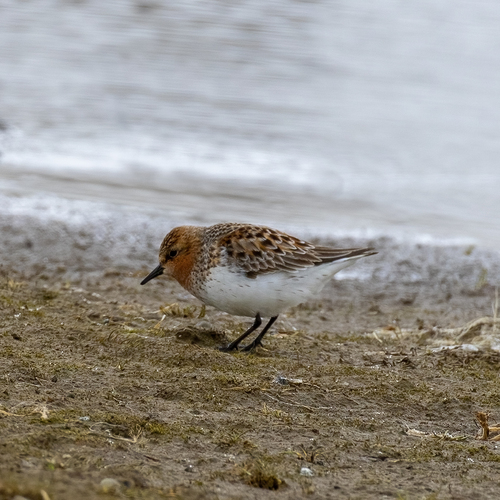 Correlimos Cuellirrojo
 Correlimos Tridáctilo
En breve
La marca de campo más confiable para separar el Correlimos Cuellirrojo del Correlimos Tridáctilo es el tamaño y la estructura: el Correlimos Cuellirrojo es notablemente más pequeño, más delicado, con un pico fino y delgado y movimientos rápidos y erráticos, mientras que el Correlimos Tridáctilo es notablemente más grande, más robusto, con un pico más grueso y una acción de carrera única, 'bicicleteando'. En vuelo, el Correlimos Tridáctilo muestra una fuerte barra alar blanca, que el Correlimos Cuellirrojo carece. Ambas especies tienen patas y picos negros, pero el Correlimos Tridáctilo carece de un dedo trasero (no visible en el campo) y tiene un pico más grueso. Los plumajes juveniles y no reproductivos pueden ser confusos, pero el tamaño, la forma y el patrón de alas del Correlimos Tridáctilo siguen siendo confiables. Concéntrate en el aspecto general, la estructura del pico y, si se ve en vuelo, la presencia o ausencia de una fuerte barra alar blanca.
Consejos de identificación
- Tamaño y volumen: El Correlimos Tridáctilo es mucho más grande y robusto que el Correlimos Cuellirrojo. En bandadas mixtas, el Correlimos Tridáctilo se destaca como un gran playero pálido, mientras que el Correlimos Cuellirrojo es pequeño y ordenado. Esto es confiable en todas las edades y estaciones.
- Estructura del pico: El Correlimos Cuellirrojo tiene un pico fino, delgado y recto, mientras que el pico del Correlimos Tridáctilo es más grueso y robusto. Esto se ve mejor a corta distancia, pero se puede juzgar con buena luz usando binoculares.
- Color de las patas: Ambas especies tienen patas negras, por lo que esto no es útil para la separación.
- Patrón de alas en vuelo: El Correlimos Tridáctilo de todas las edades muestra una fuerte y amplia barra alar blanca en vuelo; el Correlimos Cuellirrojo carece de esto, mostrando un ala más simple. Esta es una de las mejores marcas de campo si los pájaros se asustan o vuelan.
- Proyección primaria: El Correlimos Cuellirrojo tiene una proyección primaria más larga en relación con su tamaño corporal, lo que le da un aspecto más alargado en reposo. El Correlimos Tridáctilo parece más compacto y menos alargado.
- Plumaje (reproductor): El Correlimos Cuellirrojo en plumaje reproductor muestra un pecho de un brillante color naranja rojizo y una 'V' blanca en la espalda, que el Correlimos Tridáctilo nunca muestra. El Correlimos Tridáctilo es más gris y blanco, careciendo de tonos rojizos.
- Plumaje (juvenil): El Correlimos Cuellirrojo juvenil tiene un manto más contrastante con líneas blancas más débiles a lo largo de la espalda; los juveniles de Correlimos Tridáctilo son generalmente más pálidos y menos patrones, pero esto es sutil y no siempre diagnóstico.
- Plumaje (no reproductor): Ambas especies se vuelven más simples, pero el Correlimos Tridáctilo es más pálido en general, a menudo casi blanco por debajo y gris pálido por encima, mientras que el Correlimos Cuellirrojo sigue siendo pequeño y ordenado, con menos contraste.
- Comportamiento: La acción de carrera 'bicicleteando' del Correlimos Tridáctilo a lo largo de la línea de surf es única y diagnóstica. El Correlimos Cuellirrojo se mueve rápidamente pero no muestra este andar distintivo.
- Hábitat: En invierno, el Correlimos Tridáctilo está casi siempre en playas de arena abiertas, a menudo en la zona de olas. El Correlimos Cuellirrojo prefiere los llanos de barro, estuarios y humedales costeros. Si ves un pequeño correlimos en una playa de arena, revisa cuidadosamente las otras marcas del Correlimos Tridáctilo.
- Asociaciones grupales: El Correlimos Cuellirrojo a menudo se agrupa con otros pequeños playeros Calidris, mientras que el Correlimos Tridáctilo suele estar en bandadas de una sola especie o con aves costeras más grandes.
- Voz: El Correlimos Cuellirrojo emite un llamado áspero 'stit', pero el llamado del Correlimos Tridáctilo no se describe aquí, así que úsalo con precaución.
- Patas: El Correlimos Tridáctilo carece de un dedo trasero, pero esto no es visible en el campo y no es un separador práctico.
- Aspecto general: El Correlimos Cuellirrojo parece delicado, con un pico fino y rápido; el Correlimos Tridáctilo es robusto, con un pico grueso y decidido en su carrera.
- Trampas: Ten cuidado con los pájaros solitarios, especialmente en plumaje no reproductor. Usa una combinación de tamaño, estructura, patrón de alas en vuelo y comportamiento para la identificación más confiable.
Tamaño
El Correlimos Cuellirrojo está entre los playeros más pequeños, con una masa corporal de alrededor de 26 g y una longitud de 13–17 cm. El Correlimos Tridáctilo es sustancialmente más grande y robusto, con un tamaño similar al del Correlimos Común, y una apariencia mucho más voluminosa en comparación con el delicado Correlimos Cuellirrojo. Incluso a distancia o en bandadas mixtas, el Correlimos Tridáctilo se destaca como un pájaro más grande y robusto, mientras que el Correlimos Cuellirrojo parece pequeño y con un pico fino.
Plumaje
- Juvenil/Primer invierno: Los juveniles de Correlimos Cuellirrojo muestran un patrón de manto más contrastante con líneas blancas más débiles a lo largo de la espalda, mientras que los juveniles de Correlimos Tridáctilo no se describen en detalle aquí, pero son generalmente más pálidos y menos patrones por encima. En vuelo, el Correlimos Tridáctilo de todas las edades muestra una fuerte barra alar blanca, una característica clave ausente en el Correlimos Cuellirrojo.
- Adulto reproductor: Los adultos de Correlimos Cuellirrojo tienen un pecho naranja (rojizo) sin estrías, bordeado por debajo con marcas oscuras y una 'V' blanca en la espalda; los adultos de Correlimos Tridáctilo en plumaje reproductor no se describen en detalle aquí, pero son generalmente más grises y blancos, careciendo de los tonos rojizos.
- No reproductor/invierno: Ambas especies se vuelven más simples, pero el Correlimos Tridáctilo sigue siendo más pálido en general, a menudo apareciendo casi blanco por debajo y gris pálido por encima, mientras que el Correlimos Cuellirrojo es más corto de patas y más largo de alas que el Correlimos Menudo, y sigue siendo pequeño y ordenado. La barra alar blanca del Correlimos Tridáctilo en vuelo es siempre un factor decisivo.
Comportamiento
El Correlimos Cuellirrojo es altamente gregario y a menudo se agrupa con otros pequeños playeros Calidris, moviéndose rápidamente con acciones rápidas y erráticas. El Correlimos Tridáctilo también es gregario, especialmente en invierno, pero su comportamiento es distintivo: corre a lo largo de la playa con un movimiento de piernas 'bicicleteando', deteniéndose frecuentemente para recoger alimento, y a menudo se encuentra persiguiendo el surf que retrocede en playas de arena. Este estilo de carrera es una fuerte pista de comportamiento.
Hábitat
El Correlimos Cuellirrojo cría en el noreste de Rusia y pasa el invierno a lo largo de las costas del sudeste asiático y Australasia, encontrándose típicamente en llanos de barro y humedales costeros. El Correlimos Tridáctilo cría en el Alto Ártico y pasa el invierno en playas de arena en todo el mundo, incluyendo América del Sur, África y Australia. En la temporada no reproductiva, el Correlimos Tridáctilo prefiere fuertemente las playas de arena abiertas, mientras que el Correlimos Cuellirrojo es más probable que se encuentre en llanos de barro o hábitats estuarinos. Puede haber superposición durante la migración, pero el Correlimos Tridáctilo está mucho más ligado a las costas de arena.
Voz
El Correlimos Cuellirrojo emite un llamado áspero 'stit'. El llamado del Correlimos Tridáctilo no se describe en las notas proporcionadas, por lo que la voz no es un separador fuerte aquí.
Correlimos Cuellirrojo · Correlimos Tridáctilo · Mis aves difíciles