

Motmot

Quelea Cabecirrojo vs Obispo Rojo

Quelea erythrops frente a Euplectes orix

Juega un quiz con Quelea Cabecirrojo y Obispo Rojo
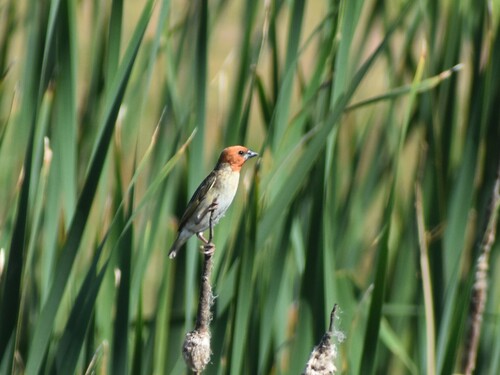
Quelea Cabecirrojo (Quelea erythrops) Quelea Cabecirrojo
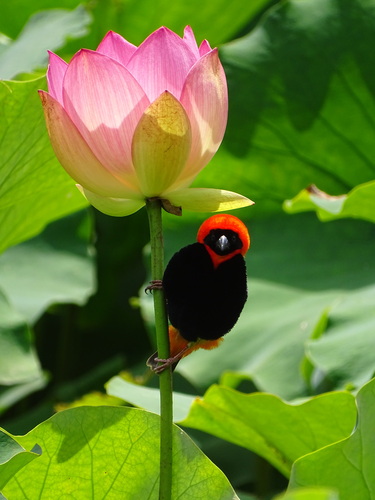
Obispo Rojo (Euplectes orix) Obispo Rojo

Medios

Cargando…

En breve

The most reliable field mark between Red-headed Quelea and Southern Red Bishop is the male breeding plumage: Red-headed Quelea males show a red or rufous face and head, while Southern Red Bishop males have a striking combination of red and black, with a black face, throat, and belly, and red elsewhere. Females and non-breeding birds of both species are streaky brown and easily confused, but the bishop is generally bulkier with a thicker bill. In flight or at a distance, focus on the distribution of red and black on the head and underparts for males, and use structure and context for duller birds. Both species occur in overlapping regions in southern Africa, but Southern Red Bishop is more closely tied to wetlands and grasslands, while Red-headed Quelea is widespread in a broader range of habitats.

Consejos de identificación

  1. Breeding male plumage is the most reliable field mark: Southern Red Bishop males show a black face, throat, and belly with bright red upperparts and breast; Red-headed Quelea males have a red or rufous face and head, lacking the bishop's extensive black. This applies only to males in breeding condition.
  2. Non-breeding and female birds are very similar: Both are streaky brown above and paler below, so plumage alone is rarely diagnostic outside the breeding season or for females.
  3. Bill structure: Southern Red Bishop has a noticeably thicker, more conical bill compared to the slimmer bill of Red-headed Quelea. This is subtle but can be useful in good views, especially among non-breeding birds.
  4. Bulk and body shape: The bishop is heavier and appears bulkier, which can help in direct comparison or when seen in mixed flocks.
  5. Red distribution: In breeding males, bishop's red covers the upperparts, upper breast, and undertail, while quelea's red is mostly restricted to the face and head.
  6. Black distribution: Only the bishop has a black lower breast and belly in breeding plumage; quelea lacks this feature.
  7. Habitat context: If the bird is in reeds, marshes, or wet grassland, especially south of the Equator, Southern Red Bishop is more likely. Quelea is more catholic in habitat, including drier areas and agricultural fields.
  8. Behavior during breeding: Bishop males display conspicuously, puffing up their red plumage and performing display flights in reeds; quelea is less showy in its courtship.
  9. Flock structure: Both species are gregarious, but bishops may be more tied to wetland habitats in large numbers, while quelea flocks can be found in a wider range of open country.
  10. No distinctive juvenile/immature wing patterns: There are no described age-specific wing or flight marks that reliably separate juveniles or first-winter birds in these two species.
  11. Voice is not diagnostic: Bishop has a buzzing song and twittering calls, but without specific quelea vocalizations, do not rely on this mark.
  12. Geographic overlap: Both species occur in southern Africa, but bishop is absent north of the Equator, where it is replaced by Northern Red Bishop.
  13. Seasonal context: Only males in breeding plumage are easily separated; outside this period, identification relies more on structure, habitat, and subtle behavioral cues.
  14. Pitfalls: Beware of assuming any red-headed weaver in a wetland is a bishop—female and non-breeding quelea can occur in similar habitats, and only breeding males are safely identified by plumage.
  15. Mixed flocks: In mixed weaver flocks, look for the combination of bill size, bulk, and, in season, the sharp contrast of red and black in bishop males to pick them out from quelea.

Tamaño

Southern Red Bishop is noticeably heavier (23.1 g vs 19.4 g for Red-headed Quelea) and appears bulkier in the field. The bishop also has a thicker, more conical bill. While both are small weavers, the bishop's more robust build and bill can be a subtle but useful clue when plumage is not diagnostic, especially among females and non-breeding birds.

Plumaje

Breeding males are the easiest to separate: Red-headed Quelea males have a red or rufous face and head, with the rest of the plumage less vividly marked, while Southern Red Bishop males are intensely red above with a black face, throat, and belly, and brown wings and tail. The bishop's red is more extensive, covering the upperparts, upper breast, and under tail-coverts, with black sharply demarcated on the lower breast and belly. Non-breeding males and females of both species are streaky brown above and paler below, making them very similar and challenging to separate visually. There are no distinctive juvenile or immature wing patterns described for either species that would allow reliable separation in flight at these ages.

Comportamiento

Both species are highly social and often seen in flocks, but Southern Red Bishop males are conspicuous during the breeding season, displaying prominently in reeds or tall grass, often puffing up their red plumage and performing display flights. Red-headed Quelea also forms large flocks but is less likely to display in such an obvious manner. Outside the breeding season, both species can be found in mixed weaver flocks, behaving similarly.

Hábitat

Red-headed Quelea is found in a wide range of habitats across sub-Saharan Africa, including savannas, grasslands, and agricultural areas. Southern Red Bishop is more closely associated with wetlands and grasslands, especially south of the Equator, and is often seen in reeds or marshy vegetation. If the bird is in a wetland or reedbed, Southern Red Bishop is more likely, but both can occur in overlapping regions.

Voz

Southern Red Bishop has a variety of twittering calls and a nasal contact call, with males producing a buzzing song during display. There is no specific vocalization information for Red-headed Quelea in the provided notes, so voice is not a reliable separator based on the current information.

Enviar una descripción mejor

Usa las mismas secciones que la comparación. El texto se publica al momento.

The most reliable field mark between Red-headed Quelea and Southern Red Bishop is the male breeding plumage: Red-headed Quelea males show a red or rufous face and head, while Southern Red Bishop males have a striking combination of red and black, with a black face, throat, and belly, and red elsewhere. Females and non-breeding birds of both species are streaky brown and easily confused, but the bishop is generally bulkier with a thicker bill. In flight or at a distance, focus on the distribution of red and black on the head and underparts for males, and use structure and context for duller birds. Both species occur in overlapping regions in southern Africa, but Southern Red Bishop is more closely tied to wetlands and grasslands, while Red-headed Quelea is widespread in a broader range of habitats.

  1. Breeding male plumage is the most reliable field mark: Southern Red Bishop males show a black face, throat, and belly with bright red upperparts and breast; Red-headed Quelea males have a red or rufous face and head, lacking the bishop's extensive black. This applies only to males in breeding condition.
  2. Non-breeding and female birds are very similar: Both are streaky brown above and paler below, so plumage alone is rarely diagnostic outside the breeding season or for females.
  3. Bill structure: Southern Red Bishop has a noticeably thicker, more conical bill compared to the slimmer bill of Red-headed Quelea. This is subtle but can be useful in good views, especially among non-breeding birds.
  4. Bulk and body shape: The bishop is heavier and appears bulkier, which can help in direct comparison or when seen in mixed flocks.
  5. Red distribution: In breeding males, bishop's red covers the upperparts, upper breast, and undertail, while quelea's red is mostly restricted to the face and head.
  6. Black distribution: Only the bishop has a black lower breast and belly in breeding plumage; quelea lacks this feature.
  7. Habitat context: If the bird is in reeds, marshes, or wet grassland, especially south of the Equator, Southern Red Bishop is more likely. Quelea is more catholic in habitat, including drier areas and agricultural fields.
  8. Behavior during breeding: Bishop males display conspicuously, puffing up their red plumage and performing display flights in reeds; quelea is less showy in its courtship.
  9. Flock structure: Both species are gregarious, but bishops may be more tied to wetland habitats in large numbers, while quelea flocks can be found in a wider range of open country.
  10. No distinctive juvenile/immature wing patterns: There are no described age-specific wing or flight marks that reliably separate juveniles or first-winter birds in these two species.
  11. Voice is not diagnostic: Bishop has a buzzing song and twittering calls, but without specific quelea vocalizations, do not rely on this mark.
  12. Geographic overlap: Both species occur in southern Africa, but bishop is absent north of the Equator, where it is replaced by Northern Red Bishop.
  13. Seasonal context: Only males in breeding plumage are easily separated; outside this period, identification relies more on structure, habitat, and subtle behavioral cues.
  14. Pitfalls: Beware of assuming any red-headed weaver in a wetland is a bishop—female and non-breeding quelea can occur in similar habitats, and only breeding males are safely identified by plumage.
  15. Mixed flocks: In mixed weaver flocks, look for the combination of bill size, bulk, and, in season, the sharp contrast of red and black in bishop males to pick them out from quelea.

Southern Red Bishop is noticeably heavier (23.1 g vs 19.4 g for Red-headed Quelea) and appears bulkier in the field. The bishop also has a thicker, more conical bill. While both are small weavers, the bishop's more robust build and bill can be a subtle but useful clue when plumage is not diagnostic, especially among females and non-breeding birds.

Breeding males are the easiest to separate: Red-headed Quelea males have a red or rufous face and head, with the rest of the plumage less vividly marked, while Southern Red Bishop males are intensely red above with a black face, throat, and belly, and brown wings and tail. The bishop's red is more extensive, covering the upperparts, upper breast, and under tail-coverts, with black sharply demarcated on the lower breast and belly. Non-breeding males and females of both species are streaky brown above and paler below, making them very similar and challenging to separate visually. There are no distinctive juvenile or immature wing patterns described for either species that would allow reliable separation in flight at these ages.

Both species are highly social and often seen in flocks, but Southern Red Bishop males are conspicuous during the breeding season, displaying prominently in reeds or tall grass, often puffing up their red plumage and performing display flights. Red-headed Quelea also forms large flocks but is less likely to display in such an obvious manner. Outside the breeding season, both species can be found in mixed weaver flocks, behaving similarly.

Red-headed Quelea is found in a wide range of habitats across sub-Saharan Africa, including savannas, grasslands, and agricultural areas. Southern Red Bishop is more closely associated with wetlands and grasslands, especially south of the Equator, and is often seen in reeds or marshy vegetation. If the bird is in a wetland or reedbed, Southern Red Bishop is more likely, but both can occur in overlapping regions.

Southern Red Bishop has a variety of twittering calls and a nasal contact call, with males producing a buzzing song during display. There is no specific vocalization information for Red-headed Quelea in the provided notes, so voice is not a reliable separator based on the current information.

¿Descartar los cambios?

Tienes ediciones sin guardar. Si sales ahora, se perderán.

Quelea Cabecirrojo · Obispo Rojo · Mis aves difíciles