

Gavilán Japonés vs Gavilán Besra
Tachyspiza gularis frente a Tachyspiza virgata
Juega un quiz con Gavilán Japonés y Gavilán Besra
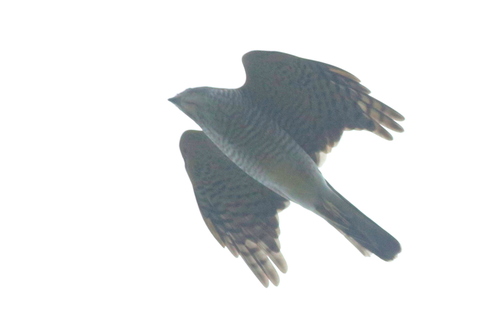 Gavilán Japonés
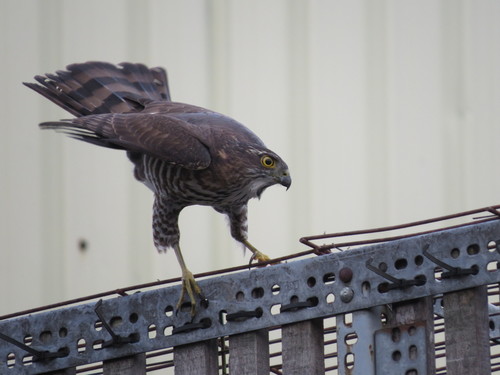 Gavilán Besra
En breve
The most reliable separation between Japanese Sparrowhawk and Besra is the pattern and color of the underparts and throat stripe, especially in juveniles and females. Japanese Sparrowhawk juveniles show cream underparts with red-brown streaking and a distinct but narrow throat stripe, while Besra juveniles have white underparts with brown barring and a broader, more obvious gular (throat) stripe. In adults, male Japanese Sparrowhawks have a red-brown wash on the chest and flanks, absent in Besra. Both species are small, slim Accipitridae with long toes and similar flight styles, but Besra is generally larger and darker, with a more robust appearance and broader gular stripe. Structural and wing pattern differences are subtle, so careful attention to underpart pattern and throat markings is key.
Consejos de identificación
- Juvenile underpart pattern: Japanese Sparrowhawk juveniles show cream underparts with red-brown streaking on the breast and spots on the abdomen; Besra juveniles are white below with brown barring. Look for streaks (Japanese Sparrowhawk) vs. bars (Besra) on the underparts.
- Throat stripe (gular stripe): Both species have a throat stripe, but Besra's is broader and more obvious in all plumages, especially juveniles and females. Japanese Sparrowhawk's is narrower and less contrasting, except in females where it is more visible.
- Adult male coloration: Japanese Sparrowhawk males have a distinctive red-brown wash on the chest and flanks, lacking in Besra. Besra males are darker blue-grey above and white, barred reddish brown below, but without the reddish wash on the sides.
- Adult female tone: Japanese Sparrowhawk females are brown above and white below with brown-grey barring; Besra females are browner above and generally darker overall, with a broader gular stripe.
- Tail banding: Both species have 3–4 dark tail bands, but Besra's are more equally sized and often more distinct in all plumages. Japanese Sparrowhawk's tail bands may appear thinner.
- Wing and tail structure: Besra has broader wings and a longer tail than Japanese Sparrowhawk, giving a more robust, deep-chested look, especially in flight. Japanese Sparrowhawk is slimmer, with slightly more pointed wings and a shorter tail.
- Legs and toes: Besra has longer, thinner legs and toes than Japanese Sparrowhawk, but this is subtle and best seen at close range or in photos.
- Eye color: Adult male Japanese Sparrowhawk has red-orange eyes; females have yellow eyes. Juveniles have brown eyes. Besra eye color is not specified in the notes, so not reliably diagnostic here.
- Facial markings: Japanese Sparrowhawk shows brown-grey patches on the cheeks and a subtle line on the white throat; Besra does not have these specific facial marks.
- Upperparts: Adult Japanese Sparrowhawk males are black-slate above with a white nape; Besra males are dark blue-grey above. Females of both are brown, but Besra is generally darker and more uniform.
- Flight style: Both show 'flap-flap-glide' flight, but Besra may appear more powerful and deep-chested, while Japanese Sparrowhawk is lighter and more agile.
- Habitat context: If seen deep in dense forest, especially in southern Asia, Besra is more likely. Japanese Sparrowhawk is more often seen at forest edge or in open woodland, especially on migration.
- Size impression: Besra is noticeably larger and bulkier than Japanese Sparrowhawk, but size can be hard to judge without direct comparison.
- Vocalization: Japanese Sparrowhawk may give a chattering 'kiki-kik-kik...' call, but this is not a reliable separator unless heard clearly.
- Pitfalls: Both species are variable and can appear similar, especially in poor light or at distance. Focus on underpart pattern, throat stripe, and overall size/structure for best separation, especially in juveniles and females.
Tamaño
Japanese Sparrowhawk is smaller overall, with males measuring 23–30 cm in length and a wingspan of 46–58 cm, weighing 92–142 g. Females are larger, but still smaller than Besra. Besra is a medium-sized raptor, 29–36 cm in length, and thus noticeably larger and heavier than Japanese Sparrowhawk. Both species show sexual dimorphism, with females larger than males, but Besra of either sex will usually appear bulkier and longer-tailed in direct comparison.
Plumaje
- Juveniles/immatures: Japanese Sparrowhawk juveniles have dark brown upperparts, cream underparts with red-brown streaking on the breast, spots on the abdomen, and barring on the sides. They show a narrow throat stripe and white above the eye and nape. Besra juveniles are dark brown above and white below, with brown barring rather than streaking, and a broader, more prominent gular (throat) stripe. Both have 3–4 dark tail bands, but Besra's are more equally sized.
- Adult males: Japanese Sparrowhawk males have black-slate upperparts, white nape, whitish underparts with grey-brown and red-brown barring, and a faint red-brown wash on the chest/flanks. Besra males are dark blue-grey above and white below, barred reddish brown, but lack the red-brown wash on the sides. Both have yellow legs, but Besra's legs and toes are longer and thinner.
- Adult females: Japanese Sparrowhawk females are brown above, white below with brown-grey barring, and a more obvious throat stripe than males. Besra females are browner above than males and show similar barring below, but with a broader gular stripe and generally darker tone overall.
- In flight: Both species have short, broad wings and long tails, but Japanese Sparrowhawk's wings are slightly more pointed and the tail shorter; Besra's wings are broader and tail longer, aiding maneuverability in dense forest.
Comportamiento
Both species hunt by surprise, using rapid dashes from cover to catch small birds and other prey. Their flight is similar, with a characteristic 'flap-flap-glide' pattern. Besra is adapted for maneuvering in dense forests with its broader wings and longer tail, and may appear more robust and powerful in flight. Japanese Sparrowhawk is generally more agile and lighter, with a slightly more buoyant flight. Both perch quietly for long periods, but Besra is more likely to remain deep within forest cover, while Japanese Sparrowhawk may be seen at forest edges or in more open woodland during migration.
Hábitat
Japanese Sparrowhawk breeds in temperate forests of East Asia (Russia, Korea, Japan, China), often near the trunk of trees, and may be found in more open woodland or forest edge during migration. Besra is a resident of dense forests across southern Asia, from the Indian subcontinent through Southeast Asia to East Asia, and is more strictly tied to dense woodland. In winter, Besra may venture into more open woodland, savannah, or even cultivated areas, but is still less likely than Japanese Sparrowhawk to be seen in open country.
Voz
Japanese Sparrowhawk occasionally gives a chattering 'kiki-kik-kik...' call, especially during display. No distinctive vocalization is noted for Besra in the provided notes, so voice is not a reliable separator in most field situations.