

Chotacabras Pauraque vs Pradero Oriental
Nyctidromus albicollis frente a Sturnella magna
Juega un quiz con Chotacabras Pauraque y Pradero Oriental
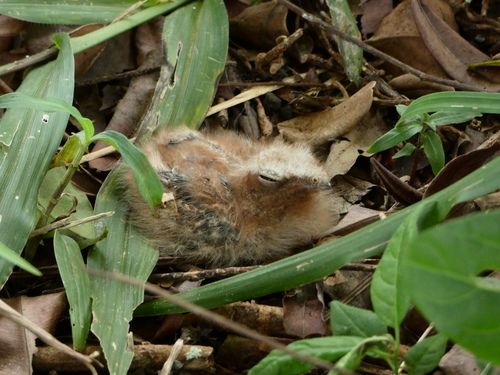 Chotacabras Pauraque
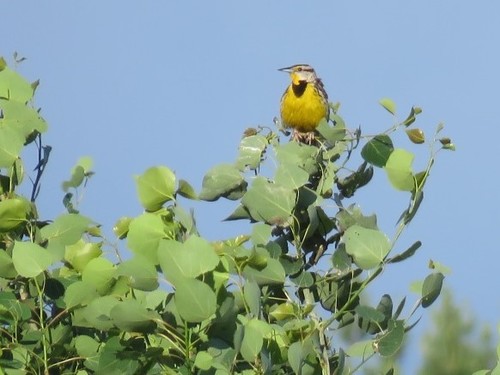 Pradero Oriental
En breve
The most reliable way to separate Common Pauraque from Eastern Meadowlark is by overall structure and plumage: Pauraque is a long-tailed, broad-winged nightjar with cryptic, mottled browns and prominent white in the wings and tail (especially in adult males), while Eastern Meadowlark is a stocky, upright songbird with a bright yellow breast crossed by a bold black 'V' and streaked brown upperparts. In flight, Pauraque shows rounded wings and long tail with white flashes, while Meadowlark has shorter, more pointed wings and a much shorter tail. If seen perched, the Pauraque's cryptic pattern and facial stripes contrast with the Meadowlark's striking yellow and black front. Habitat and behavior also help: Pauraque is crepuscular/nocturnal and often flushes from the ground, while Meadowlark is diurnal, foraging in open fields. Vocalizations are entirely different, with Pauraque giving variable whistles and 'whip' calls, and Meadowlark singing clear, whistled phrases.
Consejos de identificación
- Flight pattern and structure: Pauraque has broad, rounded wings and a long, rounded tail with white flashes (especially in adult males); Meadowlark has shorter, pointed wings and a much shorter tail, with white outer tail feathers but no wing flash. This is most obvious in flight.
- Perched posture: Pauraque sits low, often flat on the ground, blending in with leaf litter or bark; Meadowlark stands upright, often on fenceposts or in open fields, with a conspicuous, alert posture.
- Bill shape: Meadowlark has a long, straight, pointed bill suited for probing; Pauraque's bill is short and less obvious, more adapted for aerial insect-catching.
- Facial pattern: Pauraque shows a buff eye-ring and facial stripe against a reddish or grey-brown face; Meadowlark has a striped head (light brown and black) but no eye-ring or facial stripe like Pauraque.
- Underparts: Meadowlark's bright yellow breast with a bold black 'V' is diagnostic and never shown by Pauraque, which is cryptically mottled below.
- Upperparts: Pauraque is intricately mottled and camouflaged (bark-like), while Meadowlark is brown with black streaks but not truly cryptic.
- Tail pattern: In flight, adult male Pauraque shows mostly white outer tail feathers; Meadowlark shows white outer tail feathers but never as extensive or as a broad flash.
- Sex differences: Pauraque males have more white in wing and tail than females; Meadowlark sexes are similar, with females slightly duller and smaller.
- Age/season: Meadowlark juveniles are duller but still show yellowish underparts and lack cryptic camouflage; Pauraque juveniles are not described in detail but likely resemble adults in being cryptic.
- Behavior: Pauraque is nocturnal/crepuscular, often flushed from ground cover or roads at dusk or night; Meadowlark is diurnal, foraging openly in fields and singing during the day.
- Habitat: Pauraque prefers mixed woodland, forest edge, and scrub with dense cover; Meadowlark is found in open grassland and farmland, rarely near dense trees.
- Vocalizations: Pauraque gives variable whistles and 'whip' calls at night; Meadowlark sings clear, whistled phrases by day. If you hear a song in daylight in open country, it's Meadowlark.
- Legs and movement: Pauraque has long legs for a nightjar and may run when disturbed; Meadowlark walks or runs in open fields but never flushes in the same way as a nightjar.
- Local abundance/context: In North America, Meadowlark is common in open farmland; Pauraque is mainly southern (Texas southward) and tied to denser cover. Context can help if habitat is known.
- Common pitfalls: At dusk or in poor light, a flushed Pauraque may be mistaken for a streaky brown bird, but the long tail, white flashes, and cryptic pattern are unlike any Meadowlark. Meadowlark's yellow and black front is never matched by Pauraque.
Tamaño
Eastern Meadowlark is noticeably heavier and more robust than Common Pauraque. Meadowlark adults weigh 76–150 g (much heavier than Pauraque's 53 g) and measure 19–28 cm in length, overlapping Pauraque's 22–28 cm but with a stouter, more upright posture. Pauraque is slimmer, with a proportionally longer tail and wings, giving it a more elongated, low-slung appearance. Meadowlark has a shorter tail and a thicker, pointed bill, while Pauraque has a small, less prominent bill. In hand or at close range, the Meadowlark's tarsus is longer and more robust, fitting its terrestrial, open-country habits.
Plumaje
No age-specific upperwing pattern is described for either species, but plumage is highly distinctive in all ages. Common Pauraque (both sexes) is cryptically mottled brown or rufous, with a buff eye-ring and facial stripe, and in adult males, a broad white band near the wing tips and mostly white outer tail feathers. Females have less white in the tail and a narrower wing band. The overall effect is a camouflaged, bark-like pattern, especially when roosting. Eastern Meadowlark is boldly patterned: adults (both sexes) have bright yellow underparts with a black 'V' across the breast, white flanks with black streaks, and brown, black-streaked upperparts. The head is striped with light brown and black, and the bill is long and pointed. In nonbreeding plumage, Meadowlarks show more yellow-brown on the flanks and stronger head striping, but always retain the yellow and black front (except in juveniles, which are duller but never cryptic like Pauraque). In flight, Pauraque shows white in the tail and wings (especially males), while Meadowlark shows white outer tail feathers but lacks any wing flash.
Comportamiento
Common Pauraque is nocturnal or crepuscular, often found resting on roads, tracks, or leaf litter during the day, relying on camouflage. When flushed, it may run before flying, and its flight is buoyant with broad, rounded wings and a long tail. It often forages by flycatching from a low perch or sallying over open ground at dusk or night. Eastern Meadowlark is strictly diurnal, foraging on the ground or in low vegetation, probing with its bill for insects and seeds. It walks or runs in open fields and is rarely seen in dense cover. When flushed, it flies low with stiff, fluttery wingbeats and a short tail, often giving a sharp call. Meadowlarks are more likely to be seen perched upright on fenceposts or singing from exposed perches.
Hábitat
Habitat is a strong separator. Common Pauraque prefers mixed habitats with dense cover for day-roosting (forest edges, scrub, secondary growth) and open areas for nocturnal hunting, including roadsides and even near wetlands. It is rarely seen in open grassland during the day. Eastern Meadowlark is a classic grassland and farmland species, favoring open fields, meadows, and pastures with tall grasses. It avoids dense forest and is rarely found in areas with heavy tree cover. If you see a bird in open grassland during the day, especially singing from a post, it is almost certainly a Meadowlark; a bird flushed from a shaded track or forest edge at dusk is likely a Pauraque.
Voz
Vocalizations are completely different. Common Pauraque gives variable, sometimes whistled calls (weeeow wheeooo, soft 'puk puk', and a 'whip' note in courtship flight), mostly at dusk or night. The female's call is a rapid succession of 'whip' notes. Eastern Meadowlark sings clear, pure, melancholy whistles, often described as simpler than the Western Meadowlark's song. Its song is a key field mark in open country during the day. Calls are not similar and should not cause confusion.
Chotacabras Pauraque · Pradero Oriental · Mis aves difíciles