
Porrón Osculado vs Serreta Grande
Bucephala clangula frente a Mergus merganser
Juega un quiz con Porrón Osculado y Serreta Grande
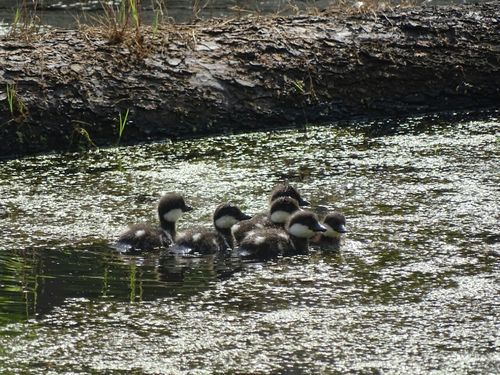 Porrón Osculado
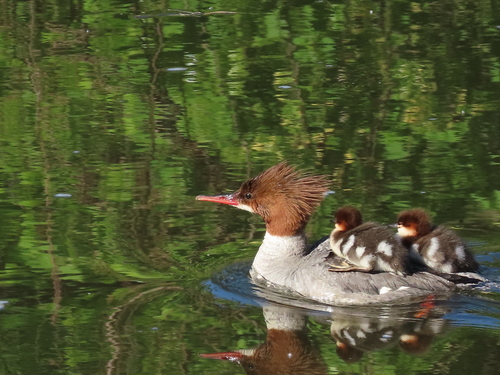 Serreta Grande
En breve
The most reliable field mark between Common Goldeneye and Goosander is bill shape: Goosander has a long, thin, red serrated bill (the classic 'sawbill'), while Common Goldeneye shows a much shorter, triangular, dark bill. In flight or at rest, Goosander is much larger and longer-bodied, with a sleeker, more elongated profile, while Goldeneye is compact and round-headed. Adult males are easily separated by head color and face pattern, but females and immatures require careful attention to head shape, bill, and body structure. Juveniles and females of both species can be confusing, especially at a distance or in poor light, so structural and bill differences are crucial.
Consejos de identificación
- Bill shape and color: Goosander has a long, thin, red serrated bill (sawbill), diagnostic at all ages and sexes. Goldeneye's bill is short, triangular, and dark. This is the most reliable field mark, especially for females and immatures.
- Size and structure: Goosander is much larger, longer-bodied, and has a longer neck and tail than Goldeneye. Goldeneye is compact, round-headed, and sits higher on the water. Use this when both species are present for direct comparison.
- Head shape: Goldeneye has a steep, rounded forehead and a 'bull-headed' look. Goosander's head is more elongated, with a smoothly rounded crest (rarely raised), especially in females and juveniles.
- Adult male plumage: Male Goosander in breeding plumage is white with a salmon-pink tinge, black iridescent green head, and red bill. Male Goldeneye has a dark green-glossed head with a round white spot below the eye and a white body. This is an easy separation in winter and spring.
- Female and immature head pattern: Female Goldeneye has a chocolate-brown head and orange-yellow legs; female Goosander has a reddish-brown head, white chin, and a long red bill. Juvenile Goosander shows a short black-edged white stripe between the eye and bill, absent in Goldeneye.
- Leg and foot color: Goldeneye females have orange-yellow legs and feet, visible when perched or in flight. Goosander's legs are red to brownish-red, brightest in adult males, duller in juveniles.
- Wing pattern in flight: Goosander shows a large white panel on the inner wing and black outer primaries; Goldeneye has a more limited white wing patch. This is best seen in good light and at close range.
- Behavior on water: Goosander often floats low, swims deep, and may rest on rocks or ice with wings half-open. Goldeneye sits higher and is more buoyant.
- Feeding behavior: Goosander often fishes in groups, herding fish into shallow water. Goldeneye is more solitary or in small groups.
- Habitat context: Goosander is more likely on large rivers and lakes, often in open water or on rocks/ice. Goldeneye prefers smaller lakes and sheltered coastal areas.
- Flight style: Goosander takes off with a long run across the water, flying strongly and directly. Goldeneye is quicker to take off and more agile in flight.
- Voice: Goosander gives a harsh croak or soft whistle (breeding season); Goldeneye is generally silent. Not usually diagnostic in the field.
- On land: Goosander is clumsy and upright, often stumbling; Goldeneye is less often seen on land.
- Pitfalls: Female and immature plumages are the main source of confusion. Always check bill shape and size first, then head shape and body structure. Juvenile Goosander's eye-bill stripe is a useful mark. In poor light or at a distance, rely on structure and bill, not subtle plumage tones.
- When marks fail: At extreme distance or in poor conditions, size and structure are the safest clues. If only a head or bill is visible, focus on length and color. If in doubt, look for feeding behavior and habitat context.
Tamaño
Goosander is substantially larger and heavier than Common Goldeneye. Goosander averages about 1470 g in body mass, with a length of 58–72 cm and a wingspan of 78–97 cm. Common Goldeneye is much smaller, averaging 900 g, 40–51 cm in length, and a wingspan of 77–83 cm. In the field, Goosander appears long-bodied and elongated, while Goldeneye looks compact, with a noticeably shorter neck and tail. This size difference is usually obvious when both species are seen together, but can be underestimated at a distance or on open water.
Plumaje
Juveniles and females of both species can be tricky, but Goosander juveniles show a distinctive short black-edged white stripe between the eye and bill, which is absent in Goldeneye. Adult male Goosander in breeding plumage is unmistakable: white body with a salmon-pink tinge, black iridescent green head, and a long, thin red bill. Adult male Goldeneye has a dark green-glossed head with a round white spot below the eye, a white neck and belly, and a much shorter, dark bill. Female Goldeneye has a chocolate-brown head, gray body, and orange-yellow legs and feet, while female Goosander has a reddish-brown head, gray body, white chin, and a long, thin red bill. In flight, Goosander shows large white patches on the inner wing and black outer primaries, while Goldeneye has a more limited white wing panel. The Goosander's head feathers form a smooth, rounded crest, but this is usually not very prominent.
Comportamiento
Goosander often floats low in the water and swims deep, sometimes resembling a cormorant, especially when moving upstream. They frequently rest on rocks or ice in rivers, sometimes with wings half-open. Their takeoff is labored, running along the water surface, but once airborne, flight is strong and direct. Goldeneye sits higher on the water, dives frequently, and has a more compact, buoyant appearance. Both species dive for food, but Goosander often fishes in groups, herding prey into shallow water. On land, Goosander is clumsy and upright, sometimes stumbling, while Goldeneye is less often seen out of water.
Hábitat
Both species use freshwater and coastal habitats, but Goosander is especially associated with larger rivers and lakes in forested areas, often seen on rocks or ice in the middle of rivers. Goldeneye is more likely to be found on smaller lakes and sheltered coastal waters. In winter, both can occur together, but Goosander prefers open stretches of water and is more likely to be seen in groups fishing cooperatively.
Voz
Goosander's usual call is a low, harsh croak, with males and juveniles giving a soft, plaintive whistle in the breeding season. Goldeneye is generally quiet, and no distinctive vocalizations are noted in the sources for field separation. Voice is not a reliable field mark for separating these two species.