
Motmot

Mosquitero Común vs Cetia Ruiseñor

Phylloscopus collybita frente a Cettia cetti

Juega un quiz con Mosquitero Común y Cetia Ruiseñor
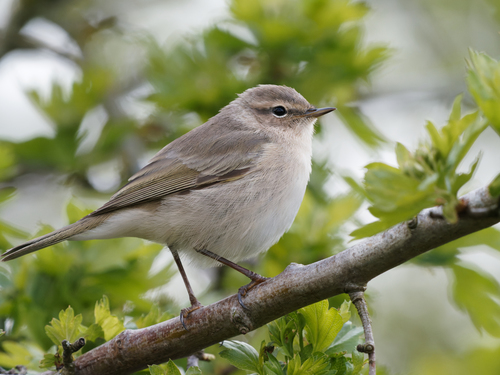
Mosquitero Común (Phylloscopus collybita) Mosquitero Común
Cetia Ruiseñor (Cettia cetti) Cetia Ruiseñor

Medios

Cargando…

En breve

The most reliable field mark between Common Chiffchaff and Cetti's Warbler is structure: Cetti's is noticeably larger, bulkier, and has a long, broad tail, while Chiffchaff is smaller, dumpier, with a short tail and short primary projection. Juvenile and adult plumages are both plain, but Cetti's is richer chestnut above and greyer below, with a strong pale supercilium, while Chiffchaff is duller green-brown above and off-white below. In flight, Chiffchaff shows rounded wings and a distinctive tail-dipping and wagging behavior, whereas Cetti's has short, rounded wings but a much longer tail. Their songs are completely different: Chiffchaff gives a repetitive chiff-chaff, while Cetti's delivers explosive, loud bursts. Habitat also helps: Chiffchaffs are in open woodland, Cetti's in dense, damp thickets near water.

Consejos de identificación

  1. Size and Structure: Cetti's Warbler is much larger and heavier than Chiffchaff, with a noticeably longer and broader tail. If you see a small, dumpy warbler with a short tail, think Chiffchaff; if it's bigger with a long tail, think Cetti's.
  2. Tail Shape and Length: Chiffchaff has a short, square-ended tail, while Cetti's has a long, broad tail that often appears rounded at the tip. This is especially obvious when the bird fans or flicks its tail.
  3. Primary Projection: Chiffchaff shows a short primary projection (the flight feathers barely extend beyond the tertials), giving it a compact, dumpy look. Cetti's has short, rounded wings but the long tail dominates its profile.
  4. Plumage Tone: Chiffchaff is greenish-brown above and off-white below, with a hint of yellow on the flanks in fresh plumage. Cetti's is a richer chestnut or dark reddish-brown above and pale grey-brown below, lacking any greenish or yellowish tones.
  5. Supercilium (Eyebrow): Both species have a pale supercilium, but Cetti's is more prominent and arches over a conspicuous dark eye, while Chiffchaff's is shorter and less distinct.
  6. Leg Color: Chiffchaff has dark legs, a useful mark if seen well. Cetti's leg color is not highlighted as distinctive in the notes.
  7. Juvenile Plumage: Juvenile Chiffchaffs are browner above and yellow-white below, but soon moult to look like adults. Juvenile Cetti's look like adults but have fresh plumage and tongue spots (not field visible).
  8. Tail Movement: Chiffchaff frequently dips and then wags its tail sideways—a unique behavior among European warblers. Cetti's may flick its tail but does not show this dip-and-wag pattern.
  9. Flight Jizz: In flight, Chiffchaff appears dumpy and short-tailed with rounded wings. Cetti's looks round-winged but with a strikingly long tail.
  10. Habitat: Chiffchaffs are in open woodland, parks, and gardens, usually away from water. Cetti's is almost always in dense, damp thickets near water.
  11. Song: Chiffchaff sings a repetitive 'chiff-chaff' phrase; Cetti's delivers explosive, metallic bursts. If you hear the song clearly, it is diagnostic.
  12. Call: Chiffchaff gives a soft 'hweet'; Cetti's call is not described in detail but is not similar to Chiffchaff's.
  13. Visibility: Chiffchaff is often visible, feeding in the open. Cetti's is very skulking, rarely seen except when singing or moving between cover.
  14. Sex Differences: Both species are sexually monomorphic in plumage, but Cetti's males are larger than females.
  15. Seasonality: Chiffchaff is migratory and may be absent in winter; Cetti's is resident in much of its range. In early spring, singing Chiffchaffs are often the first warblers to return.

Tamaño

Cetti's Warbler is substantially larger and heavier than Common Chiffchaff. Cetti's measures about 13–14 cm in length, with males weighing around 15 g and females 12 g. In contrast, Chiffchaff is only 10–12 cm long, with males at 7–8 g and females 6–7 g. Cetti's also has a noticeably longer and broader tail, and males have a wing length over 60 mm (females under 55 mm), while Chiffchaff has a much shorter wing and tail. This size difference is often obvious in the field, especially if both are seen close to each other.

Plumaje

Juvenile Cetti's Warbler resembles the adult but can be aged by fresh plumage and two dark spots on the tongue (not visible in the field). Both adult and juvenile Cetti's show rich chestnut or dark reddish-brown upperparts, pale grey-brown throat and breast, and a strong pale grey supercilium. The tail is long and broad, and the wings are short and rounded. Chiffchaff, whether adult or juvenile, is greenish-brown above and off-white below, with a short whitish supercilium and dark legs. Juvenile Chiffchaffs are browner above and yellow-white below, but after their first moult (about 10 weeks post-fledging) they become brighter and greener above, with a paler supercilium. Chiffchaff's primary projection is short, and its wings look rounded in flight. Cetti's lacks the greenish tones and has a more uniform, richer brown coloration. No distinctive upperwing panels or strong flight marks are present in either species, but Chiffchaff's overall duller, greener look and Cetti's warm chestnut tones are key.

Comportamiento

Chiffchaff is active and often flicks or dips its tail, followed by a sideways wag—a behavior unique among European leaf warblers and a strong clue. It forages in open woodland, often visible and moving through foliage. Cetti's Warbler is skulking, usually remaining hidden in dense, damp vegetation near water, and rarely shows itself for long. When it moves, it may flick its long tail but not with the distinctive dip-and-wag of Chiffchaff. In flight, Cetti's looks round-winged but with a noticeably long tail, while Chiffchaff is dumpy and short-tailed.

Hábitat

Chiffchaffs breed and forage in open woodlands, parks, and sometimes gardens, generally away from water. Cetti's Warbler is almost always found in thick, shrubby vegetation close to water—reeds, willows, brambles by ponds, lakes, marshes, or rivers. If you are in a dry woodland, Chiffchaff is far more likely; in a dense, wet thicket, especially with reeds, Cetti's is the default.

Voz

The songs are utterly different and diagnostic. Chiffchaff sings a simple, repetitive 'chiff-chaff, chiff-chaff', which is one of the first songs of spring. Its call is a soft 'hweet'. Cetti's Warbler gives explosive, loud, metallic bursts—often described as 'chet-chet-chet-chet-chet'—and is much more powerful and abrupt than any Chiffchaff vocalization. If you hear the song clearly, confusion is almost impossible.

Enviar una descripción mejor

Usa las mismas secciones que la comparación. El texto se publica al momento.

The most reliable field mark between Common Chiffchaff and Cetti's Warbler is structure: Cetti's is noticeably larger, bulkier, and has a long, broad tail, while Chiffchaff is smaller, dumpier, with a short tail and short primary projection. Juvenile and adult plumages are both plain, but Cetti's is richer chestnut above and greyer below, with a strong pale supercilium, while Chiffchaff is duller green-brown above and off-white below. In flight, Chiffchaff shows rounded wings and a distinctive tail-dipping and wagging behavior, whereas Cetti's has short, rounded wings but a much longer tail. Their songs are completely different: Chiffchaff gives a repetitive chiff-chaff, while Cetti's delivers explosive, loud bursts. Habitat also helps: Chiffchaffs are in open woodland, Cetti's in dense, damp thickets near water.

  1. Size and Structure: Cetti's Warbler is much larger and heavier than Chiffchaff, with a noticeably longer and broader tail. If you see a small, dumpy warbler with a short tail, think Chiffchaff; if it's bigger with a long tail, think Cetti's.
  2. Tail Shape and Length: Chiffchaff has a short, square-ended tail, while Cetti's has a long, broad tail that often appears rounded at the tip. This is especially obvious when the bird fans or flicks its tail.
  3. Primary Projection: Chiffchaff shows a short primary projection (the flight feathers barely extend beyond the tertials), giving it a compact, dumpy look. Cetti's has short, rounded wings but the long tail dominates its profile.
  4. Plumage Tone: Chiffchaff is greenish-brown above and off-white below, with a hint of yellow on the flanks in fresh plumage. Cetti's is a richer chestnut or dark reddish-brown above and pale grey-brown below, lacking any greenish or yellowish tones.
  5. Supercilium (Eyebrow): Both species have a pale supercilium, but Cetti's is more prominent and arches over a conspicuous dark eye, while Chiffchaff's is shorter and less distinct.
  6. Leg Color: Chiffchaff has dark legs, a useful mark if seen well. Cetti's leg color is not highlighted as distinctive in the notes.
  7. Juvenile Plumage: Juvenile Chiffchaffs are browner above and yellow-white below, but soon moult to look like adults. Juvenile Cetti's look like adults but have fresh plumage and tongue spots (not field visible).
  8. Tail Movement: Chiffchaff frequently dips and then wags its tail sideways—a unique behavior among European warblers. Cetti's may flick its tail but does not show this dip-and-wag pattern.
  9. Flight Jizz: In flight, Chiffchaff appears dumpy and short-tailed with rounded wings. Cetti's looks round-winged but with a strikingly long tail.
  10. Habitat: Chiffchaffs are in open woodland, parks, and gardens, usually away from water. Cetti's is almost always in dense, damp thickets near water.
  11. Song: Chiffchaff sings a repetitive 'chiff-chaff' phrase; Cetti's delivers explosive, metallic bursts. If you hear the song clearly, it is diagnostic.
  12. Call: Chiffchaff gives a soft 'hweet'; Cetti's call is not described in detail but is not similar to Chiffchaff's.
  13. Visibility: Chiffchaff is often visible, feeding in the open. Cetti's is very skulking, rarely seen except when singing or moving between cover.
  14. Sex Differences: Both species are sexually monomorphic in plumage, but Cetti's males are larger than females.
  15. Seasonality: Chiffchaff is migratory and may be absent in winter; Cetti's is resident in much of its range. In early spring, singing Chiffchaffs are often the first warblers to return.

Cetti's Warbler is substantially larger and heavier than Common Chiffchaff. Cetti's measures about 13–14 cm in length, with males weighing around 15 g and females 12 g. In contrast, Chiffchaff is only 10–12 cm long, with males at 7–8 g and females 6–7 g. Cetti's also has a noticeably longer and broader tail, and males have a wing length over 60 mm (females under 55 mm), while Chiffchaff has a much shorter wing and tail. This size difference is often obvious in the field, especially if both are seen close to each other.

Juvenile Cetti's Warbler resembles the adult but can be aged by fresh plumage and two dark spots on the tongue (not visible in the field). Both adult and juvenile Cetti's show rich chestnut or dark reddish-brown upperparts, pale grey-brown throat and breast, and a strong pale grey supercilium. The tail is long and broad, and the wings are short and rounded. Chiffchaff, whether adult or juvenile, is greenish-brown above and off-white below, with a short whitish supercilium and dark legs. Juvenile Chiffchaffs are browner above and yellow-white below, but after their first moult (about 10 weeks post-fledging) they become brighter and greener above, with a paler supercilium. Chiffchaff's primary projection is short, and its wings look rounded in flight. Cetti's lacks the greenish tones and has a more uniform, richer brown coloration. No distinctive upperwing panels or strong flight marks are present in either species, but Chiffchaff's overall duller, greener look and Cetti's warm chestnut tones are key.

Chiffchaff is active and often flicks or dips its tail, followed by a sideways wag—a behavior unique among European leaf warblers and a strong clue. It forages in open woodland, often visible and moving through foliage. Cetti's Warbler is skulking, usually remaining hidden in dense, damp vegetation near water, and rarely shows itself for long. When it moves, it may flick its long tail but not with the distinctive dip-and-wag of Chiffchaff. In flight, Cetti's looks round-winged but with a noticeably long tail, while Chiffchaff is dumpy and short-tailed.

Chiffchaffs breed and forage in open woodlands, parks, and sometimes gardens, generally away from water. Cetti's Warbler is almost always found in thick, shrubby vegetation close to water—reeds, willows, brambles by ponds, lakes, marshes, or rivers. If you are in a dry woodland, Chiffchaff is far more likely; in a dense, wet thicket, especially with reeds, Cetti's is the default.

The songs are utterly different and diagnostic. Chiffchaff sings a simple, repetitive 'chiff-chaff, chiff-chaff', which is one of the first songs of spring. Its call is a soft 'hweet'. Cetti's Warbler gives explosive, loud, metallic bursts—often described as 'chet-chet-chet-chet-chet'—and is much more powerful and abrupt than any Chiffchaff vocalization. If you hear the song clearly, confusion is almost impossible.

¿Descartar los cambios?

Tienes ediciones sin guardar. Si sales ahora, se perderán.

Mosquitero Común · Cetia Ruiseñor · Mis aves difíciles