

Motmot

Flamenco Chileno vs Parina Chica

Phoenicopterus chilensis frente a Phoenicoparrus jamesi

Juega un quiz con Flamenco Chileno y Parina Chica
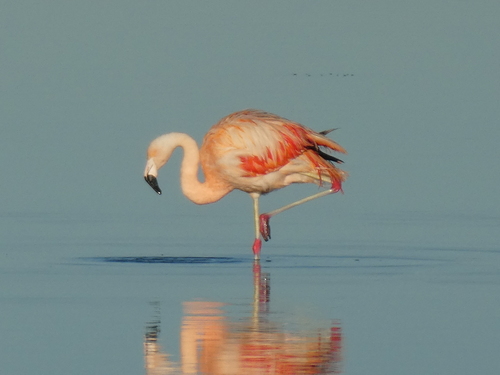
Flamenco Chileno (Phoenicopterus chilensis) Flamenco Chileno
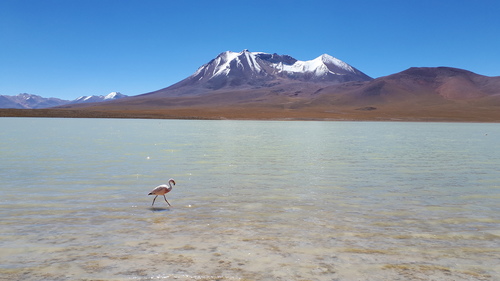
Parina Chica (Phoenicoparrus jamesi) Parina Chica

Medios

Cargando…

En breve

The most reliable field mark between Chilean Flamingo and James's Flamingo is the bill and leg color: Chilean Flamingo has a mostly black bill with grayish legs and pink joints, while James's Flamingo shows a bright yellow bill with a black tip and striking brick-red legs. In the field, Chilean Flamingo appears larger and pinker overall, while James's Flamingo is smaller, paler, and often shows bright carmine streaks on the neck and back. Both species can look similar at a distance, especially immatures, but careful attention to bill color and leg color will separate them in most situations. Flight and perched views offer additional clues, especially in adults.

Consejos de identificación

  1. Bill color and pattern: Chilean Flamingo has a mostly black bill (more than half black), while James's Flamingo has a bright yellow bill with only the tip black. This is the most reliable mark at close to moderate range for adults.
  2. Leg color: Chilean Flamingo shows gray legs with pink joints; James's Flamingo has uniform brick-red legs. This is visible in good light and especially useful when birds are wading or standing.
  3. Overall size and structure: Chilean Flamingo is much larger and bulkier than James's Flamingo. In mixed flocks, look for the largest birds (Chilean) versus the more delicate, shorter James's.
  4. Plumage tone (adults): Chilean Flamingo is generally pinker overall, while James's Flamingo is paler with distinctive carmine streaks on the neck and back. At a distance, Chilean will look more saturated pink.
  5. Wing pattern (adults): In flight or when stretching wings, Chilean Flamingo shows more extensive black in the wings; James's Flamingo shows only a small amount of black (flight feathers) when perched.
  6. Immature birds: Both species' juveniles are gray or white and lack pink tones, making them hard to separate by color alone. Bill and leg color may still help: even young James's should show some yellow in the bill and reddish tones in the legs as they mature.
  7. Eye and facial skin: James's Flamingo adults have bright red skin around the eyes and yellow eyes, which can be a subtle but helpful mark at close range. Chilean Flamingo does not show this combination.
  8. Habitat and elevation: If you are at high-altitude Andean lakes, James's Flamingo is much more likely; in lowland or coastal wetlands, Chilean is expected. This is a strong supporting clue but not diagnostic on its own.
  9. Feet structure (rarely visible): James's Flamingo (and the closely related Andean Flamingo) have three toes and no hind toe (hallux), while Chilean Flamingo has three forward toes and a hallux. This is only useful if you have a clear view of the feet.
  10. Behavioral context: Both species feed and display similarly, so behavior is not a strong separator, but Chilean Flamingos may be more likely to be seen in larger, denser flocks at lower elevations.
  11. Sex and season: There is no sexual dimorphism in plumage or size in either species; both sexes look alike year-round.
  12. Pitfalls: Immature birds of both species can be very similar, especially before they acquire adult bill and leg colors. In these cases, size and structure (if seen in mixed flocks) and subtle bill/leg color differences are your best clues.
  13. Mixed flocks: Where ranges overlap (e.g., in parts of Chile, Bolivia, Argentina), both species may occur together. Use a combination of size, bill, and leg color to pick out individuals.
  14. Not diagnostic: Voice is not a reliable separator in the field based on available information.

Tamaño

Chilean Flamingo is noticeably larger, standing 110–130 cm tall, while James's Flamingo is smaller at 90–92 cm. The Chilean is bulkier and stands a foot taller than James's. In mixed flocks, Chilean Flamingos will stand out as the largest flamingos present except when Andean Flamingos are also nearby. James's Flamingo is about the same size as the Old World Lesser Flamingo, making it distinctly smaller and more delicate than the Chilean.

Plumaje

Juvenile and immature flamingos of both species start out gray or white and slowly acquire pink tones over 2–3 years, so young birds can be very similar and lack strong color. In adults, Chilean Flamingo is overall pinker, with a deeper pink wash to the body, while James's Flamingo is very pale pink with bright carmine (red-pink) streaks around the neck and back. The Chilean's bill is mostly black (more than half), while James's has a distinctive bright yellow bill with only the tip black. Leg color is also key: Chilean has gray legs with pink joints, James's has brick-red legs. In flight or when perched, James's Flamingo shows only a small amount of black in the wings (flight feathers), while Chilean Flamingo's black wing markings are more extensive. Both species lack sexual dimorphism in plumage.

Comportamiento

Both species feed in shallow water by filter-feeding with their heads upside down. Chilean Flamingos often stand on one leg, a behavior that helps reduce heat loss, and are known to stir up sediment with their long legs. James's Flamingos are adapted to high-altitude Andean lakes and may be seen in large, synchronized colonies. Both species engage in elaborate group displays during courtship, but these are not typically diagnostic in the field. Feeding style and flock behavior are broadly similar.

Hábitat

Chilean Flamingo breeds and feeds in lowland wetlands, estuaries, lagoons, and salt lakes across southern South America, from Ecuador and Peru to Chile, Argentina, and Brazil. James's Flamingo is restricted to high-altitude Andean plateaus in Peru, Chile, Bolivia, and northwest Argentina, favoring saline lakes and puna habitats. Thus, habitat and elevation can be a strong clue: James's is a high Andes specialist, while Chilean is found at lower elevations and in a wider range of wetland types.

Enviar una descripción mejor

Usa las mismas secciones que la comparación. El texto se publica al momento.

The most reliable field mark between Chilean Flamingo and James's Flamingo is the bill and leg color: Chilean Flamingo has a mostly black bill with grayish legs and pink joints, while James's Flamingo shows a bright yellow bill with a black tip and striking brick-red legs. In the field, Chilean Flamingo appears larger and pinker overall, while James's Flamingo is smaller, paler, and often shows bright carmine streaks on the neck and back. Both species can look similar at a distance, especially immatures, but careful attention to bill color and leg color will separate them in most situations. Flight and perched views offer additional clues, especially in adults.

  1. Bill color and pattern: Chilean Flamingo has a mostly black bill (more than half black), while James's Flamingo has a bright yellow bill with only the tip black. This is the most reliable mark at close to moderate range for adults.
  2. Leg color: Chilean Flamingo shows gray legs with pink joints; James's Flamingo has uniform brick-red legs. This is visible in good light and especially useful when birds are wading or standing.
  3. Overall size and structure: Chilean Flamingo is much larger and bulkier than James's Flamingo. In mixed flocks, look for the largest birds (Chilean) versus the more delicate, shorter James's.
  4. Plumage tone (adults): Chilean Flamingo is generally pinker overall, while James's Flamingo is paler with distinctive carmine streaks on the neck and back. At a distance, Chilean will look more saturated pink.
  5. Wing pattern (adults): In flight or when stretching wings, Chilean Flamingo shows more extensive black in the wings; James's Flamingo shows only a small amount of black (flight feathers) when perched.
  6. Immature birds: Both species' juveniles are gray or white and lack pink tones, making them hard to separate by color alone. Bill and leg color may still help: even young James's should show some yellow in the bill and reddish tones in the legs as they mature.
  7. Eye and facial skin: James's Flamingo adults have bright red skin around the eyes and yellow eyes, which can be a subtle but helpful mark at close range. Chilean Flamingo does not show this combination.
  8. Habitat and elevation: If you are at high-altitude Andean lakes, James's Flamingo is much more likely; in lowland or coastal wetlands, Chilean is expected. This is a strong supporting clue but not diagnostic on its own.
  9. Feet structure (rarely visible): James's Flamingo (and the closely related Andean Flamingo) have three toes and no hind toe (hallux), while Chilean Flamingo has three forward toes and a hallux. This is only useful if you have a clear view of the feet.
  10. Behavioral context: Both species feed and display similarly, so behavior is not a strong separator, but Chilean Flamingos may be more likely to be seen in larger, denser flocks at lower elevations.
  11. Sex and season: There is no sexual dimorphism in plumage or size in either species; both sexes look alike year-round.
  12. Pitfalls: Immature birds of both species can be very similar, especially before they acquire adult bill and leg colors. In these cases, size and structure (if seen in mixed flocks) and subtle bill/leg color differences are your best clues.
  13. Mixed flocks: Where ranges overlap (e.g., in parts of Chile, Bolivia, Argentina), both species may occur together. Use a combination of size, bill, and leg color to pick out individuals.
  14. Not diagnostic: Voice is not a reliable separator in the field based on available information.

Chilean Flamingo is noticeably larger, standing 110–130 cm tall, while James's Flamingo is smaller at 90–92 cm. The Chilean is bulkier and stands a foot taller than James's. In mixed flocks, Chilean Flamingos will stand out as the largest flamingos present except when Andean Flamingos are also nearby. James's Flamingo is about the same size as the Old World Lesser Flamingo, making it distinctly smaller and more delicate than the Chilean.

Juvenile and immature flamingos of both species start out gray or white and slowly acquire pink tones over 2–3 years, so young birds can be very similar and lack strong color. In adults, Chilean Flamingo is overall pinker, with a deeper pink wash to the body, while James's Flamingo is very pale pink with bright carmine (red-pink) streaks around the neck and back. The Chilean's bill is mostly black (more than half), while James's has a distinctive bright yellow bill with only the tip black. Leg color is also key: Chilean has gray legs with pink joints, James's has brick-red legs. In flight or when perched, James's Flamingo shows only a small amount of black in the wings (flight feathers), while Chilean Flamingo's black wing markings are more extensive. Both species lack sexual dimorphism in plumage.

Both species feed in shallow water by filter-feeding with their heads upside down. Chilean Flamingos often stand on one leg, a behavior that helps reduce heat loss, and are known to stir up sediment with their long legs. James's Flamingos are adapted to high-altitude Andean lakes and may be seen in large, synchronized colonies. Both species engage in elaborate group displays during courtship, but these are not typically diagnostic in the field. Feeding style and flock behavior are broadly similar.

Chilean Flamingo breeds and feeds in lowland wetlands, estuaries, lagoons, and salt lakes across southern South America, from Ecuador and Peru to Chile, Argentina, and Brazil. James's Flamingo is restricted to high-altitude Andean plateaus in Peru, Chile, Bolivia, and northwest Argentina, favoring saline lakes and puna habitats. Thus, habitat and elevation can be a strong clue: James's is a high Andes specialist, while Chilean is found at lower elevations and in a wider range of wetland types.

¿Descartar los cambios?

Tienes ediciones sin guardar. Si sales ahora, se perderán.

Flamenco Chileno · Parina Chica · Mis aves difíciles