

Malcoha Africano Occidental vs Alción Senegalés
Ceuthmochares aereus frente a Halcyon senegalensis
Juega un quiz con Malcoha Africano Occidental y Alción Senegalés
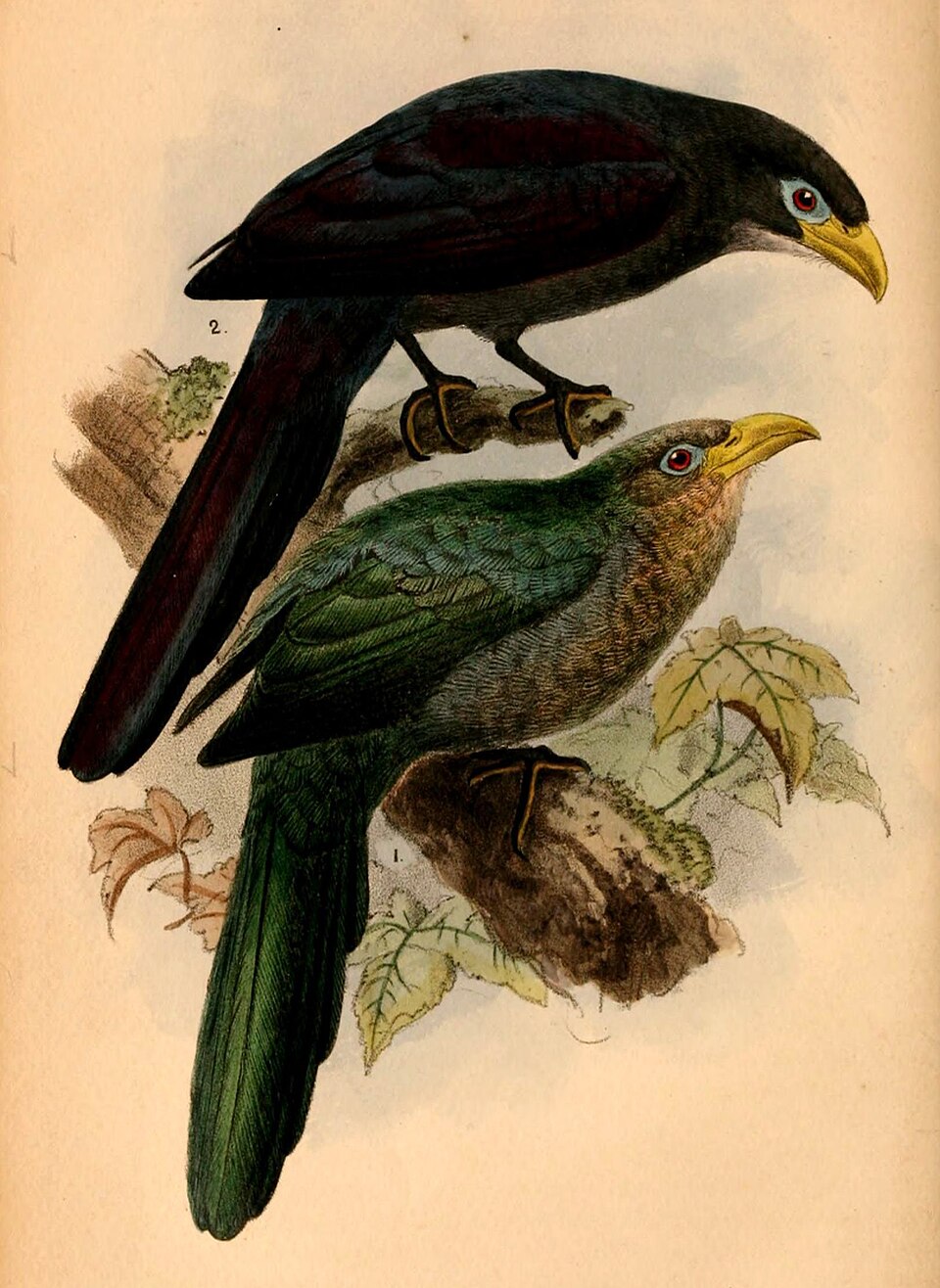 Malcoha Africano Occidental
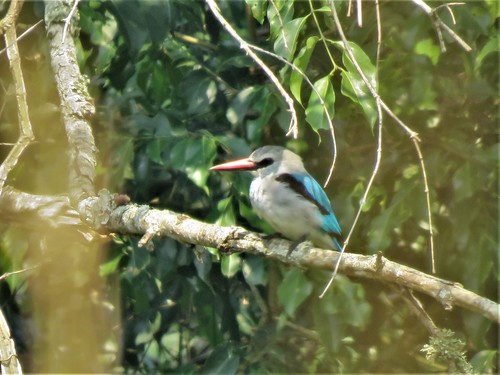 Alción Senegalés
En breve
The most reliable field mark to separate Blue Malkoha from Woodland Kingfisher is the combination of bill color and underparts: Blue Malkoha has a heavy, entirely yellow bill and a greyish belly, head, and throat, while Woodland Kingfisher shows a striking bicolored bill (red above, black below) and gleaming white underparts. In flight, Woodland Kingfisher flashes black and white in the wings and underwing, unlike the more uniformly blue-green upperparts of Blue Malkoha. Both species have blue in the wings and tail, but the kingfisher's blue is brighter and more electric. Structure and behavior also differ markedly, with the malkoha moving furtively through dense vegetation and the kingfisher perching conspicuously and flying directly between exposed perches.
Consejos de identificación
- Bill color and shape: Blue Malkoha has a heavy, entirely yellow bill in all ages and sexes. Woodland Kingfisher has a large, pointed bill with a red upper mandible and black lower mandible; juveniles have a duller brownish bill but still show a two-tone pattern. If the bill is all yellow, it's a malkoha; if bicolored, it's a kingfisher.
- Underparts color: Woodland Kingfisher always has white underparts (breast, belly, throat), while Blue Malkoha has greyish underparts. If you see a grey-bellied blue bird, it's a malkoha; if the belly is white, it's a kingfisher.
- Upperparts and blue tone: Both species have blue in the wings and tail, but the kingfisher's blue is brighter and more electric, while the malkoha's blue is deeper and sometimes greenish (especially in C. a. aereus). The kingfisher also has a black shoulder patch, absent in malkoha.
- Wing pattern in flight: Woodland Kingfisher shows black primaries and secondaries with white underwing coverts and a faint white wingbar (from the white bases to the flight feathers). Blue Malkoha's wings and tail are uniformly blue or greenish-blue above, with no white or black wing markings. This is a key mark for all ages in flight.
- Facial pattern: Woodland Kingfisher has dark lores, creating a dark stripe through the eye. Blue Malkoha lacks this facial stripe and has a plain greyish face.
- Tail shape and length: Blue Malkoha has a longer, graduated tail that often appears proportionally longer than the kingfisher's. Woodland Kingfisher has a shorter, squarer tail.
- Perching behavior: Kingfishers perch in the open, often on wires or bare branches, while malkohas skulk in dense vegetation and are rarely seen in the open.
- Flight style: Woodland Kingfisher flies rapidly and directly between perches, often flashing its wing pattern. Blue Malkoha moves with short, hopping flights through vegetation, rarely making long, direct flights in the open.
- Habitat: If seen in deep, tangled rainforest, it's almost certainly a Blue Malkoha. In open woodland, forest edge, or gardens, Woodland Kingfisher is far more likely.
- Aggression and visibility: Woodland Kingfisher is bold and territorial, sometimes attacking intruders (including people), while Blue Malkoha is shy and secretive.
- Juvenile confusion: Juvenile kingfishers are duller and have a brownish bill, but still show the two-tone pattern and white underparts. Juvenile malkohas retain the yellow bill and greyish underparts.
- Shoulder patch: The kingfisher has a distinct black patch on the shoulder, visible when perched and in flight; malkoha lacks this mark.
- Mixed flocks: Blue Malkoha may join mixed-species flocks or follow squirrels; kingfishers do not.
- Bill size: Both have large bills, but the kingfisher's is more dagger-like, while the malkoha's is heavier and more decurved.
- Voice: Not diagnostic based on available notes, but kingfishers are generally more vocal and conspicuous.
Tamaño
Woodland Kingfisher is a medium-sized kingfisher, about 23 cm (9.1 in) in length [wikipedia]. Blue Malkoha is similar in overall length, but appears longer-tailed and slimmer due to its elongated body and tail shape. The kingfisher is stockier, with a proportionally larger head and bill, and shorter tail. Both are similar in length, but their proportions and posture are quite different when perched.
Plumaje
Juvenile Woodland Kingfisher is duller than adults and has a brown bill, but still shows the bicolored pattern (red above, black below) as it matures. In all ages, Woodland Kingfisher has a bright blue back, wing panel, and tail, with white underparts and a black shoulder patch. In flight, the kingfisher shows black primaries and secondaries with white underwing coverts, and a faint white wingbar from the white bases to the flight feathers. Blue Malkoha, in all ages and subspecies, has a greyish head, throat, and belly, with greenish-blue or blue tail, wings, and back (depending on subspecies). The malkoha lacks any white in the wings or underparts, and its blue is deeper and less electric than the kingfisher's. The heavy yellow bill is present in all ages of malkoha. There are no distinctive age-specific upperwing patterns described for malkoha, but the kingfisher's black-and-white wing contrast is a strong mark for all ages.
Comportamiento
Blue Malkoha is secretive and moves through tangled rainforest vegetation with small hops, often staying hidden and low in the understory. It sometimes joins mixed-species flocks or follows squirrels to catch flushed insects. Woodland Kingfisher is much more conspicuous, often perching in the open, aggressively defending its territory, and making rapid, direct flights between perches. It may display by spreading its wings to show the white underwing linings. The kingfisher is generally bolder and more visible than the elusive malkoha.
Hábitat
Blue Malkoha is a specialist of African tropical rainforest, staying within dense, tangled vegetation and rarely venturing into open areas. Woodland Kingfisher is widespread in sub-Saharan Africa and favors open woodland, forest edge, and even gardens, but avoids the deep, closed-canopy rainforest preferred by malkoha. Thus, finding a blue bird in dense rainforest understory points to malkoha, while a blue bird in open woodland or perched on a wire is likely a kingfisher.
Malcoha Africano Occidental · Alción Senegalés · Mis aves difíciles