

Motmot

Reinita Castaña vs Reinita de Pensilvania

Setophaga castanea frente a Setophaga pensylvanica

Juega un quiz con Reinita Castaña y Reinita de Pensilvania
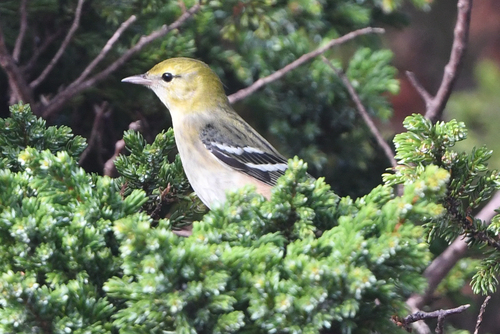
Reinita Castaña (Setophaga castanea) Reinita Castaña
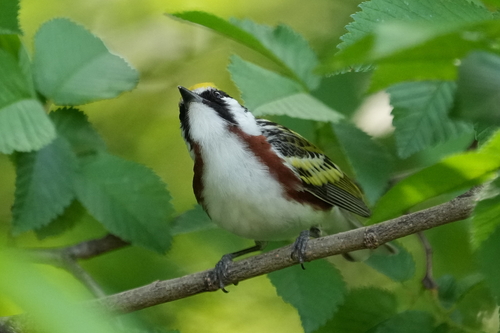
Reinita de Pensilvania (Setophaga pensylvanica) Reinita de Pensilvania

Medios

Cargando…

En breve

The most reliable field mark to separate Bay-breasted Warbler from Chestnut-sided Warbler is the pattern and extent of chestnut coloration: Bay-breasted shows chestnut on the throat, crown, and sides in breeding plumage, while Chestnut-sided only has chestnut on the flanks and a bright yellow crown. In nonbreeding plumage, Bay-breasted can be tricky, but it never shows a yellow crown or white face. Both species have two white wing bars, but facial pattern and crown color are key. Immature and nonbreeding birds are a challenge, but Bay-breasted never has yellowish feet and may retain some chestnut on the flanks, while Chestnut-sided has a yellow-green crown and white eye-ring. Watch for these marks in both perched and flight views.

Consejos de identificación

  1. Chestnut location is key: In breeding plumage, Bay-breasted Warbler shows chestnut on the throat, crown, and sides, while Chestnut-sided Warbler only has chestnut on the flanks. If you see chestnut on the throat or crown, it's Bay-breasted.
  2. Crown color: Chestnut-sided Warbler has a bright yellow (breeding) or yellow-green (nonbreeding) crown, never seen in Bay-breasted. Bay-breasted's crown is chestnut in breeding males, grayish or olive in nonbreeding.
  3. Facial pattern: Chestnut-sided Warbler has a white face with a sharp black eyestripe in breeding plumage, and a white eye-ring in nonbreeding. Bay-breasted lacks a white face and black eyestripe, instead showing a black face and creamy neck patch in breeding plumage, and a duller, less contrasting face in nonbreeding.
  4. Flank color in nonbreeding/immature birds: Bay-breasted may retain a hint of chestnut on the flanks, but Chestnut-sided in nonbreeding/immature plumage usually lacks chestnut or shows only a faint wash.
  5. Feet color: Bay-breasted Warbler always has black feet, while Blackpoll Warbler (not Chestnut-sided) has yellowish feet. This is not useful for separating Chestnut-sided from Bay-breasted, but helps avoid a common confusion with Blackpoll.
  6. Wing bars: Both species have two white wing bars in all plumages; this is not a separating mark.
  7. Back color: Both can show grayish, streaked backs in breeding plumage, but Chestnut-sided's is often more distinctly streaked and contrasts with the white face and yellow crown.
  8. Underparts: Chestnut-sided Warbler has white underparts with chestnut only on the sides; Bay-breasted has more extensive chestnut on the underparts in breeding plumage.
  9. Nonbreeding confusion: In fall, both species become duller. Bay-breasted turns olive above and loses much of the chestnut, but never gains a yellow crown or white eye-ring. Chestnut-sided becomes yellow-green on the crown, gray-faced, with a white eye-ring and unstreaked pale gray breast.
  10. Sex differences: Female Chestnut-sided Warblers are paler, with less chestnut and weaker head pattern, but still show the yellow crown and white face. Female Bay-breasted are duller than males but retain the overall pattern.
  11. Habitat context: In breeding season, Bay-breasted is more likely in mature coniferous forests; Chestnut-sided prefers shrubby, regenerating areas. Use with caution during migration.
  12. No reliable size difference in the field: Both are small warblers; Bay-breasted averages slightly heavier, but this is not visible in the field.
  13. No described age-specific upperwing pattern differences: Both have two white wing bars at all ages; no unique juvenile/immature flight marks are noted in the sources.
  14. No reliable vocal differences described in the sources: Use visual marks for separation.
  15. Beware of overlap with Blackpoll Warbler in fall: Bay-breasted can look similar to Blackpoll, but Chestnut-sided is less likely to be confused due to its yellow crown and white face in nonbreeding plumage.

Tamaño

Bay-breasted Warbler is slightly heavier (12.0 g) than Chestnut-sided Warbler (8–13.1 g), but their overall size and proportions are very similar, and this is not a reliable field mark in the field. Both are small, active warblers with similar body length and wingspan, so structure alone is not helpful for separation.

Plumaje

In adult breeding plumage, Bay-breasted Warbler males are grayish above with two white wing bars, black face, creamy neck patch, and extensive dark chestnut on the crown, throat, and sides. Females are similar but duller. Chestnut-sided Warbler males have a white face, black eyestripe, bright yellow crown, white underparts, and chestnut only on the flanks (never on throat or crown). Females are paler, with less chestnut and weaker head pattern. In nonbreeding plumage, Bay-breasted becomes olive-green above, with reduced or absent chestnut on the flanks, and a duller face; the two white wing bars remain. Chestnut-sided in nonbreeding plumage has a yellow-green crown, white eye-ring, gray face, and unstreaked pale gray underparts, with chestnut flanks fading or absent. Both species retain the two white wing bars in all plumages. Juvenile/immature-specific upperwing patterns are not described in the sources, so focus on crown, face, and flank color for all ages.

Comportamiento

Both species are active, gleaning insects from foliage. Bay-breasted Warbler forages more in the interior middle portions of coniferous trees during breeding, while Chestnut-sided Warbler is more typical of second growth and edge habitats. In winter, Bay-breasted can be aggressive in mixed-species flocks. No major behavioral differences are reliably diagnostic in the field.

Hábitat

Bay-breasted Warbler breeds in mature coniferous forests, often foraging in the mid-levels of spruces and firs. Chestnut-sided Warbler breeds in second growth, shrubby edges, and regenerating forests, often where mature forest has been cleared. Overlap occurs during migration, but habitat preference can provide a supporting clue in the breeding season.

Enviar una descripción mejor

Usa las mismas secciones que la comparación. El texto se publica al momento.

The most reliable field mark to separate Bay-breasted Warbler from Chestnut-sided Warbler is the pattern and extent of chestnut coloration: Bay-breasted shows chestnut on the throat, crown, and sides in breeding plumage, while Chestnut-sided only has chestnut on the flanks and a bright yellow crown. In nonbreeding plumage, Bay-breasted can be tricky, but it never shows a yellow crown or white face. Both species have two white wing bars, but facial pattern and crown color are key. Immature and nonbreeding birds are a challenge, but Bay-breasted never has yellowish feet and may retain some chestnut on the flanks, while Chestnut-sided has a yellow-green crown and white eye-ring. Watch for these marks in both perched and flight views.

  1. Chestnut location is key: In breeding plumage, Bay-breasted Warbler shows chestnut on the throat, crown, and sides, while Chestnut-sided Warbler only has chestnut on the flanks. If you see chestnut on the throat or crown, it's Bay-breasted.
  2. Crown color: Chestnut-sided Warbler has a bright yellow (breeding) or yellow-green (nonbreeding) crown, never seen in Bay-breasted. Bay-breasted's crown is chestnut in breeding males, grayish or olive in nonbreeding.
  3. Facial pattern: Chestnut-sided Warbler has a white face with a sharp black eyestripe in breeding plumage, and a white eye-ring in nonbreeding. Bay-breasted lacks a white face and black eyestripe, instead showing a black face and creamy neck patch in breeding plumage, and a duller, less contrasting face in nonbreeding.
  4. Flank color in nonbreeding/immature birds: Bay-breasted may retain a hint of chestnut on the flanks, but Chestnut-sided in nonbreeding/immature plumage usually lacks chestnut or shows only a faint wash.
  5. Feet color: Bay-breasted Warbler always has black feet, while Blackpoll Warbler (not Chestnut-sided) has yellowish feet. This is not useful for separating Chestnut-sided from Bay-breasted, but helps avoid a common confusion with Blackpoll.
  6. Wing bars: Both species have two white wing bars in all plumages; this is not a separating mark.
  7. Back color: Both can show grayish, streaked backs in breeding plumage, but Chestnut-sided's is often more distinctly streaked and contrasts with the white face and yellow crown.
  8. Underparts: Chestnut-sided Warbler has white underparts with chestnut only on the sides; Bay-breasted has more extensive chestnut on the underparts in breeding plumage.
  9. Nonbreeding confusion: In fall, both species become duller. Bay-breasted turns olive above and loses much of the chestnut, but never gains a yellow crown or white eye-ring. Chestnut-sided becomes yellow-green on the crown, gray-faced, with a white eye-ring and unstreaked pale gray breast.
  10. Sex differences: Female Chestnut-sided Warblers are paler, with less chestnut and weaker head pattern, but still show the yellow crown and white face. Female Bay-breasted are duller than males but retain the overall pattern.
  11. Habitat context: In breeding season, Bay-breasted is more likely in mature coniferous forests; Chestnut-sided prefers shrubby, regenerating areas. Use with caution during migration.
  12. No reliable size difference in the field: Both are small warblers; Bay-breasted averages slightly heavier, but this is not visible in the field.
  13. No described age-specific upperwing pattern differences: Both have two white wing bars at all ages; no unique juvenile/immature flight marks are noted in the sources.
  14. No reliable vocal differences described in the sources: Use visual marks for separation.
  15. Beware of overlap with Blackpoll Warbler in fall: Bay-breasted can look similar to Blackpoll, but Chestnut-sided is less likely to be confused due to its yellow crown and white face in nonbreeding plumage.

Bay-breasted Warbler is slightly heavier (12.0 g) than Chestnut-sided Warbler (8–13.1 g), but their overall size and proportions are very similar, and this is not a reliable field mark in the field. Both are small, active warblers with similar body length and wingspan, so structure alone is not helpful for separation.

In adult breeding plumage, Bay-breasted Warbler males are grayish above with two white wing bars, black face, creamy neck patch, and extensive dark chestnut on the crown, throat, and sides. Females are similar but duller. Chestnut-sided Warbler males have a white face, black eyestripe, bright yellow crown, white underparts, and chestnut only on the flanks (never on throat or crown). Females are paler, with less chestnut and weaker head pattern. In nonbreeding plumage, Bay-breasted becomes olive-green above, with reduced or absent chestnut on the flanks, and a duller face; the two white wing bars remain. Chestnut-sided in nonbreeding plumage has a yellow-green crown, white eye-ring, gray face, and unstreaked pale gray underparts, with chestnut flanks fading or absent. Both species retain the two white wing bars in all plumages. Juvenile/immature-specific upperwing patterns are not described in the sources, so focus on crown, face, and flank color for all ages.

Both species are active, gleaning insects from foliage. Bay-breasted Warbler forages more in the interior middle portions of coniferous trees during breeding, while Chestnut-sided Warbler is more typical of second growth and edge habitats. In winter, Bay-breasted can be aggressive in mixed-species flocks. No major behavioral differences are reliably diagnostic in the field.

Bay-breasted Warbler breeds in mature coniferous forests, often foraging in the mid-levels of spruces and firs. Chestnut-sided Warbler breeds in second growth, shrubby edges, and regenerating forests, often where mature forest has been cleared. Overlap occurs during migration, but habitat preference can provide a supporting clue in the breeding season.

¿Descartar los cambios?

Tienes ediciones sin guardar. Si sales ahora, se perderán.

Reinita Castaña · Reinita de Pensilvania · Mis aves difíciles