

Motmot

Abejaruco Esmeralda Árabe vs Zarcero Grande

Merops cyanophrys frente a Hippolais olivetorum

Juega un quiz con Abejaruco Esmeralda Árabe y Zarcero Grande
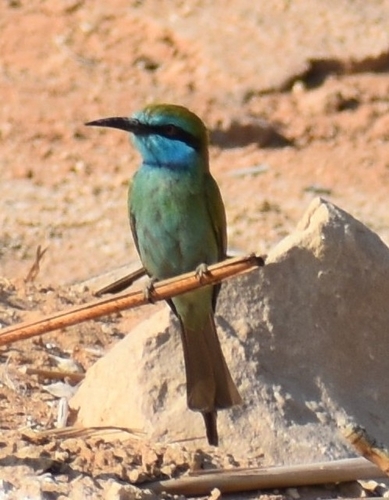
Abejaruco Esmeralda Árabe (Merops cyanophrys) Abejaruco Esmeralda Árabe
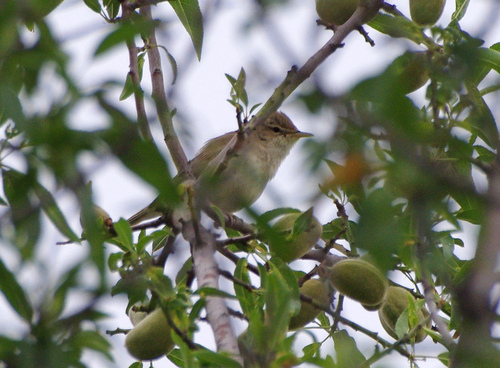
Zarcero Grande (Hippolais olivetorum) Zarcero Grande

Medios

Cargando…

En breve

The most reliable field mark to separate Arabian Green Bee-eater from Olive-tree Warbler is the bee-eater’s vivid blue throat and face, which is never shown by the warbler. Juvenile bee-eaters can be duller, but still show greenish tones and lack the warbler’s pale wing panel and olive-grey upperparts. Structurally, the bee-eater is more slender with a long, slightly decurved black bill and pointed wings, while the warbler is a chunky songbird with a thick, straight bill and a pale lower mandible. In flight or perched, the bee-eater’s bright colors and elongated central tail feathers (adults) are distinctive, while the warbler is always drab and lacks any blue or green. Habitat and behavior also differ: bee-eaters sally for insects in open, arid country, while warblers skulk in trees and bushes.

Consejos de identificación

  1. Blue throat and face (all ages except very young juveniles): Arabian Green Bee-eater always shows a blue throat and blue on the face, especially intense in adults. Olive-tree Warbler never shows any blue or green on the head or throat.
  2. Black throat crescent (adult bee-eater): Look for a bold black crescent at the top of the breast, just below the blue throat, in adult bee-eaters. Juveniles lack this mark, but warblers never show any black on the throat or breast.
  3. Overall color: Bee-eater is green (dull in juveniles, bright in adults) above, with blue-green underparts. Warbler is pale olive-grey above and whitish below, with no green or blue tones.
  4. Pale wing panel (warbler): Olive-tree Warbler shows a pale wing panel on otherwise plain wings, a good mark in all plumages. Bee-eater’s wings are bronzed green above and coppery-orange below, with no pale panel.
  5. Bill shape and color: Bee-eater has a long, slender, slightly decurved all-black bill. Warbler’s bill is thick, straight, and has a contrasting orange-yellow lower mandible.
  6. Tail shape: Adult bee-eaters have elongated central tail feathers projecting beyond the rest of the tail. Juveniles lack these, but still have a more pointed tail than the warbler. Warbler’s tail is long, dark grey, and squared at the tip.
  7. Iris color: Bee-eater has a red iris; warbler’s iris color is not specified but is never red.
  8. Perching behavior: Bee-eaters perch openly on wires, exposed branches, or fence posts, often returning to the same spot. Warblers stay in cover, moving through foliage and rarely perching in the open.
  9. Flight style: Bee-eater’s flight is buoyant, with gliding and sallying for insects. Warbler’s flight is more direct and less acrobatic.
  10. Habitat: In open, arid country with scattered trees, expect bee-eater; in leafy groves or woodland, especially with olive trees, expect warbler.
  11. Juvenile confusion: Juvenile bee-eaters are duller and lack the black crescent and long tail feathers, but still show greenish and blue tones. Juvenile warblers are always drab, with no blue or green.
  12. Underwing color in flight: Bee-eater shows coppery-orange underwings; warbler’s underwings are not described but are not bright or contrasting.
  13. Group size: Bee-eaters often seen in small groups; warblers are solitary or in pairs.
  14. Voice: If you hear a soft, trilling call, suspect bee-eater; a harsh, buzzy warbler song or call points to Olive-tree Warbler.
  15. Season and range: Bee-eater is resident or locally nomadic in the Arabian Peninsula and southern Levant; warbler is a migrant breeder in southeast Europe/Near East and winters in Africa. Context can help if you know the local status.

Tamaño

Both species are similar in length (16–18 cm for the bee-eater, 18 cm for the warbler), but the Olive-tree Warbler is heavier (17.5–23 g) and more robust, with a bulkier body and thicker bill. The Arabian Green Bee-eater is slimmer and more delicate, with a lighter build and longer, more pointed wings. The bee-eater’s elongated central tail feathers (in adults) add to its slender appearance, while the warbler’s tail is long but not pointed.

Plumaje

Juvenile Arabian Green Bee-eaters are paler and duller than adults, lacking the elongated tail feathers and the black throat crescent, but still show a greenish overall color and a blue-tinged throat and face, which are never present in Olive-tree Warbler. Adult bee-eaters are unmistakable with their bright blue throat, blue forehead, and green back, plus a black eyestripe and a bold black crescent below the throat. The upperwing is bronzed coppery-green above and coppery-orange below, visible in flight. Olive-tree Warbler of all ages is drab: pale olive-grey above, whitish below, with a noticeable pale wing panel and long, dark grey tail. The warbler’s bill is thick and has a contrasting orange-yellow lower mandible, unlike the bee-eater’s all-black, slender bill. No blue, green, or black throat crescent is ever present on the warbler. In flight, the bee-eater flashes bright colors; the warbler remains muted and plain.

Comportamiento

Arabian Green Bee-eaters are highly aerial, often seen sallying from exposed perches to catch insects in open country, and frequently return to the same perch. They may perch on wires or isolated trees, often in small groups. Olive-tree Warblers are much more secretive, moving slowly and deliberately through foliage, rarely sallying into the open, and are usually solitary or in pairs. Their flight is more direct and less buoyant than the bee-eater’s.

Hábitat

Arabian Green Bee-eaters prefer dry, open habitats with scattered trees, wadis, gardens, and farmland, often in arid regions of the Arabian Peninsula and southern Levant. They are rarely found in dense woodland. Olive-tree Warblers breed in southeast Europe and the Near East, favoring groves, open woodland, and areas with mature trees, especially olives. They avoid very open country and are more often found in leafy, shaded environments.

Voz

The Arabian Green Bee-eater’s voice is distinctive and differs from both Olive-tree Warbler and other bee-eaters, but no specific details are provided in these notes. Olive-tree Warbler is a typical Acrocephalus warbler with a song and calls unlike any bee-eater, but again, no detailed description is available here. In practice, any clear, repeated, buzzy warbler song or harsh call is likely Olive-tree Warbler, while a bee-eater’s call is more likely to be a soft, rolling trill.

Enviar una descripción mejor

Usa las mismas secciones que la comparación. El texto se publica al momento.

The most reliable field mark to separate Arabian Green Bee-eater from Olive-tree Warbler is the bee-eater’s vivid blue throat and face, which is never shown by the warbler. Juvenile bee-eaters can be duller, but still show greenish tones and lack the warbler’s pale wing panel and olive-grey upperparts. Structurally, the bee-eater is more slender with a long, slightly decurved black bill and pointed wings, while the warbler is a chunky songbird with a thick, straight bill and a pale lower mandible. In flight or perched, the bee-eater’s bright colors and elongated central tail feathers (adults) are distinctive, while the warbler is always drab and lacks any blue or green. Habitat and behavior also differ: bee-eaters sally for insects in open, arid country, while warblers skulk in trees and bushes.

  1. Blue throat and face (all ages except very young juveniles): Arabian Green Bee-eater always shows a blue throat and blue on the face, especially intense in adults. Olive-tree Warbler never shows any blue or green on the head or throat.
  2. Black throat crescent (adult bee-eater): Look for a bold black crescent at the top of the breast, just below the blue throat, in adult bee-eaters. Juveniles lack this mark, but warblers never show any black on the throat or breast.
  3. Overall color: Bee-eater is green (dull in juveniles, bright in adults) above, with blue-green underparts. Warbler is pale olive-grey above and whitish below, with no green or blue tones.
  4. Pale wing panel (warbler): Olive-tree Warbler shows a pale wing panel on otherwise plain wings, a good mark in all plumages. Bee-eater’s wings are bronzed green above and coppery-orange below, with no pale panel.
  5. Bill shape and color: Bee-eater has a long, slender, slightly decurved all-black bill. Warbler’s bill is thick, straight, and has a contrasting orange-yellow lower mandible.
  6. Tail shape: Adult bee-eaters have elongated central tail feathers projecting beyond the rest of the tail. Juveniles lack these, but still have a more pointed tail than the warbler. Warbler’s tail is long, dark grey, and squared at the tip.
  7. Iris color: Bee-eater has a red iris; warbler’s iris color is not specified but is never red.
  8. Perching behavior: Bee-eaters perch openly on wires, exposed branches, or fence posts, often returning to the same spot. Warblers stay in cover, moving through foliage and rarely perching in the open.
  9. Flight style: Bee-eater’s flight is buoyant, with gliding and sallying for insects. Warbler’s flight is more direct and less acrobatic.
  10. Habitat: In open, arid country with scattered trees, expect bee-eater; in leafy groves or woodland, especially with olive trees, expect warbler.
  11. Juvenile confusion: Juvenile bee-eaters are duller and lack the black crescent and long tail feathers, but still show greenish and blue tones. Juvenile warblers are always drab, with no blue or green.
  12. Underwing color in flight: Bee-eater shows coppery-orange underwings; warbler’s underwings are not described but are not bright or contrasting.
  13. Group size: Bee-eaters often seen in small groups; warblers are solitary or in pairs.
  14. Voice: If you hear a soft, trilling call, suspect bee-eater; a harsh, buzzy warbler song or call points to Olive-tree Warbler.
  15. Season and range: Bee-eater is resident or locally nomadic in the Arabian Peninsula and southern Levant; warbler is a migrant breeder in southeast Europe/Near East and winters in Africa. Context can help if you know the local status.

Both species are similar in length (16–18 cm for the bee-eater, 18 cm for the warbler), but the Olive-tree Warbler is heavier (17.5–23 g) and more robust, with a bulkier body and thicker bill. The Arabian Green Bee-eater is slimmer and more delicate, with a lighter build and longer, more pointed wings. The bee-eater’s elongated central tail feathers (in adults) add to its slender appearance, while the warbler’s tail is long but not pointed.

Juvenile Arabian Green Bee-eaters are paler and duller than adults, lacking the elongated tail feathers and the black throat crescent, but still show a greenish overall color and a blue-tinged throat and face, which are never present in Olive-tree Warbler. Adult bee-eaters are unmistakable with their bright blue throat, blue forehead, and green back, plus a black eyestripe and a bold black crescent below the throat. The upperwing is bronzed coppery-green above and coppery-orange below, visible in flight. Olive-tree Warbler of all ages is drab: pale olive-grey above, whitish below, with a noticeable pale wing panel and long, dark grey tail. The warbler’s bill is thick and has a contrasting orange-yellow lower mandible, unlike the bee-eater’s all-black, slender bill. No blue, green, or black throat crescent is ever present on the warbler. In flight, the bee-eater flashes bright colors; the warbler remains muted and plain.

Arabian Green Bee-eaters are highly aerial, often seen sallying from exposed perches to catch insects in open country, and frequently return to the same perch. They may perch on wires or isolated trees, often in small groups. Olive-tree Warblers are much more secretive, moving slowly and deliberately through foliage, rarely sallying into the open, and are usually solitary or in pairs. Their flight is more direct and less buoyant than the bee-eater’s.

Arabian Green Bee-eaters prefer dry, open habitats with scattered trees, wadis, gardens, and farmland, often in arid regions of the Arabian Peninsula and southern Levant. They are rarely found in dense woodland. Olive-tree Warblers breed in southeast Europe and the Near East, favoring groves, open woodland, and areas with mature trees, especially olives. They avoid very open country and are more often found in leafy, shaded environments.

The Arabian Green Bee-eater’s voice is distinctive and differs from both Olive-tree Warbler and other bee-eaters, but no specific details are provided in these notes. Olive-tree Warbler is a typical Acrocephalus warbler with a song and calls unlike any bee-eater, but again, no detailed description is available here. In practice, any clear, repeated, buzzy warbler song or harsh call is likely Olive-tree Warbler, while a bee-eater’s call is more likely to be a soft, rolling trill.

¿Descartar los cambios?

Tienes ediciones sin guardar. Si sales ahora, se perderán.

Abejaruco Esmeralda Árabe · Zarcero Grande · Mis aves difíciles