

Cormorán Pelágico
Urile pelagicus
Cormorants and Shags (Phalacrocoracidae) · Suliformes · Cormoranes y Anhingas
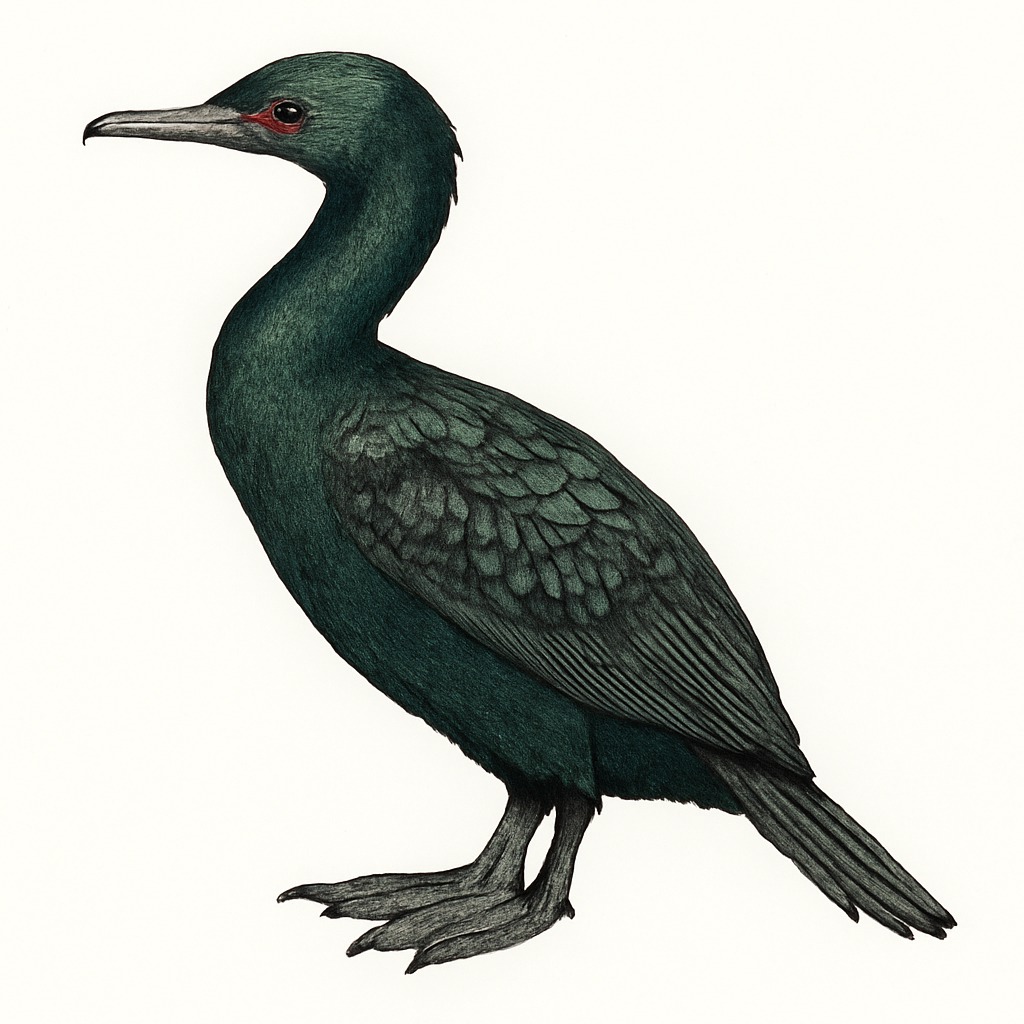
Juega un quiz con Cormorán Pelágico y especies parecidas
Ver todas las fotos, vídeo y sonido
Revisión necesaria
Motmot es un proyecto de comunidad, y muchas fotos aún necesitan un visto humano. Si conoces esta ave, puedes ayudar revisando sus imágenes.
O-o, se nos acabaron los créditos de IA. Desarrollo Motmot en mi tiempo libre, y ahora mismo no hay financiación. Si te apetece ayudar a que crezca, escríbeme a info@motmot.club.
Cómo identificar Cormorán Pelágico
Escribiendo las notas de identificación…
Busca notas de identificación en fuentes abiertas y luego pide al modelo que las redacte. Puede tardar un minuto.
Inicia sesión para generar notas de identificación de esta ave.
A menudo se confunde con
En los quizzes, los jugadores suelen confundir Cormorán Pelágico con estas aves: o se eligió esta especie por error, o al revés.
| Especies | Confusiones |
|---|---|
| Cormorán Orejudo Nannopterum auritum | 7 |
| Cormorán Sargento Urile penicillatus | 5 |
| Cormorán Carirrojo Urile urile | 3 |
| Cormorán Biguá Nannopterum brasilianum | 3 |
| Cormorán Grande Phalacrocorax carbo | 2 |
Familia
Phalacrocoracidae is a family of approximately 40 species of aquatic birds found worldwide and commonly known as cormorants and shags. Several different classifications of the family have been proposed, but in 2021 the International Ornithologists' Union (IOU) adopted a consensus taxonomy of seven genera. The great cormorant (Phalacrocorax carbo) and the common shag (Gulosus aristotelis) are the only two species of the family commonly encountered in Britain and Ireland.
Orden
The order Suliformes (, dubbed "Phalacrocoraciformes" by Christidis & Boles 2008) is an order of birds that includes gannets, boobies, frigatebirds, cormorants and darters. The order is recognised by the International Ornithologist's Union. Regarding the recent evidence that the traditional Pelecaniformes is polyphyletic, it has been suggested that the group be divided to reflect the true evolutionary relationships; a 2017 study indicated that they are most closely related to Otidiformes (bustards) and Ciconiiformes (storks).