

Regenbrachvogel vs Waldwasserläufer
Numenius phaeopus gegen Tringa ochropus
Ein Quiz mit Regenbrachvogel und Waldwasserläufer spielen
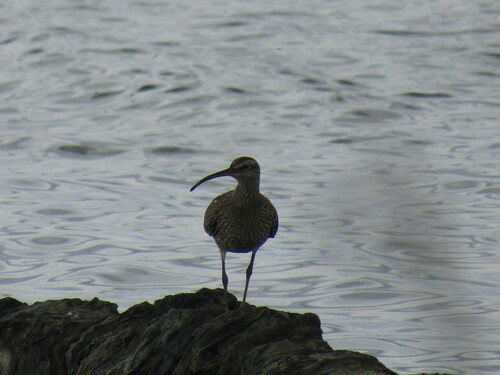 Regenbrachvogel
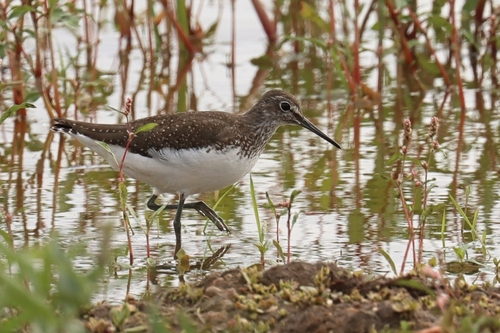 Waldwasserläufer
Kurz gesagt
The most reliable field mark to separate Whimbrel from Green Sandpiper is overall size and bill shape, but in flight, both show a striking white rump—so focus on structure and bill length. Whimbrel is a much larger, long-billed wader with a strongly decurved bill and a white rump only in Eurasian birds, while Green Sandpiper is compact, short-billed, and always shows a brilliant white rump and dark wings in flight. Immature and adult Green Sandpipers both have dark underwings and a crisp white rump, but are never as large or long-necked as Whimbrel. If you see a large, curlew-shaped bird with a long, kinked bill and white rump, it's Whimbrel; a small, plump, short-billed bird with a white rump and dark wings is Green Sandpiper.
Bestimmungstipps
- Size is the first check: Whimbrel is much larger and bulkier than Green Sandpiper. If you see both together, the difference is unmistakable. If alone, compare to nearby waders or use the length of the bill relative to the head.
- Bill shape and length: Whimbrel has a long, strongly decurved bill with a noticeable 'kink'—it is several times the length of the head. Green Sandpiper has a short, straight, dark green bill, only slightly longer than the head. This is diagnostic at any age or season.
- White rump in flight: Both species show a white rump, but context is key. Whimbrel's white rump is only present in Eurasian birds (not Hudsonian Whimbrel); Green Sandpiper always shows a brilliant white rump and uppertail coverts, sharply contrasting with the rest of the upperparts. If the bird is small and compact with a white rump, it's Green Sandpiper; if large and curlew-shaped, it's Whimbrel.
- Upperwing pattern: Green Sandpiper of all ages has dark upperwings with white spotting on the back (most in breeding adults, less in juveniles/winter). Whimbrel is more uniform grey-brown above, lacking the crisp white spots.
- Underwing color: Green Sandpiper shows dark underwings in flight, which contrasts with its white belly and rump. Whimbrel's underwings are not as dark or contrasting.
- Body shape and jizz: Whimbrel appears long-necked, long-legged, and stretched, especially in flight. Green Sandpiper is compact, plump, and often bobs its tail when feeding.
- Leg color: Green Sandpiper has dark green legs, which can be seen at close range. Whimbrel's legs are less distinctly colored and appear greyish.
- Breast and neck pattern: Green Sandpiper has a dark, streaked breast and neck, sharply set off from the white belly. Whimbrel is more uniform below, with less contrast between breast and belly.
- Habitat context: Whimbrel is usually in open, coastal, or estuarine settings; Green Sandpiper prefers small, freshwater pools and ditches, often with some cover.
- Feeding behavior: Whimbrel probes deeply with its long bill; Green Sandpiper picks at the surface or in shallow water, often tail-bobbing.
- Vocalizations: Listen for a long, rippling trill for Whimbrel; a short, three-note whistle for Green Sandpiper, especially in flight flushes.
- Supercilium and crown: Not reliably diagnostic between these two, though Whimbrel may show a more distinct supercilium and crown stripes, but this is more useful when separating from other curlews.
- Seasonal changes: Green Sandpiper shows most white spotting on the back in breeding plumage; less in winter and juveniles, but always retains the white rump. Whimbrel's plumage is more stable year-round.
- Pitfalls: The shared white rump in flight is the main source of confusion—always check size and bill shape before relying on rump pattern. Juvenile Green Sandpipers can look duller, but never approach Whimbrel's size or bill length.
- When in doubt: If the bird is large, long-billed, and in open habitat, it's Whimbrel; if small, short-billed, and in a freshwater setting, it's Green Sandpiper.
Größe
Whimbrel is dramatically larger than Green Sandpiper. Whimbrel measures 37–47 cm in length, with a wingspan of 75–90 cm and a body mass of 270–493 g [wikipedia]; Green Sandpiper is much smaller, with a body mass of about 80 g [wikidata]. In the field, Whimbrel towers over Green Sandpiper, appearing long-legged, long-necked, and heavy-bodied, while Green Sandpiper is compact and plump, with shorter legs and neck.
Gefieder
Both species show a white rump in flight, but the context and pattern differ. Whimbrel (Eurasian) has a white rump and lower back, contrasting with its grey-brown upperparts and wings; this is most visible in flight and is a key mark for separating it from the New World Hudsonian Whimbrel, which lacks the white rump. Green Sandpiper of all ages shows a brilliant white rump and uppertail coverts, sharply set off from dark greenish-brown upperwings and back. Green Sandpiper's wings are dark above and below, with white spotting on the back (most in breeding adults, less in winter and juveniles). Whimbrel is overall greyish brown with a white rump (Eurasian only), but is much larger and more uniform above, lacking the crisp white spots of Green Sandpiper. Both species have white underparts, but Green Sandpiper's are more sharply demarcated from the darker breast and neck. The supercilium and crown pattern are not diagnostic between these two.
Verhalten
Whimbrel typically feeds by probing mud with its long, curved bill, often in open coastal or estuarine habitats, moving with a deliberate, striding gait. Green Sandpiper is more active and often bobs its tail, feeding in shallow freshwater pools or along muddy margins. In flight, Whimbrel is powerful and steady, with slow, deep wingbeats and a stretched-out neck and bill; Green Sandpiper is quick and agile, with rapid wingbeats and a compact, slightly hunched profile.
Lebensraum
Whimbrel is most often found in open coastal areas, estuaries, mudflats, and sometimes inland wetlands during migration, usually in open, expansive settings. Green Sandpiper favors smaller, freshwater habitats such as ponds, ditches, and marshy pools, often with some cover nearby. It is rarely found in the open tidal flats preferred by Whimbrel. If you find a white-rumped wader in a small, muddy freshwater pool, it's likely Green Sandpiper; on a broad mudflat or saltmarsh, Whimbrel is more likely.
Stimme
Whimbrel gives a rippling whistle, often prolonged into a trill, which is distinctive and carries far. Green Sandpiper has a characteristic three-note whistle in flight, which is shorter and sharper than Whimbrel's call. If you hear a long, bubbling trill, think Whimbrel; a short, piping three-note call suggests Green Sandpiper.
Regenbrachvogel · Waldwasserläufer · Meine schwierigen Vögel