

Motmot

Sängervireo vs Gelbflankenvireo

Vireo gilvus gegen Vireo flavoviridis

Ein Quiz mit Sängervireo und Gelbflankenvireo spielen
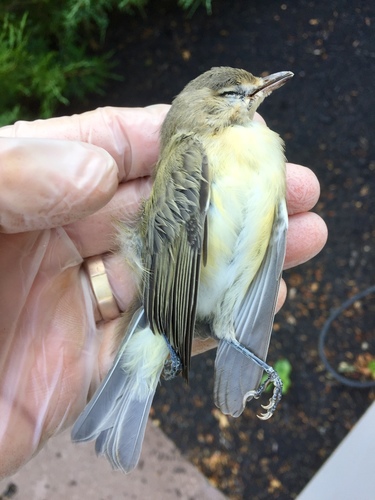
Sängervireo (Vireo gilvus) Sängervireo
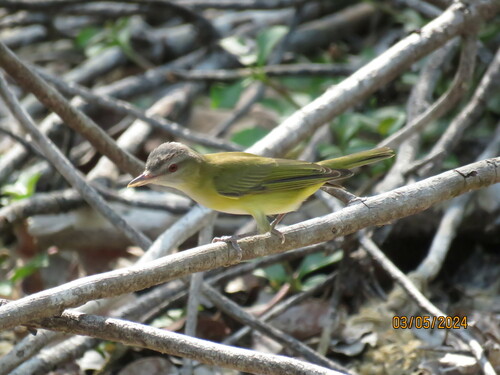
Gelbflankenvireo (Vireo flavoviridis) Gelbflankenvireo

Medien

Laden…

Kurz gesagt

The most reliable field mark between Warbling Vireo and Yellow-green Vireo is the presence of yellow on the underparts: Yellow-green Vireo adults show clear yellow on the sides and flanks, while Warbling Vireo is clean white below. Juvenile Yellow-green Vireos can be duller, but still tend to show some yellow wash compared to the always white-bellied Warbling. Structurally, Yellow-green Vireo is noticeably larger and heavier, with a longer body and bill. Both have a white supercilium and olive-tinged upperparts, but Yellow-green Vireo has a dusky-edged gray crown and a dark line from bill to eye, while Warbling Vireo's face is plainer and lighter. In the field, focus on underpart color and overall size, especially if you have a mixed-age group or see birds in flight.

Bestimmungstipps

  1. Underpart color is the most reliable field mark: Adult Yellow-green Vireo shows yellow on the sides and flanks, while Warbling Vireo is always clean white below. This works for all ages of Warbling and for most Yellow-green except the dullest juveniles.
  2. Juvenile Yellow-green Vireo can be duller: Young birds have brown eyes, a brownish back, and less yellow on the underparts, but still usually show more yellow wash than any Warbling Vireo.
  3. Crown and face pattern: Yellow-green Vireo has a dusky-edged gray crown and a dark line from bill to eye, giving the face a more marked look. Warbling Vireo has a plainer, lighter face with a white supercilium but no strong loral line or crown contrast.
  4. Supercilium: Both species have a white supercilium, but on Warbling Vireo it stands out against a paler face, while on Yellow-green it is set off by the gray crown and dark loral line.
  5. Upperparts: Yellow-green Vireo is more olive-green above, while Warbling Vireo is olive-gray. This is subtle and can be affected by light, but may help in good views.
  6. Eye color: Adult Yellow-green Vireo has red-brown eyes; juveniles have brown eyes. Warbling Vireo has brown eyes. This is subtle and not always visible in the field.
  7. Bill and structure: Yellow-green Vireo is larger and more robust, with a slightly heavier bill. Warbling Vireo is smaller and more delicate overall.
  8. Size: If you have a direct comparison or a good sense of scale, Yellow-green Vireo is about 2 cm longer and noticeably heavier than Warbling Vireo.
  9. Habitat and range: In the US and Canada, Warbling Vireo is expected; Yellow-green Vireo is a rare vagrant. In Central America, Yellow-green is the default. Use range and habitat as a supporting clue, not a primary mark.
  10. No distinctive wing or flight pattern: Neither species has a unique wing pattern or flight mark for quick separation; focus on body and face.
  11. Plumage consistency: Warbling Vireo never shows yellow on the underparts, so any yellowish wash should point to Yellow-green Vireo.
  12. Song is not diagnostic with these notes: Warbling Vireo's song is a cheerful warble, but Yellow-green's voice is not described here. Use caution with song-based IDs.
  13. Seasonal variation: Both species are migratory, but their ranges overlap little. Be cautious with out-of-range records, especially in migration.
  14. Pitfalls: Dull juvenile Yellow-green Vireos can look less yellow, but Warbling Vireo is always white-bellied. Overexposed photos or poor light can obscure yellow tones, so check multiple features.
  15. Sex is not a separator: No sexual dimorphism is described for either species, so male and female are alike.

Größe

Yellow-green Vireo is distinctly larger and heavier: adults measure 14–14.7 cm in length and weigh about 18.5 g, while Warbling Vireo is smaller at 12–13 cm and 10–16 g. The difference is usually obvious with direct comparison or good views, especially in the bulk and length of the body. Both species have similar proportions, but Yellow-green Vireo's bill is slightly stouter and the bird appears more robust overall.

Gefieder

No distinctive age-specific wing or flight pattern is described for either species, so focus on body and face. Adult Yellow-green Vireo has olive-green upperparts, a gray crown with dusky edges, a dark line from bill to eye, and white underparts with obvious yellow on the breast sides and flanks. Warbling Vireo is olive-gray above with a paler, lighter face, white supercilium, and clean white underparts without yellow. Juvenile Yellow-green Vireos are duller, with brown eyes, a brownish back, and less yellow on the underparts, but still tend to show more yellow than any Warbling Vireo. Warbling Vireo never shows yellow below, regardless of age or season. Both species have a white supercilium, but Warbling's is set off by a plainer, paler face, while Yellow-green's is contrasted by the dark loral line and gray crown.

Verhalten

Both species forage in trees, moving along branches or sometimes hovering for insects. Warbling Vireo may be more likely to forage in widely spaced trees along streams, especially in the west. No major behavioral differences are diagnostic in the field.

Lebensraum

Warbling Vireo breeds in open deciduous and mixed woods from Alaska to Mexico, often in riparian areas with cottonwood or aspen. Yellow-green Vireo breeds from Mexico to Panama, favoring more southern and subtropical habitats. If you are in the US or Canada, Warbling Vireo is expected; Yellow-green Vireo is a rare vagrant north of Mexico. In Central America, Yellow-green is the default vireo of this type. Habitat overlap is minimal except in northern Mexico.

Stimme

Warbling Vireo sings a cheerful warble, somewhat similar to Painted Bunting or Purple Finch. No vocal description is provided for Yellow-green Vireo in the notes, so voice is not a reliable separator here.

Eine bessere Beschreibung senden

Nutze dieselben Abschnitte wie der Vergleich. Dein Text ist sofort veröffentlicht.

The most reliable field mark between Warbling Vireo and Yellow-green Vireo is the presence of yellow on the underparts: Yellow-green Vireo adults show clear yellow on the sides and flanks, while Warbling Vireo is clean white below. Juvenile Yellow-green Vireos can be duller, but still tend to show some yellow wash compared to the always white-bellied Warbling. Structurally, Yellow-green Vireo is noticeably larger and heavier, with a longer body and bill. Both have a white supercilium and olive-tinged upperparts, but Yellow-green Vireo has a dusky-edged gray crown and a dark line from bill to eye, while Warbling Vireo's face is plainer and lighter. In the field, focus on underpart color and overall size, especially if you have a mixed-age group or see birds in flight.

  1. Underpart color is the most reliable field mark: Adult Yellow-green Vireo shows yellow on the sides and flanks, while Warbling Vireo is always clean white below. This works for all ages of Warbling and for most Yellow-green except the dullest juveniles.
  2. Juvenile Yellow-green Vireo can be duller: Young birds have brown eyes, a brownish back, and less yellow on the underparts, but still usually show more yellow wash than any Warbling Vireo.
  3. Crown and face pattern: Yellow-green Vireo has a dusky-edged gray crown and a dark line from bill to eye, giving the face a more marked look. Warbling Vireo has a plainer, lighter face with a white supercilium but no strong loral line or crown contrast.
  4. Supercilium: Both species have a white supercilium, but on Warbling Vireo it stands out against a paler face, while on Yellow-green it is set off by the gray crown and dark loral line.
  5. Upperparts: Yellow-green Vireo is more olive-green above, while Warbling Vireo is olive-gray. This is subtle and can be affected by light, but may help in good views.
  6. Eye color: Adult Yellow-green Vireo has red-brown eyes; juveniles have brown eyes. Warbling Vireo has brown eyes. This is subtle and not always visible in the field.
  7. Bill and structure: Yellow-green Vireo is larger and more robust, with a slightly heavier bill. Warbling Vireo is smaller and more delicate overall.
  8. Size: If you have a direct comparison or a good sense of scale, Yellow-green Vireo is about 2 cm longer and noticeably heavier than Warbling Vireo.
  9. Habitat and range: In the US and Canada, Warbling Vireo is expected; Yellow-green Vireo is a rare vagrant. In Central America, Yellow-green is the default. Use range and habitat as a supporting clue, not a primary mark.
  10. No distinctive wing or flight pattern: Neither species has a unique wing pattern or flight mark for quick separation; focus on body and face.
  11. Plumage consistency: Warbling Vireo never shows yellow on the underparts, so any yellowish wash should point to Yellow-green Vireo.
  12. Song is not diagnostic with these notes: Warbling Vireo's song is a cheerful warble, but Yellow-green's voice is not described here. Use caution with song-based IDs.
  13. Seasonal variation: Both species are migratory, but their ranges overlap little. Be cautious with out-of-range records, especially in migration.
  14. Pitfalls: Dull juvenile Yellow-green Vireos can look less yellow, but Warbling Vireo is always white-bellied. Overexposed photos or poor light can obscure yellow tones, so check multiple features.
  15. Sex is not a separator: No sexual dimorphism is described for either species, so male and female are alike.

Yellow-green Vireo is distinctly larger and heavier: adults measure 14–14.7 cm in length and weigh about 18.5 g, while Warbling Vireo is smaller at 12–13 cm and 10–16 g. The difference is usually obvious with direct comparison or good views, especially in the bulk and length of the body. Both species have similar proportions, but Yellow-green Vireo's bill is slightly stouter and the bird appears more robust overall.

No distinctive age-specific wing or flight pattern is described for either species, so focus on body and face. Adult Yellow-green Vireo has olive-green upperparts, a gray crown with dusky edges, a dark line from bill to eye, and white underparts with obvious yellow on the breast sides and flanks. Warbling Vireo is olive-gray above with a paler, lighter face, white supercilium, and clean white underparts without yellow. Juvenile Yellow-green Vireos are duller, with brown eyes, a brownish back, and less yellow on the underparts, but still tend to show more yellow than any Warbling Vireo. Warbling Vireo never shows yellow below, regardless of age or season. Both species have a white supercilium, but Warbling's is set off by a plainer, paler face, while Yellow-green's is contrasted by the dark loral line and gray crown.

Both species forage in trees, moving along branches or sometimes hovering for insects. Warbling Vireo may be more likely to forage in widely spaced trees along streams, especially in the west. No major behavioral differences are diagnostic in the field.

Warbling Vireo breeds in open deciduous and mixed woods from Alaska to Mexico, often in riparian areas with cottonwood or aspen. Yellow-green Vireo breeds from Mexico to Panama, favoring more southern and subtropical habitats. If you are in the US or Canada, Warbling Vireo is expected; Yellow-green Vireo is a rare vagrant north of Mexico. In Central America, Yellow-green is the default vireo of this type. Habitat overlap is minimal except in northern Mexico.

Warbling Vireo sings a cheerful warble, somewhat similar to Painted Bunting or Purple Finch. No vocal description is provided for Yellow-green Vireo in the notes, so voice is not a reliable separator here.

Änderungen verwerfen?

Du hast ungespeicherte Änderungen. Wenn du jetzt gehst, gehen sie verloren.

Sängervireo · Gelbflankenvireo · Meine schwierigen Vögel