
Sula-Großfußhuhn vs Tanimbar-Großfußhuhn
Megapodius bernsteinii gegen Megapodius tenimberensis
Ein Quiz mit Sula-Großfußhuhn und Tanimbar-Großfußhuhn spielen
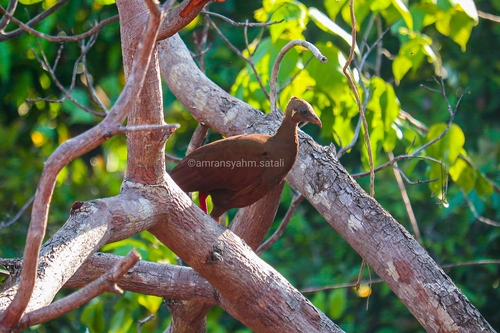 Sula-Großfußhuhn
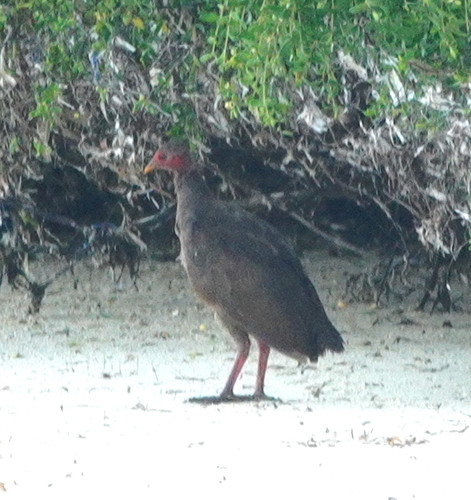 Tanimbar-Großfußhuhn
Kurz gesagt
The most reliable way to separate Sula Megapode from Tanimbar Megapode in the field is by location: Sula Megapode is restricted to the Banggai and Sula Islands, while Tanimbar Megapode is only found on the Tanimbar Islands. If you are within the range overlap, focus on size and leg color: Sula Megapode is slightly larger and has striking red or orange-red legs and feet, while Tanimbar Megapode is smaller and generally described as chicken-sized. Both species are ground-dwelling with similar overall shape and uniform brownish plumage, so structural and subtle color differences are key. There are no described age-specific wing or flight pattern differences, and both sexes look alike.
Bestimmungstipps
- Location is diagnostic: If you are on the Banggai or Sula Islands, you are looking at Sula Megapode; on the Tanimbar Islands, it is Tanimbar Megapode. There is no natural range overlap.
- Size: Sula Megapode is noticeably larger (30–35 cm), appearing bulkier and longer-legged than the chicken-sized Tanimbar Megapode. Use this mark with caution unless you have experience or a direct comparison.
- Leg and foot color: Sula Megapode has long, vivid red or orange-red legs and feet, which can be striking in good light. Tanimbar Megapode's leg color is not described as such and is likely duller. Focus on this feature if you get a clear look at the legs.
- Plumage: Both species are uniformly brownish with little to no pattern, so plumage is not a reliable separator. Do not rely on subtle shade differences.
- Crest: Sula Megapode has a short, pointed crest. The presence or absence of a crest is not described for Tanimbar Megapode, but this may be subtle and not always visible in the field.
- Age/sex: No differences between sexes or ages are described for either species. Juveniles and adults look similar.
- Flight/wing pattern: There are no reported differences in wing pattern or flight marks for any age. Both are more often seen on the ground than in flight.
- Behavior: Both species behave similarly—shy, terrestrial, and often foraging on the ground. Do not use behavior for separation.
- Habitat context: Both use a range of forest and scrub habitats, including mangroves, but only within their respective island groups.
- Vocalization: No distinctive calls or songs are described in the available sources; do not use voice for separation.
- Pitfalls: Do not rely on general brown coloration, body shape, or habitat type for identification—these are shared by both species and most megapodes.
- Seasonal context: There are no seasonal plumage changes or migratory movements described for either species; all field marks apply year-round.
- Quiz tip: If you are shown a megapode in Indonesia and asked to choose between these two, use the island location and leg color as your primary clues.
- When marks fail: If you cannot see the legs or do not know your precise location, separating these two in the field is extremely difficult and may not be possible with confidence.
- Summary: In practice, most field identifications will rely on location first, then size and leg color if visible. All other features are too similar to be reliable.
Größe
Sula Megapode is medium-sized for a megapode, measuring 30–35 cm in length, while Tanimbar Megapode is smaller, described as the size of a domestic chicken. This makes Sula Megapode noticeably bulkier and longer-legged in direct comparison, though both are ground-dwelling birds with similar proportions. If you see a megapode that appears especially robust or long-legged, especially with vivid red or orange-red legs, Sula Megapode is more likely. However, size alone can be hard to judge without direct comparison or experience.
Gefieder
There are no reported differences in juvenile or immature wing pattern, flight feather markings, or age-specific plumage between these two species. Both sexes and all ages of Sula Megapode are described as uniformly reddish-brown with a short, pointed crest and long red or orange-red legs and feet. Tanimbar Megapode is also uniformly brownish, and no distinctive age-related plumage or wing pattern is noted in the available sources. Therefore, plumage is not a reliable separator except for the leg and foot color in Sula Megapode, which is more vividly red or orange-red.
Verhalten
Both species are terrestrial and ground-dwelling, foraging in forest and scrub habitats. They are shy and secretive, often seen walking or running rather than flying. Their general behavior is similar, with no strong behavioral differences noted in the available sources. Both may be seen scratching in leaf litter or near mounds, but this is typical of megapodes in general.
Lebensraum
Habitat is a strong separator due to their non-overlapping ranges. Sula Megapode is found only on the Banggai and Sula Islands, inhabiting a range of forest types: dry forest, moist lowland forest, mangrove forest, and moist shrubland. Tanimbar Megapode is endemic to the Tanimbar Islands and occupies a similar range of forest and scrub habitats there. If you know your location, this is the simplest and most reliable way to separate them.
Sula-Großfußhuhn · Tanimbar-Großfußhuhn · Meine schwierigen Vögel