

Zwergseeschwalbe vs Rosenseeschwalbe
Sternula albifrons gegen Sterna dougallii
Ein Quiz mit Zwergseeschwalbe und Rosenseeschwalbe spielen
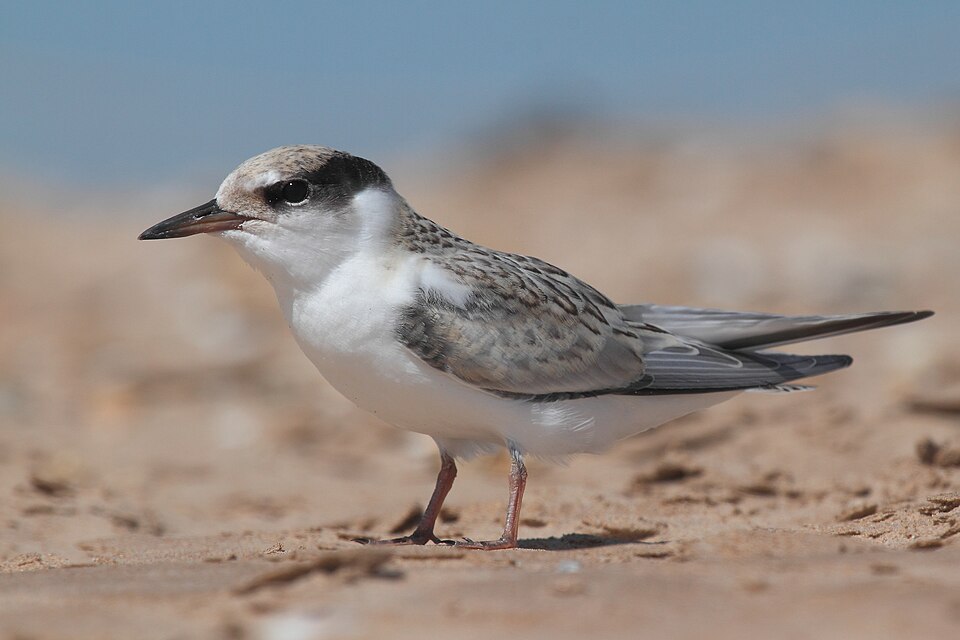 Zwergseeschwalbe
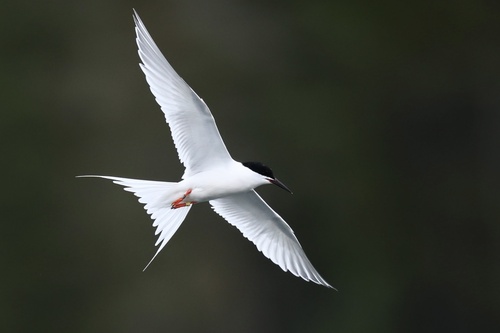 Rosenseeschwalbe
Kurz gesagt
The most reliable field mark to separate Little Tern from Roseate Tern is overall size and structure: Little Tern is much smaller, with a compact build, short wings, and a short tail, while Roseate Tern is notably longer, more graceful, and sports extremely long tail streamers in adults. In breeding plumage, Little Tern shows a white forehead and striking yellow bill with a black tip, whereas Roseate Tern has a mostly black bill with a reddish base and a subtle pinkish tinge to the underparts. In flight, Roseate Tern appears pale and elegant, with long, flexible tail streamers, while Little Tern is more compact and lacks the elongated tail. Juvenile and non-breeding birds of both species show more white on the forehead and duller bills, but the size and structure differences remain clear.
Bestimmungstipps
- Size and Structure: Little Tern is much smaller and more compact than Roseate Tern. If the bird appears tiny, with short wings and tail, it's likely a Little Tern. Roseate Tern is slender, long-winged, and has a long, deeply forked tail with streamers in adults.
- Tail Streamers: Adult Roseate Terns have very long, flexible tail streamers that extend well beyond the wingtips when perched or in flight. Little Tern's tail is short and only slightly forked, never with streamers.
- Bill Color in Breeding Plumage: Little Tern has a yellow bill with a black tip in breeding season; Roseate Tern has a mostly black bill with a reddish base, sometimes becoming fully red in some populations. In non-breeding, both have blacker bills, but Roseate's may retain some reddish at the base.
- Leg Color: Little Tern has yellow legs in breeding plumage, becoming duller in winter. Roseate Tern has orange-red legs, which remain bright even in non-breeding plumage.
- Forehead Pattern: Both species develop a white forehead in non-breeding plumage, but in breeding, Little Tern's white forehead is more extensive and contrasts sharply with the black crown. Roseate Tern's forehead becomes white in winter, but the effect is less striking.
- Underparts: In breeding, Roseate Tern often shows a pinkish tinge to the underparts (hence 'roseate'), especially in good light. Little Tern's underparts are always clean white.
- Upperwing and Flight Appearance: Roseate Tern appears very pale above, with pale grey upperwings and darkening outer primaries in summer. Little Tern's upperwings are not as pale, and its compact shape and short wings are distinctive in flight.
- Juvenile Plumage: Juvenile Roseate Terns have a scaly appearance above and a fuller black cap compared to juvenile Sandwich Tern, but direct comparison to Little Tern juveniles is not detailed in these notes. Use size and structure for immatures.
- Flight Style: Little Tern flies with rapid, shallow wingbeats and often hovers before diving. Roseate Tern has a more buoyant, graceful flight with faster wingbeats and trailing streamers.
- Habitat Context: Little Tern is more likely to be found inland or on open, sandy coasts; Roseate Tern is strongly associated with marine islands and dense breeding colonies, often using nestboxes.
- Colony Behavior: Roseate Tern often breeds in large, mixed colonies and may be less aggressive in nest defense, relying on other terns. Little Tern is less colonial and more likely to nest in small groups.
- Vocalization: If you hear a sharp 'chuwit' call, it's indicative of Roseate Tern; Little Tern's calls are not described here but are not similar to this.
- Seasonal Changes: In winter, both species develop more white on the forehead and darker bills, making separation by plumage harder—rely on size, structure, and tail length.
- Direct Comparison: If both species are present, the size difference is striking: Roseate Tern dwarfs Little Tern and looks much more elongated and elegant.
- Common Pitfall: Non-breeding and juvenile birds can be confusing due to similar white foreheads and dark bills; always check size, tail length, and bill/leg color for confirmation.
Größe
Little Tern is significantly smaller, with a body mass around 57 g and a length of 21–25 cm, compared to the Roseate Tern's much greater length of 33–36 cm and a wingspan of 67–76 cm. The difference in size is obvious in direct comparison or when seen with other terns: Little Tern is the smallest regularly occurring tern in its range, while Roseate Tern is intermediate between Little Tern and Common/Arctic Terns, but with a more slender, elongated look. The Little Tern's wings are short and pointed, and its tail is short and only slightly forked, while Roseate Tern has very long wings and tail streamers, giving it a much more elegant, attenuated appearance.
Gefieder
Juvenile and non-breeding birds of both species develop a white forehead, but age-specific upperwing patterns are not described in detail for either species in these notes. In breeding plumage, Little Tern is distinctive with a white forehead, black crown, yellow bill with a black tip, and yellow legs. Roseate Tern in breeding plumage has a mostly black bill with a reddish base (sometimes becoming fully red in some populations), orange-red legs, and a subtle pinkish wash to the underparts. The Roseate Tern's upperwings are pale grey, and its outermost primaries darken in summer. The long, flexible tail streamers of Roseate Tern are a key adult feature, absent in Little Tern. In winter, both species develop more white on the forehead and their bills become black, but Little Tern's legs also become duller, while Roseate Tern's legs remain orange-red. Juvenile Roseate Terns have a scaly upperpart pattern and a fuller black cap than juvenile Sandwich Tern, but this is not directly compared to Little Tern juveniles in the notes.
Verhalten
Little Tern is typically seen flying low over water with rapid, shallow wingbeats and abrupt changes of direction, often hovering before plunge-diving. Roseate Tern, while also agile, has a more buoyant, graceful flight with faster wingbeats than Common or Arctic Tern, and its long tail streamers trail elegantly behind. Roseate Tern often breeds in dense colonies, sometimes using nestboxes or concealed sites, and is less aggressive in nest defense than other terns, relying on mixed colonies for protection. Little Tern is more likely to be seen singly or in small groups along coasts and rivers, and is less colonial in nesting habits.
Lebensraum
Little Tern breeds on sandy or gravelly coasts and inland waterways, often on open, exposed shingle or sandbanks. Roseate Tern prefers breeding on coasts and islands, often in partially hidden or vegetated sites, and is more likely to be found in dense colonies, sometimes with nestboxes or artificial shelters. While both can be found near the sea, Little Tern is more likely to be encountered along rivers and lakes inland, whereas Roseate Tern is strongly associated with marine islands and coastal colonies.
Stimme
Roseate Tern has a distinctive, sharp 'chuwit' call, which is quite different from the calls of other terns and can be a useful field clue if heard. The notes do not describe Little Tern's vocalizations, but the Roseate's unique call is highlighted as a strong separator.
Zwergseeschwalbe · Rosenseeschwalbe · Meine schwierigen Vögel