

Amurdrossel vs Blaumerle
Turdus hortulorum gegen Monticola solitarius
Ein Quiz mit Amurdrossel und Blaumerle spielen
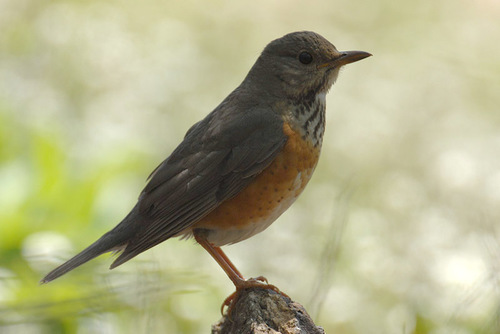 Amurdrossel
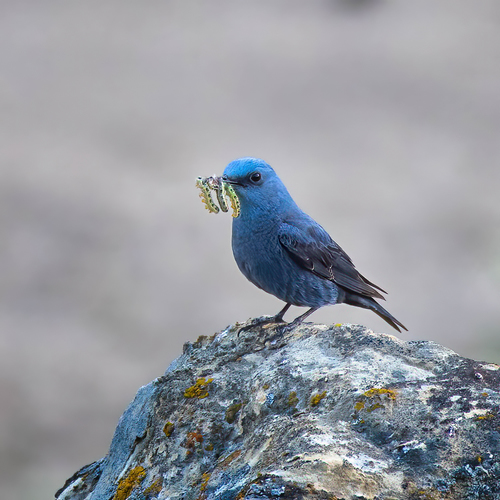 Blaumerle
Kurz gesagt
The most reliable field mark between Grey-backed Thrush and Blue Rock Thrush is overall plumage color and pattern, especially in adult males: Grey-backed Thrush males show a slate-grey back with a whitish belly and rufous flanks, while male Blue Rock Thrushes are all blue-grey (or blue with darker wings), lacking the rufous flanks. Females and immatures of both species are more subdued and can be confusing, but the Blue Rock Thrush female/immature is brown above with scaly pale underparts, while female Grey-backed Thrushes are greyer or browner above with dark spotting on the breast and rufous flanks. Structure and jizz differ as well: Blue Rock Thrush is slimmer, longer-billed, and often perches upright on rocks or buildings, while Grey-backed Thrush is more typical of woodland thrushes. Habitat is a strong clue: Blue Rock Thrush favors rocky, open, or urban settings, while Grey-backed Thrush is a bird of temperate forests.
Bestimmungstipps
- Adult male color: Look for slate-grey back and rufous flanks (Grey-backed Thrush) vs. all blue-grey or blue with darker wings (Blue Rock Thrush). The latter never has rufous flanks in the nominate form.
- Belly and chin: Grey-backed Thrush males have a whitish chin and belly, contrasting with the rest of the underparts; Blue Rock Thrush males are more uniformly colored below (except Asian subspecies with rufous-chestnut underparts, but still not sharply defined flanks).
- Female/immature confusion: Female Grey-backed Thrushes are grey-brown above with dark spotting on the breast and rufous flanks; Blue Rock Thrush females/immatures are brown above with pale scaly underparts and lack rufous flanks.
- Flank color: If you see clear rufous-orange on the flanks, especially in a forest setting, think Grey-backed Thrush. Blue Rock Thrush never shows this (except for the Asian subspecies, which is rufous below but not just on the flanks).
- Underpart pattern: Scaly or barred underparts point to Blue Rock Thrush female/immature; spotted breast with rufous flanks is Grey-backed Thrush female/immature.
- Bill shape: Blue Rock Thrush has a longer, thinner bill; Grey-backed Thrush has a more typical thrush bill, shorter and stouter.
- Posture and jizz: Blue Rock Thrush perches upright, often on rocks or buildings, and appears slimmer and longer-tailed; Grey-backed Thrush is bulkier, more horizontal, and usually in woodland or on the ground.
- Habitat context: In rocky, open, or urban areas, Blue Rock Thrush is far more likely; in dense forest or woodland, expect Grey-backed Thrush.
- Flight views: No strong wing or tail pattern separates them, so rely on overall color and jizz.
- Song and calls: Both are melodious, but Blue Rock Thrush is louder and more ringing. Use with caution unless familiar with both.
- Size impression: Grey-backed Thrush is heavier and bulkier; Blue Rock Thrush is slimmer and more elongated.
- Season and range: Grey-backed Thrush is migratory in northeast Asia; Blue Rock Thrush is resident or migratory in southern Europe, Africa, and Asia. Check local status on eBird if unsure.
- Subspecies pitfall: Asian Blue Rock Thrush males (M. s. philippensis) have rufous underparts, which can confuse the issue, but look for the extent (entire belly vs. just flanks) and context (rocky vs. woodland).
Größe
Both species are similar in length (Grey-backed Thrush: 20–23 cm, Blue Rock Thrush: 21–23 cm), but Grey-backed Thrush is heavier (body mass ~65 g) and bulkier. Blue Rock Thrush is slimmer and more elongated, with a longer, thinner bill and a more upright stance, especially when perched. In the field, Blue Rock Thrush may appear slightly larger due to its posture and tail length, but side-by-side, Grey-backed Thrush is the more robust bird.
Gefieder
-
Adult males: Grey-backed Thrush males have slate-grey upperparts, a whitish chin and belly, and rufous-orange flanks. Blue Rock Thrush males (nominate) are all blue-grey with darker wings, lacking rufous flanks or a whitish belly. The Asian subspecies (M. s. philippensis) of Blue Rock Thrush has rufous-chestnut from mid-breast to undertail, but still lacks the sharply defined rufous flanks and white belly of Grey-backed Thrush.
-
Adult females: Female Grey-backed Thrushes are grey-brown above, with dark spotting on the breast and rufous flanks. Female Blue Rock Thrushes are dark brown above with pale brown scaly underparts and no rufous on the flanks.
-
Immatures/juveniles: Blue Rock Thrush immatures resemble females but are even duller, with scaly underparts and no rufous. Grey-backed Thrush immatures are not described in detail, but likely resemble adult females with some spotting and rufous flanks, which is absent in Blue Rock Thrush.
-
In flight: No distinctive upperwing or tail pattern is described for either species, so flight views rely on overall color and jizz.
Verhalten
Blue Rock Thrush is often seen perched upright on rocks, cliffs, buildings, or other exposed sites, sometimes sallying out to catch insects. Its behavior is reminiscent of a wheatear or starling. Grey-backed Thrush behaves more like a typical woodland thrush, foraging on the ground or in low vegetation, and is less likely to be seen in open or rocky habitats. Flight is direct in both, but Blue Rock Thrush may appear more elongated and less bulky.
Lebensraum
Habitat is a strong separator: Grey-backed Thrush breeds in temperate forests and wooded areas of northeast China, Russian Far East, and North Korea, and winters in southern China and northern Vietnam. Blue Rock Thrush prefers rocky outcrops, cliffs, urban buildings, and open, stony areas across southern Europe, northwest Africa, and much of Asia. If you see a 'thrush' on a rock or building, especially in open country, Blue Rock Thrush is far more likely; in dense woodland, expect Grey-backed Thrush.
Stimme
Both species have melodious, whistled songs, but Blue Rock Thrush is noted for a clear, loud, and melodious call, sometimes compared to a rock thrush but louder. Song structure and frequency overlap between populations, and both have a variety of calls. In practice, vocalizations are not the most reliable separator unless you know both species well, as their basic song traits are similar.