

Motmot

Schnatterente vs Krickente

Mareca strepera gegen Anas crecca

Ein Quiz mit Schnatterente und Krickente spielen
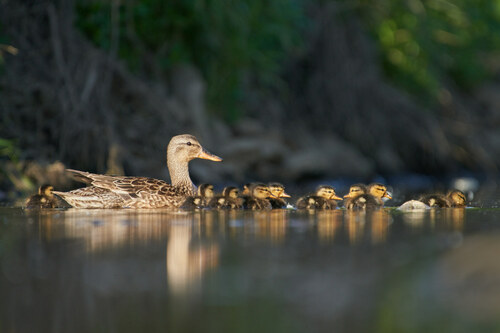
Schnatterente (Mareca strepera) Schnatterente
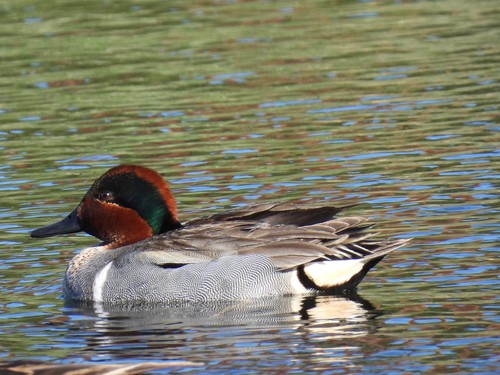
Krickente (Anas crecca) Krickente

Medien

Laden…

Kurz gesagt

The most reliable field mark to separate Gadwall from Eurasian/Green-winged Teal is size: Gadwall is much larger and bulkier, with a longer body and broader wings, while Teal is notably small and compact. In flight, both species show a white wing patch (speculum), but Gadwall’s is brilliant white and larger, while Teal’s is a narrower, iridescent green bordered with white. Male Gadwall in breeding plumage is mostly gray with a black rear and white belly, whereas male Teal shows a chestnut head with a bold green face patch and a white horizontal stripe on the flanks. Females of both can look similar, but Gadwall females are bigger, paler, and have a distinct orange-edged bill. If you’re unsure, focus first on overall size and the pattern of the speculum in flight.

Bestimmungstipps

  1. Size is the first check: Gadwall is much larger and bulkier than Teal. If the bird looks small and compact, especially in a mixed flock, it's likely a Teal.
  2. Wing speculum in flight: Gadwall of all ages show a large, brilliant white speculum; Teal shows a narrower, iridescent green speculum bordered by white. The white in Gadwall is more extensive and obvious, especially from below.
  3. Male breeding plumage (spring): Gadwall males are mostly gray with a black rear and white belly, lacking strong head markings. Teal males have a chestnut head with a bold green face patch and a white horizontal stripe on the flanks.
  4. Female and eclipse plumage: Female Gadwall is pale brown, with a white belly and orange-edged bill; female Teal is darker, more densely patterned, smaller, and has a plain dark bill. Eclipse males of both species resemble females, but Gadwall males remain greyer and keep the white speculum.
  5. Bill color: Gadwall females have a dark bill with orange edges; Teal females and immatures have a plainer, dark bill, sometimes with a pinkish or yellowish base in young birds.
  6. Head pattern (male Teal): Only male Teal in breeding plumage shows the chestnut and green head; Gadwall males never have strong head markings.
  7. Flank markings: Male Teal has a white horizontal stripe on the flanks; Gadwall lacks this and is more uniformly gray.
  8. Underparts: Gadwall shows a white belly in both sexes; Teal has a white midbelly but more streaked or spotted underparts, especially in females and immatures.
  9. Tail and rump: Gadwall has a black rear end; Teal has a black tail with a bright yellowish-buff triangular patch on each side of the tail coverts.
  10. Behavior in flocks: Teal often gather in large, tight flocks and are very agile in flight; Gadwall is less gregarious and forms smaller, looser groups.
  11. Feeding behavior: Gadwall may dive for food and sometimes steals from coots; Teal almost always dabble and rarely dive.
  12. Habitat context: Teal are more likely in small pools, muddy edges, or shallow flooded fields; Gadwall prefers larger lakes and marshes with dense vegetation.
  13. Voice: Teal males give a clear, whistling call; Gadwall males are quieter, with a low grunt or whistle. Teal calls are often more obvious in mixed flocks.
  14. Juvenile/immature pattern: Young Teal are strongly patterned but always tiny compared to Gadwall; juvenile Gadwall are larger and paler.
  15. When in doubt: If you see a small duck with a green speculum and a whistling call, it's almost certainly a Teal. If the duck is medium-sized with a large white wing patch and a quiet demeanor, it's a Gadwall.

Größe

Gadwall is significantly larger: 47–58 cm in length with a 78–85 cm wingspan and weighs around 990 g (male) or 850 g (female) [wikipedia]. In contrast, Eurasian/Green-winged Teal is one of the smallest dabbling ducks at 34–43 cm length, 53–59 cm wingspan, and weighs only 360 g (male) or 340 g (female) [wikipedia]. In the field, Gadwall appears as a medium-sized duck, while Teal is distinctly small and dainty, often described as 'half the size' of Gadwall. This size difference is obvious even at a distance and is a primary separation point.

Gefieder

Juvenile and female Gadwall and Teal can be confusing at a distance, especially at rest. However, in flight, Gadwall of all ages and sexes show a large, brilliant white speculum (the wing patch), which is visible both at rest and in flight. Teal, regardless of age, show a narrower, iridescent green speculum bordered by white, but the white is less extensive and the green is more prominent. Male Gadwall in breeding plumage is mostly gray with a black rear and white belly, lacking any strong head pattern, while male Teal in breeding plumage has a chestnut head with a bold green face patch and a white horizontal stripe on the flanks. Female Gadwall is pale brown with a white belly and orange-edged bill, while female Teal is darker, more densely patterned, and smaller, with a plain dark bill. In eclipse (non-breeding) plumage, both species' males resemble their females, but Gadwall males remain greyer above and keep the white speculum, while Teal males lose the strong head pattern and become more uniform brown. Immature Teal are more strongly patterned than adult females, but always much smaller than Gadwall.

Verhalten

Gadwall is less gregarious than Teal outside the breeding season, tending to form only small flocks, while Teal often gather in large, tight flocks, especially in migration and winter. Gadwall feeds mainly by dabbling but is also known to dive more proficiently than most dabbling ducks and may steal food from coots. Teal is a classic dabbling duck, rarely diving, and is more active and agile on the water. In flight, Gadwall appears steady and direct, with broad wings and a slower wingbeat; Teal is fast, agile, and often twists and turns in tight flocks.

Lebensraum

Both species use open wetlands, but Gadwall favors larger lakes, marshes, and wet grasslands with dense vegetation, often nesting some distance from water. Teal also use marshes and lakes but are more likely to be seen in smaller pools, shallow flooded fields, or muddy edges. Teal can be found in a wider variety of wetland habitats, including small ponds and flooded ditches, especially in migration and winter.

Stimme

Gadwall is generally quieter, with males giving a low 'mep' grunt and a whistle during courtship, and females giving a higher-pitched quack similar to Mallard but softer and more clipped. Teal is noticeably more vocal: males give a clear, whistling 'cryc' or 'creelycc', while females give a sharp 'keh' or 'neeh' quack. In mixed flocks, Teal's whistling calls are often the most obvious sound.

Eine bessere Beschreibung senden

Nutze dieselben Abschnitte wie der Vergleich. Dein Text ist sofort veröffentlicht.

The most reliable field mark to separate Gadwall from Eurasian/Green-winged Teal is size: Gadwall is much larger and bulkier, with a longer body and broader wings, while Teal is notably small and compact. In flight, both species show a white wing patch (speculum), but Gadwall’s is brilliant white and larger, while Teal’s is a narrower, iridescent green bordered with white. Male Gadwall in breeding plumage is mostly gray with a black rear and white belly, whereas male Teal shows a chestnut head with a bold green face patch and a white horizontal stripe on the flanks. Females of both can look similar, but Gadwall females are bigger, paler, and have a distinct orange-edged bill. If you’re unsure, focus first on overall size and the pattern of the speculum in flight.

  1. Size is the first check: Gadwall is much larger and bulkier than Teal. If the bird looks small and compact, especially in a mixed flock, it's likely a Teal.
  2. Wing speculum in flight: Gadwall of all ages show a large, brilliant white speculum; Teal shows a narrower, iridescent green speculum bordered by white. The white in Gadwall is more extensive and obvious, especially from below.
  3. Male breeding plumage (spring): Gadwall males are mostly gray with a black rear and white belly, lacking strong head markings. Teal males have a chestnut head with a bold green face patch and a white horizontal stripe on the flanks.
  4. Female and eclipse plumage: Female Gadwall is pale brown, with a white belly and orange-edged bill; female Teal is darker, more densely patterned, smaller, and has a plain dark bill. Eclipse males of both species resemble females, but Gadwall males remain greyer and keep the white speculum.
  5. Bill color: Gadwall females have a dark bill with orange edges; Teal females and immatures have a plainer, dark bill, sometimes with a pinkish or yellowish base in young birds.
  6. Head pattern (male Teal): Only male Teal in breeding plumage shows the chestnut and green head; Gadwall males never have strong head markings.
  7. Flank markings: Male Teal has a white horizontal stripe on the flanks; Gadwall lacks this and is more uniformly gray.
  8. Underparts: Gadwall shows a white belly in both sexes; Teal has a white midbelly but more streaked or spotted underparts, especially in females and immatures.
  9. Tail and rump: Gadwall has a black rear end; Teal has a black tail with a bright yellowish-buff triangular patch on each side of the tail coverts.
  10. Behavior in flocks: Teal often gather in large, tight flocks and are very agile in flight; Gadwall is less gregarious and forms smaller, looser groups.
  11. Feeding behavior: Gadwall may dive for food and sometimes steals from coots; Teal almost always dabble and rarely dive.
  12. Habitat context: Teal are more likely in small pools, muddy edges, or shallow flooded fields; Gadwall prefers larger lakes and marshes with dense vegetation.
  13. Voice: Teal males give a clear, whistling call; Gadwall males are quieter, with a low grunt or whistle. Teal calls are often more obvious in mixed flocks.
  14. Juvenile/immature pattern: Young Teal are strongly patterned but always tiny compared to Gadwall; juvenile Gadwall are larger and paler.
  15. When in doubt: If you see a small duck with a green speculum and a whistling call, it's almost certainly a Teal. If the duck is medium-sized with a large white wing patch and a quiet demeanor, it's a Gadwall.

Gadwall is significantly larger: 47–58 cm in length with a 78–85 cm wingspan and weighs around 990 g (male) or 850 g (female) [wikipedia]. In contrast, Eurasian/Green-winged Teal is one of the smallest dabbling ducks at 34–43 cm length, 53–59 cm wingspan, and weighs only 360 g (male) or 340 g (female) [wikipedia]. In the field, Gadwall appears as a medium-sized duck, while Teal is distinctly small and dainty, often described as 'half the size' of Gadwall. This size difference is obvious even at a distance and is a primary separation point.

Juvenile and female Gadwall and Teal can be confusing at a distance, especially at rest. However, in flight, Gadwall of all ages and sexes show a large, brilliant white speculum (the wing patch), which is visible both at rest and in flight. Teal, regardless of age, show a narrower, iridescent green speculum bordered by white, but the white is less extensive and the green is more prominent. Male Gadwall in breeding plumage is mostly gray with a black rear and white belly, lacking any strong head pattern, while male Teal in breeding plumage has a chestnut head with a bold green face patch and a white horizontal stripe on the flanks. Female Gadwall is pale brown with a white belly and orange-edged bill, while female Teal is darker, more densely patterned, and smaller, with a plain dark bill. In eclipse (non-breeding) plumage, both species' males resemble their females, but Gadwall males remain greyer above and keep the white speculum, while Teal males lose the strong head pattern and become more uniform brown. Immature Teal are more strongly patterned than adult females, but always much smaller than Gadwall.

Gadwall is less gregarious than Teal outside the breeding season, tending to form only small flocks, while Teal often gather in large, tight flocks, especially in migration and winter. Gadwall feeds mainly by dabbling but is also known to dive more proficiently than most dabbling ducks and may steal food from coots. Teal is a classic dabbling duck, rarely diving, and is more active and agile on the water. In flight, Gadwall appears steady and direct, with broad wings and a slower wingbeat; Teal is fast, agile, and often twists and turns in tight flocks.

Both species use open wetlands, but Gadwall favors larger lakes, marshes, and wet grasslands with dense vegetation, often nesting some distance from water. Teal also use marshes and lakes but are more likely to be seen in smaller pools, shallow flooded fields, or muddy edges. Teal can be found in a wider variety of wetland habitats, including small ponds and flooded ditches, especially in migration and winter.

Gadwall is generally quieter, with males giving a low 'mep' grunt and a whistle during courtship, and females giving a higher-pitched quack similar to Mallard but softer and more clipped. Teal is noticeably more vocal: males give a clear, whistling 'cryc' or 'creelycc', while females give a sharp 'keh' or 'neeh' quack. In mixed flocks, Teal's whistling calls are often the most obvious sound.

Änderungen verwerfen?

Du hast ungespeicherte Änderungen. Wenn du jetzt gehst, gehen sie verloren.

Schnatterente · Krickente · Meine schwierigen Vögel