

Flattersturmtaucher vs Subantarktis-Lummensturmvogel
Puffinus gavia gegen Pelecanoides urinatrix
Ein Quiz mit Flattersturmtaucher und Subantarktis-Lummensturmvogel spielen
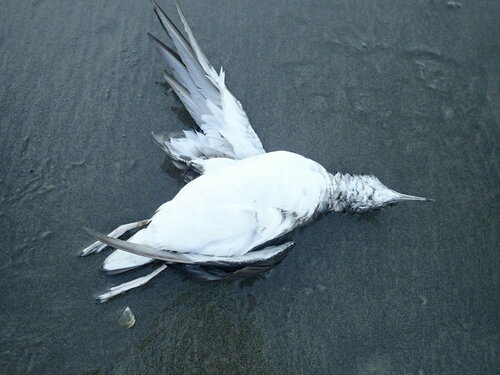 Flattersturmtaucher
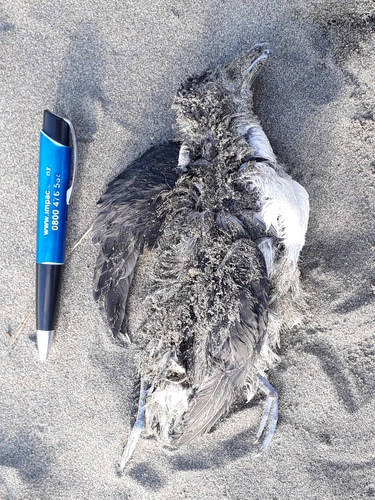 Subantarktis-Lummensturmvogel
Kurz gesagt
The most reliable field mark to separate Fluttering Shearwater from Common Diving-Petrel is overall structure and flight style: Fluttering Shearwater is a longer, slimmer, and more streamlined bird with a pointed bill and long wings, while Common Diving-Petrel is compact, stubby, and short-billed, with rapid, whirring wingbeats. In flight, Fluttering Shearwater shows a white underwing with a dark thigh patch and feet projecting beyond the tail, whereas Common Diving-Petrel’s underwing is mostly dull white but the bird appears much more compact and rounded. Both species have dark above/white below plumage, but the petrel is much smaller and chunkier. Age-related plumage differences are subtle, but structure and flight jizz are consistently diagnostic.
Bestimmungstipps
- Size and shape: Fluttering Shearwater is much larger, longer-winged, and slimmer; Common Diving-Petrel is compact, stubby, and football-shaped. This is usually obvious even at a distance.
- Bill: Shearwater has a long, thin, dark bill; petrel has a very short, thick, black bill. Bill shape is a strong mark at close range.
- Feet projection: In flight, Fluttering Shearwater’s pinkish-brown feet extend well beyond the tail; petrel’s blue feet do not project noticeably.
- Tail: Shearwater’s tail is short but appears fan-shaped and can show mixed dark and white; petrel’s tail is very short and almost invisible in flight.
- Flight style: Shearwater alternates rapid wingbeats with glides, flying low and fast but with a more graceful, determined look; petrel has rapid, whirring, shallow wingbeats with almost no gliding, hugging the water and often diving quickly.
- Underwing: Shearwater shows mostly white underwing with a dark thigh patch (all ages); petrel’s underwing is dull white, lacks strong contrast, and has no thigh patch.
- Upperwing: Both are dark above, but the petrel may show thin white strips on the wings (hard to see in the field); not a reliable mark for separation.
- Face and neck: Shearwater’s face and neck are grey-brown fading to white below the eye; petrel’s face and neck can be more brown than black, but this is subtle.
- Leg color: Shearwater has pinkish-brown legs with dark webs; petrel has blue legs with blackish webbing. Only visible at very close range or in-hand.
- Moult: Shearwater in late summer/autumn may appear paler and ragged, but still larger and structurally different from petrel.
- Habitat: Both can occur near New Zealand coasts, but petrel is more likely around offshore islands and breeding colonies; shearwater is more often seen nearshore or migrating.
- Behavior when flushed: Petrel almost always dives immediately when disturbed; shearwater tends to fly off.
- Voice: Shearwater’s odd 'ka-hek-ka-hek-ka-hek' call may be heard in flight; petrel’s voice is not distinctive or commonly heard.
- Juvenile plumage: Both are similar to adults, but shearwater juveniles may have paler wing covert edges; not a strong field mark.
- Flock structure: Shearwaters often in loose, visible flocks; petrels may be in dense breeding colonies but less likely to be seen in large flocks at sea.
Größe
Fluttering Shearwater is significantly larger and heavier than Common Diving-Petrel. While precise mass for Fluttering Shearwater is not given here, females average 302 g and males 243 g [wikipedia], compared to the Common Diving-Petrel’s average of 105 g [wikidata]. The shearwater is also longer and has a noticeably longer wingspan and tail. The petrel is short and plump, only 200–250 mm in length, and looks almost half the bulk of the shearwater in the field.
Gefieder
- Juvenile/Immature: Both species are dark above and white below from fledging, but Fluttering Shearwater juveniles may show paler wing covert edges, though this is subtle and rarely diagnostic at distance. The petrel’s young are similar to adults, with no strong age-specific upperwing pattern.
- Adult: Fluttering Shearwater has uniformly dark brown upperparts (including wings and tail), with a grey-brown face and neck fading to white below the eye, and a distinctive white underbody with a dark thigh patch visible in flight. The underwing is mostly white, but the axillaries are grey-brown. The tail is short, fan-shaped, and shows mixed dark and white. In contrast, Common Diving-Petrel is black above and dull white below, with a short black bill, blue legs, and blackish webbing. The wings have thin white strips, but these are subtle and not easily seen in flight. The face and neck can be more brown than black. The underwing is plain dull white, lacking the shearwater’s contrast and thigh patch. Moulting Fluttering Shearwaters (late summer/autumn) appear paler and ragged, sometimes rusty-brown above, but still retain their structural differences.
Verhalten
Fluttering Shearwater flies with low, fast, determined flight, alternating rapid wingbeats and glides, and often shows its feet projecting beyond the tail. It is often seen in loose flocks, sometimes close to shore, and may be seen diving or swimming with its head submerged. Common Diving-Petrel is extremely rapid and direct in flight, with very fast, shallow wingbeats and almost no gliding; it appears like a flying football, hugging the water’s surface, and will often dive at the slightest disturbance. The petrel’s flight is much more whirring and less graceful than the shearwater’s. Both species dive using their wings, but the petrel is more likely to be seen disappearing underwater almost immediately when flushed.
Lebensraum
Fluttering Shearwater is endemic to New Zealand but migrates to Australia and the Solomon Islands, often seen in open seas and near rocky shores, sometimes close inshore. Common Diving-Petrel is found around islands in the South Atlantic, subantarctic Indian Ocean, and off New Zealand and southeastern Australia, but is more strictly pelagic and associated with offshore islands, often breeding in burrows on vegetated slopes. Both may overlap around New Zealand, but the petrel is more likely further offshore or near breeding colonies.
Stimme
Fluttering Shearwater has a distinctive, disjointed call described as 'ka-hek-ka-hek-ka-hek', usually given in flight. Common Diving-Petrel’s voice is not described in the provided notes, and is not a useful field mark for separation in this context.
Flattersturmtaucher · Subantarktis-Lummensturmvogel · Meine schwierigen Vögel