

Gartenrotschwanz vs Fichtenkreuzschnabel
Phoenicurus phoenicurus gegen Loxia curvirostra
Ein Quiz mit Gartenrotschwanz und Fichtenkreuzschnabel spielen
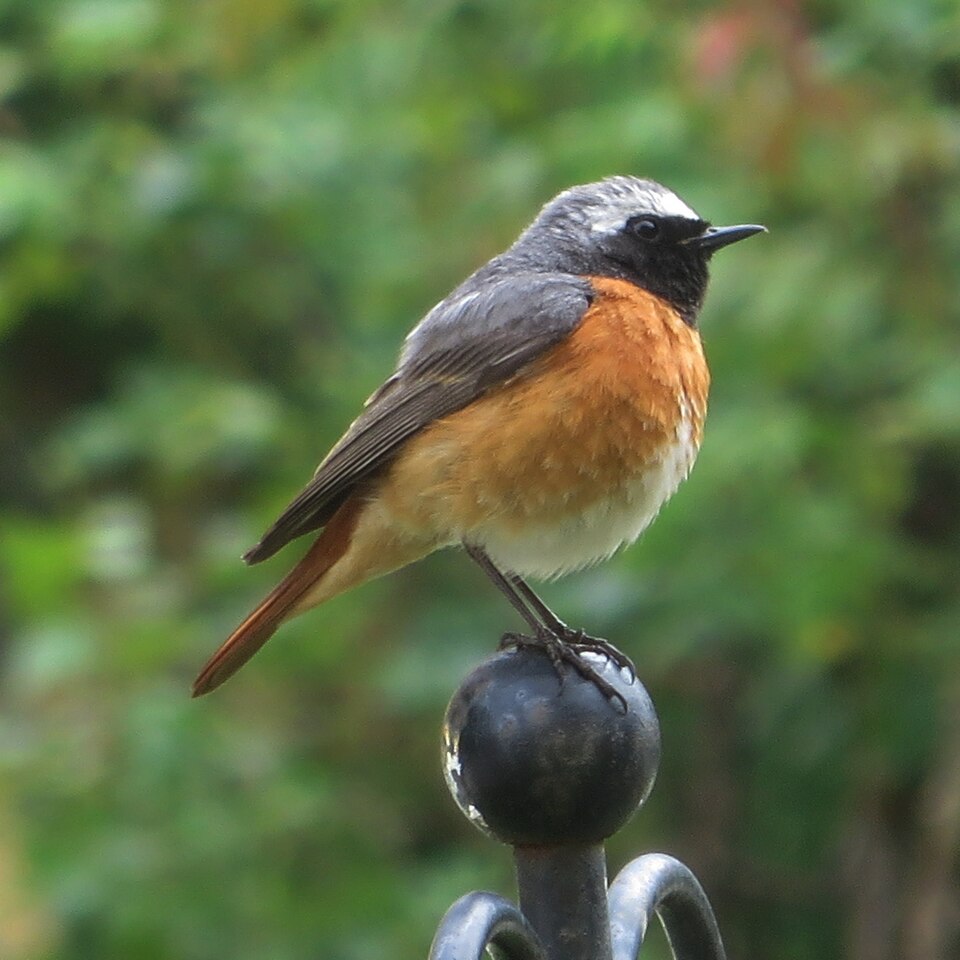 Gartenrotschwanz
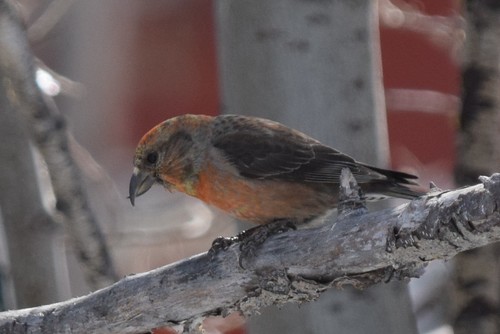 Fichtenkreuzschnabel
Kurz gesagt
The most reliable way to separate Common Redstart from Common Crossbill is by bill shape: redstarts have a slim, straight insect-eater's bill, while crossbills have thick, heavy, and distinctly crossed mandibles for extracting seeds from cones. In flight or perched, redstarts (especially adult males and some females/immatures) may show a pale or whitish wing patch, while crossbills' wings are always plain dark brownish-black with no wingbars or patches. Redstarts have a vivid orange-red tail frequently quivered, contrasting with the crossbill's notched, dark tail. Crossbills are chunkier, often flocking in conifers, and both sexes have variable red/orange/yellow/green tones, but never the sharp black, white, and orange pattern of a male redstart. Calls and feeding behavior also differ markedly.
Bestimmungstipps
- Bill shape is the most decisive mark: Redstart has a slim, straight, pointed bill for catching insects; crossbill has a thick, heavy, and distinctly crossed bill for prying open cones. This is visible even at a distance with binoculars.
- Wing pattern in flight or perched: Adult male redstarts (especially P. p. samamisicus) show a pale or whitish wing patch; some immature males and some females also show a faint version. Crossbills never show any pale wing patch or wingbars; their wings are always uniformly dark brownish-black.
- Tail color and movement: Redstart's tail is bright orange-red and often quivered or flicked, a behavior rarely seen in crossbill. Crossbill's tail is darker, not as vivid, and not habitually moved in this way.
- Overall coloration: Male redstarts have a sharp combination of slate-grey, black, white, and orange; females are more subdued but still show the orange tail. Crossbills are more uniform in color, with males red/orange and females green/yellow, but never with the crisp patterning of redstart.
- Head and face pattern: Male redstarts have a white forehead and black face/throat; crossbills lack any such facial pattern, showing a plain head matching the body color.
- Body shape and jizz: Redstarts are slim, upright, and delicate; crossbills are chunky, big-headed, and heavy-billed, often looking neckless and robust.
- Feeding behavior: Redstarts sally out from perches to catch insects; crossbills are usually seen prying open cones in conifer trees, often hanging upside down or in flocks.
- Habitat context: Redstarts are found in open woodland, parks, and gardens; crossbills are almost always in or near coniferous forests, especially where cones are abundant.
- Flocking: Redstarts are typically solitary or in pairs; crossbills are almost always in noisy flocks, especially outside the breeding season.
- Vocalizations: Redstart gives a soft, rising 'huid' or 'heed' and a melodic song; crossbill gives sharp, metallic 'jip-jip' calls, often in flight, and lacks a true song.
- Seasonal appearance: Redstarts are present in Europe mainly from April to October; crossbills can be present year-round but are highly irruptive and may be absent for years.
- Juvenile confusion: Juvenile redstarts are duller but still show the orange tail; juvenile crossbills are streaky and lack any orange in the tail.
- Sex differences: Female redstarts are plainer but still have the orange tail; female crossbills are greenish or yellowish, with no orange tail.
- Flight style: Redstarts have a light, flitting flight with frequent tail flicks; crossbills have a more direct, undulating flight typical of finches.
- When in doubt: Focus on bill shape and tail color/movement first, then look for wing patches (redstart) or uniform dark wings (crossbill), and consider habitat and flocking behavior.
Größe
Common Redstart is a slim, small passerine, about 13–14.5 cm long and weighing 11–23 g [wikipedia]. Common Crossbill is bulkier and heavier, with a noticeably thicker body and head, and a much more robust bill. While exact crossbill measurements are not given here, their overall impression is of a larger, more powerful bird, especially in the head and bill. Redstarts appear more delicate and lightly built, especially when seen side-by-side.
Gefieder
- Juvenile/immature birds in flight: Common Redstart (especially adult males, some immature males, and some females) can show a pale to whitish wing patch formed by the white outer webs of the remiges, most prominent in the nominate and samamisicus subspecies. This patch is never present in Common Crossbill, whose wings are always plain brownish-black and lack any wingbars or pale panels at all.
- Adult male redstart: Slate-grey head and upperparts, white forehead, black face and throat, bright orange-red tail and rump, orange flanks, and pale belly. The wing patch is most obvious in samamisicus males.
- Female redstart: Grey-brown above, buff-white or light orange below, with some showing a faint pale wing patch and, in older birds, a darker throat bib. Tail is always orange-red and often quivered.
- Common Crossbill (all ages/sexes): No wing patches or bars; wings are uniformly dark. Males are red or orange (variable), females green or yellow, juveniles greyish-green and streaked. Plumage is overall more uniform and lacks the sharp color contrasts of redstart. Tail is not as brightly colored and not habitually quivered.
Verhalten
Common Redstart behaves much like a European Robin, perching upright, often flicking and quivering its orange-red tail, and sallying out after flying insects. It is typically solitary or in pairs during breeding, foraging in open woodland, gardens, or parkland. Common Crossbill is highly gregarious, usually seen in noisy flocks, often high in conifer trees. Its feeding is specialized: it uses its crossed bill to pry open conifer cones for seeds, often hanging acrobatically. Crossbills are nomadic and irruptive, appearing in large numbers when cone crops are abundant, and may be absent for years in some areas.
Lebensraum
Common Redstart prefers open woodlands, forest edges, parks, and gardens, often with scattered trees and some open ground. It is rarely found deep in dense coniferous forests. Common Crossbill is strongly associated with coniferous forests, especially those with abundant cone crops. It is rarely seen away from conifers and is most often detected by its presence in the canopy or by flocks flying overhead. In irruption years, crossbills may appear in atypical habitats, but are still closely tied to conifer availability.
Stimme
Common Redstart gives a rising, slightly disyllabic 'huid' call in most of its range, or a monosyllabic 'heed' in the southeast, sometimes combined with ticking alarm calls. The male's song is a soft, melancholy series of strophes, usually 1–2 seconds long, with a distinctive three-part structure. Common Crossbill has a sharp, metallic 'jip-jip' or 'chip-chip' call, often given in flight by flocks, and lacks the redstart's soft, melodic song. Crossbill calls are diagnostic for experienced birders, especially in flight, and are more abrupt and less musical than redstart vocalizations.
Gartenrotschwanz · Fichtenkreuzschnabel · Meine schwierigen Vögel