

Motmot

Blaukehlchen vs Rohrammer

Luscinia svecica gegen Emberiza schoeniclus

Ein Quiz mit Blaukehlchen und Rohrammer spielen
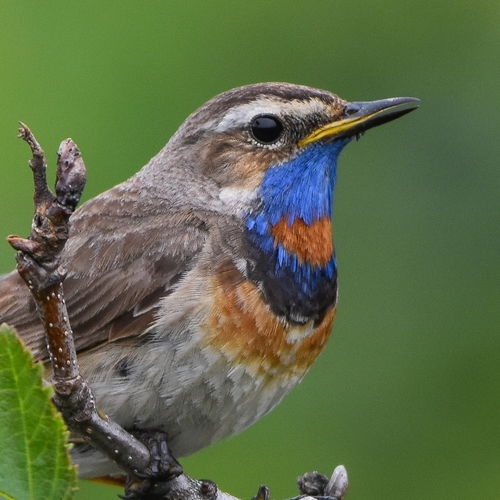
Blaukehlchen (Luscinia svecica) Blaukehlchen
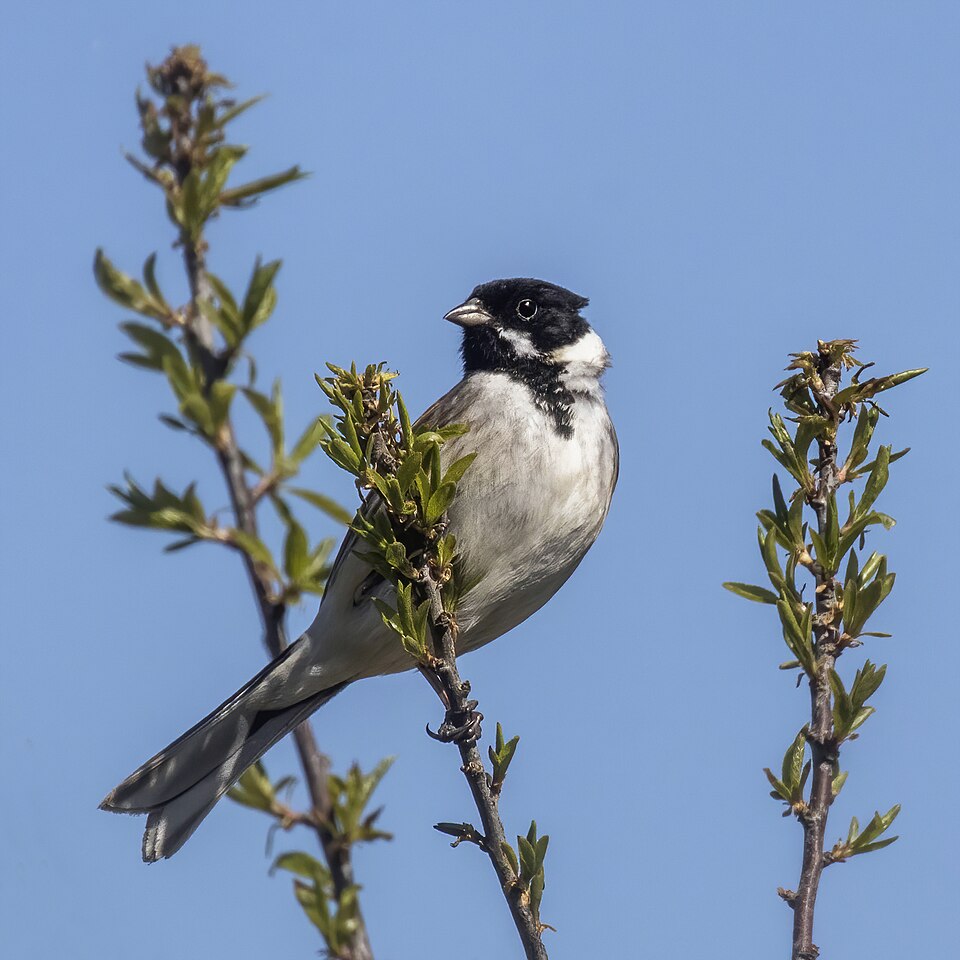
Rohrammer (Emberiza schoeniclus) Rohrammer

Medien

Laden…

Kurz gesagt

The most reliable field mark to separate Bluethroat from Common Reed Bunting is the presence of bright blue on the throat and upper breast of adult male Bluethroats (especially in spring and summer), versus the black head and throat with white collar of male Reed Buntings. Females and immatures of both species are much duller, but Bluethroats (of all ages and sexes) never show the Reed Bunting’s strong face pattern or heavy streaking below. Reed Buntings are bulkier, with a stouter seed-eater’s bill and a more streaked, sparrow-like appearance. In flight or at a distance, look for the Bluethroat’s slimmer build and more flycatcher-like jizz, compared to the Reed Bunting’s heavier, bunting-like structure.

Bestimmungstipps

  1. Adult male Bluethroat (spring/summer): Look for a bright blue throat and upper breast, often with a central red or white spot (depending on subspecies), bordered below by a rufous or chestnut band. Reed Bunting never shows blue on the throat.
  2. Adult male Reed Bunting: Shows a black head and throat, white neck collar, white underparts, and a heavily streaked brown back. Bluethroat never has a black head or throat, nor a white collar.
  3. Females and immatures (all ages): Bluethroat females and young are plain brown above, pale below, with a faint dark crescent on the throat and little to no blue. Reed Bunting females and juveniles are heavily streaked below and on the head, with a distinct (if muted) facial pattern.
  4. Bill shape: Bluethroat has a fine, slender bill for insect-eating; Reed Bunting’s bill is thicker, conical, and seed-eater-like. This is especially noticeable in profile or at close range.
  5. Body structure: Bluethroat is slimmer and more delicate, with a more upright, flycatcher-like stance and frequent tail flicking. Reed Bunting is bulkier, more sparrow-like, and perches more upright on reeds.
  6. Upperwing and flight: No distinctive upperwing pattern in either species at any age, but Bluethroat’s flight is more agile and buoyant, Reed Bunting’s is heavier and more direct.
  7. Face pattern: Reed Bunting (all ages) shows a stronger face pattern—males with black and white, females/immatures with streaked brown and pale stripes. Bluethroat is plainer-faced, especially in females and young.
  8. Underpart streaking: Reed Bunting (all ages) is heavily streaked below; Bluethroat is plain or only faintly marked, except for the throat crescent in females/immatures.
  9. Tail pattern: Not diagnostic from the notes, but Bluethroat often flicks its tail, sometimes showing rufous sides to the base (not mentioned for Reed Bunting).
  10. Habitat context: In open reedbeds, especially in winter, Reed Bunting is much more likely. Bluethroat prefers dense, damp cover and is less likely in open fields.
  11. Song: Reed Bunting’s song is a simple, repetitive 'srip'; Bluethroat’s is varied and musical, but this is most useful in spring.
  12. Seasonal changes: Male Bluethroat’s blue throat may be obscured by pale tips in autumn/winter, but the underlying blue is still present. Reed Bunting’s head pattern is always present in adult males.
  13. Behavior: Bluethroat is more likely to hop on the ground or make short flycatching sallies; Reed Bunting is more likely to perch upright and feed on seeds.
  14. Abundance: In much of Europe, Reed Bunting is common year-round; Bluethroat is mainly a passage migrant or summer breeder, rarely seen in winter except in milder areas.
  15. Pitfall: Female and immature Bluethroats can look surprisingly plain and may be mistaken for Reed Buntings, but always lack the heavy streaking and strong face pattern of Reed Bunting.

Größe

Common Reed Bunting is the larger and heavier of the two, measuring 13.5–15.5 cm in length and weighing 10–28 g [wikipedia]. Bluethroat is a small, slim passerine, distinctly lighter and more delicate in structure, with a finer bill adapted for insectivory. Reed Bunting’s bill is noticeably thicker and more conical, suited for seeds. In the field, Reed Bunting often appears bulkier and more robust, while Bluethroat is more slender and agile.

Gefieder

Juvenile and first-winter Bluethroats are freckled and spotted dark brown above and below for a few weeks after fledging, then quickly moult into a plumage resembling adult females: plain brown above, pale below, with only a faint dark crescent on the throat and little to no blue. At these ages, they lack any strong facial pattern or heavy streaking below. In contrast, juvenile and female Reed Buntings are heavily streaked below and have a streaked brown head, with a distinct (if muted) facial pattern and a more sparrow-like look. Adult male Bluethroats in spring and summer are unmistakable with their bright blue throat and upper breast, often with a central red or white spot depending on subspecies, bordered below by a rufous or chestnut band. Male Reed Buntings have a black head and throat, a sharp white collar, and white underparts, with a heavily streaked brown back. Females and immatures of Reed Bunting are much duller but always show more streaking and a stronger face pattern than female or immature Bluethroats. In autumn and winter, male Bluethroats may have the blue throat obscured by pale feather tips, but the underlying blue remains diagnostic if glimpsed. Reed Buntings never show blue on the throat or breast.

Verhalten

Bluethroats are typically more secretive, often skulking low in dense, wet vegetation or hopping on the ground, but can be surprisingly bold when singing or foraging in open patches. Their movements are quick and flycatcher-like, with frequent tail flicks and short, darting flights. Reed Buntings are more often seen perched upright on reeds or bushes, often singing from exposed perches, and their behavior is more sparrow-like—feeding on the ground or in low vegetation, but less agile and less prone to flycatching sallies. In flight, Reed Buntings appear heavier and more direct, while Bluethroats are more buoyant and agile.

Lebensraum

Both species can occur in wet, reedy habitats, especially during migration, which is a key source of confusion. Bluethroats breed in wet birch woods, bushy swamps, and sometimes reedbeds, often nesting low in dense cover or tussocks. Reed Buntings are strongly associated with reedbeds, marshes, and wet meadows, but are more likely to be seen in open, reedy areas, especially during the breeding season. In winter, Reed Buntings may be found in drier fields and hedgerows, while Bluethroats are more strictly tied to dense, damp cover.

Stimme

The male Reed Bunting’s song is a repetitive, simple 'srip' or short phrase, often given from an exposed perch. Bluethroat’s song is much more varied and musical, often incorporating mimicry, but this is most obvious in spring males and not always heard in migration or winter. Calls of Bluethroat are sharper and more ticking, while Reed Bunting’s calls are softer and more sparrow-like. However, vocalizations are not always diagnostic in brief encounters.

Eine bessere Beschreibung senden

Nutze dieselben Abschnitte wie der Vergleich. Dein Text ist sofort veröffentlicht.

The most reliable field mark to separate Bluethroat from Common Reed Bunting is the presence of bright blue on the throat and upper breast of adult male Bluethroats (especially in spring and summer), versus the black head and throat with white collar of male Reed Buntings. Females and immatures of both species are much duller, but Bluethroats (of all ages and sexes) never show the Reed Bunting’s strong face pattern or heavy streaking below. Reed Buntings are bulkier, with a stouter seed-eater’s bill and a more streaked, sparrow-like appearance. In flight or at a distance, look for the Bluethroat’s slimmer build and more flycatcher-like jizz, compared to the Reed Bunting’s heavier, bunting-like structure.

  1. Adult male Bluethroat (spring/summer): Look for a bright blue throat and upper breast, often with a central red or white spot (depending on subspecies), bordered below by a rufous or chestnut band. Reed Bunting never shows blue on the throat.
  2. Adult male Reed Bunting: Shows a black head and throat, white neck collar, white underparts, and a heavily streaked brown back. Bluethroat never has a black head or throat, nor a white collar.
  3. Females and immatures (all ages): Bluethroat females and young are plain brown above, pale below, with a faint dark crescent on the throat and little to no blue. Reed Bunting females and juveniles are heavily streaked below and on the head, with a distinct (if muted) facial pattern.
  4. Bill shape: Bluethroat has a fine, slender bill for insect-eating; Reed Bunting’s bill is thicker, conical, and seed-eater-like. This is especially noticeable in profile or at close range.
  5. Body structure: Bluethroat is slimmer and more delicate, with a more upright, flycatcher-like stance and frequent tail flicking. Reed Bunting is bulkier, more sparrow-like, and perches more upright on reeds.
  6. Upperwing and flight: No distinctive upperwing pattern in either species at any age, but Bluethroat’s flight is more agile and buoyant, Reed Bunting’s is heavier and more direct.
  7. Face pattern: Reed Bunting (all ages) shows a stronger face pattern—males with black and white, females/immatures with streaked brown and pale stripes. Bluethroat is plainer-faced, especially in females and young.
  8. Underpart streaking: Reed Bunting (all ages) is heavily streaked below; Bluethroat is plain or only faintly marked, except for the throat crescent in females/immatures.
  9. Tail pattern: Not diagnostic from the notes, but Bluethroat often flicks its tail, sometimes showing rufous sides to the base (not mentioned for Reed Bunting).
  10. Habitat context: In open reedbeds, especially in winter, Reed Bunting is much more likely. Bluethroat prefers dense, damp cover and is less likely in open fields.
  11. Song: Reed Bunting’s song is a simple, repetitive 'srip'; Bluethroat’s is varied and musical, but this is most useful in spring.
  12. Seasonal changes: Male Bluethroat’s blue throat may be obscured by pale tips in autumn/winter, but the underlying blue is still present. Reed Bunting’s head pattern is always present in adult males.
  13. Behavior: Bluethroat is more likely to hop on the ground or make short flycatching sallies; Reed Bunting is more likely to perch upright and feed on seeds.
  14. Abundance: In much of Europe, Reed Bunting is common year-round; Bluethroat is mainly a passage migrant or summer breeder, rarely seen in winter except in milder areas.
  15. Pitfall: Female and immature Bluethroats can look surprisingly plain and may be mistaken for Reed Buntings, but always lack the heavy streaking and strong face pattern of Reed Bunting.

Common Reed Bunting is the larger and heavier of the two, measuring 13.5–15.5 cm in length and weighing 10–28 g [wikipedia]. Bluethroat is a small, slim passerine, distinctly lighter and more delicate in structure, with a finer bill adapted for insectivory. Reed Bunting’s bill is noticeably thicker and more conical, suited for seeds. In the field, Reed Bunting often appears bulkier and more robust, while Bluethroat is more slender and agile.

Juvenile and first-winter Bluethroats are freckled and spotted dark brown above and below for a few weeks after fledging, then quickly moult into a plumage resembling adult females: plain brown above, pale below, with only a faint dark crescent on the throat and little to no blue. At these ages, they lack any strong facial pattern or heavy streaking below. In contrast, juvenile and female Reed Buntings are heavily streaked below and have a streaked brown head, with a distinct (if muted) facial pattern and a more sparrow-like look. Adult male Bluethroats in spring and summer are unmistakable with their bright blue throat and upper breast, often with a central red or white spot depending on subspecies, bordered below by a rufous or chestnut band. Male Reed Buntings have a black head and throat, a sharp white collar, and white underparts, with a heavily streaked brown back. Females and immatures of Reed Bunting are much duller but always show more streaking and a stronger face pattern than female or immature Bluethroats. In autumn and winter, male Bluethroats may have the blue throat obscured by pale feather tips, but the underlying blue remains diagnostic if glimpsed. Reed Buntings never show blue on the throat or breast.

Bluethroats are typically more secretive, often skulking low in dense, wet vegetation or hopping on the ground, but can be surprisingly bold when singing or foraging in open patches. Their movements are quick and flycatcher-like, with frequent tail flicks and short, darting flights. Reed Buntings are more often seen perched upright on reeds or bushes, often singing from exposed perches, and their behavior is more sparrow-like—feeding on the ground or in low vegetation, but less agile and less prone to flycatching sallies. In flight, Reed Buntings appear heavier and more direct, while Bluethroats are more buoyant and agile.

Both species can occur in wet, reedy habitats, especially during migration, which is a key source of confusion. Bluethroats breed in wet birch woods, bushy swamps, and sometimes reedbeds, often nesting low in dense cover or tussocks. Reed Buntings are strongly associated with reedbeds, marshes, and wet meadows, but are more likely to be seen in open, reedy areas, especially during the breeding season. In winter, Reed Buntings may be found in drier fields and hedgerows, while Bluethroats are more strictly tied to dense, damp cover.

The male Reed Bunting’s song is a repetitive, simple 'srip' or short phrase, often given from an exposed perch. Bluethroat’s song is much more varied and musical, often incorporating mimicry, but this is most obvious in spring males and not always heard in migration or winter. Calls of Bluethroat are sharper and more ticking, while Reed Bunting’s calls are softer and more sparrow-like. However, vocalizations are not always diagnostic in brief encounters.

Änderungen verwerfen?

Du hast ungespeicherte Änderungen. Wenn du jetzt gehst, gehen sie verloren.

Blaukehlchen · Rohrammer · Meine schwierigen Vögel