

Schwarzsegler vs Graubürzelsegler
Cypseloides niger gegen Chaetura cinereiventris
Ein Quiz mit Schwarzsegler und Graubürzelsegler spielen
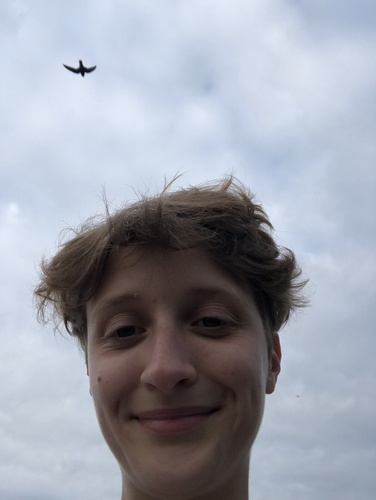 Schwarzsegler
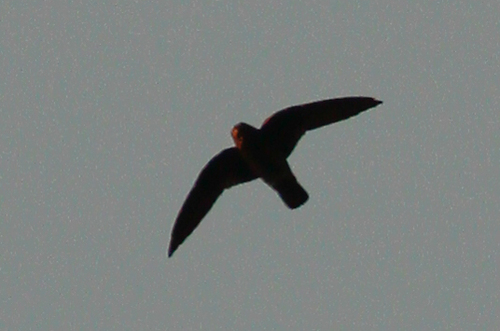 Graubürzelsegler
Kurz gesagt
The most reliable field mark to separate Black Swift from Grey-rumped Swift is the presence of a distinct pale gray rump on Grey-rumped Swift, visible in all plumages and especially obvious in flight; Black Swift is uniformly dark with no pale rump. Black Swift is much larger and heavier-bodied, with a more robust, cigar-shaped profile and a slightly forked tail, while Grey-rumped Swift is smaller, with a short, square tail and a protruding head. Both are dark swifts, but the contrast between the pale rump and darker body on Grey-rumped Swift is diagnostic at any age. Structural differences and overall size further reinforce the ID in most field situations.
Bestimmungstipps
- Pale gray rump (all ages, all subspecies): Grey-rumped Swift always shows a wide pale gray rump and uppertail coverts, visible in flight and often when perched. Black Swift never shows a pale rump—uniformly dark above and below.
- Overall size and shape: Black Swift is much larger and bulkier, with a robust, cigar-shaped body and long, slender, curved wings. Grey-rumped Swift is small, compact, with a short, square tail and a protruding head.
- Tail shape: Black Swift has a slightly forked tail, best seen in flight; Grey-rumped Swift's tail is short and square, lacking any fork.
- Wing pattern: Black Swift shows subtle contrast between darker shoulders (wing coverts) and the rest of the wing, but this is much less obvious than the pale rump of Grey-rumped Swift. Grey-rumped Swift juveniles may show pale fringes to wing feathers, but the rump is always the key mark.
- Underparts: Grey-rumped Swift has lighter gray underparts than the rump, with the undertail coverts darker or paler depending on subspecies. Black Swift is uniformly sooty gray below.
- Flight style: Black Swift flies with long, sweeping, steady wingbeats and appears powerful and direct. Grey-rumped Swift is more agile and fluttery, with rapid wingbeats and a tendency to fly in tight flocks.
- Head and bill: Grey-rumped Swift has a protruding head, giving it a slightly big-headed look compared to the sleeker Black Swift.
- Habitat context: If seen near waterfalls, cliffs, or at higher elevations, Black Swift is more likely. Grey-rumped Swift prefers lowland forests, open country, and sometimes urban areas.
- Vocalizations: If you hear a bright 'tsip' or a series of burry 'trrreeew' notes, Grey-rumped Swift is indicated. Black Swift's calls are not described here, so silence is not helpful, but hearing these calls confirms Grey-rumped Swift.
- Group size: Black Swift often forages in small groups, while Grey-rumped Swift is more likely to be seen in larger, tighter flocks.
- Subspecies variation: All Grey-rumped Swift subspecies retain the pale rump, though the tone and extent vary. Black Swift is always uniformly dark.
- Pitfalls: In poor light or distant views, the pale rump of Grey-rumped Swift can be missed, but careful observation in good light will reveal it. Beware of assuming all dark swifts are Black Swift—always check for the rump patch.
- Age/season: Juvenile Grey-rumped Swifts have pale fringes to wing feathers, but this is subtle; the rump remains the best mark. Black Swift does not show age-specific pale markings.
- Perched views: Both species rarely perch in the open, but if seen, the pale rump and short, square tail of Grey-rumped Swift will stand out against the uniformly dark, slightly forked tail of Black Swift.
- Geographic range: In North America, Black Swift is the only likely species. In Central and South America, especially lowlands, Grey-rumped Swift is much more common. Always consider location and habitat in your ID.
Größe
Black Swift is significantly larger and heavier (body mass ~45.6 g [wikidata]) compared to Grey-rumped Swift (about 17 g [wikipedia]). In the field, Black Swift appears broad-winged and robust, with a long, cigar-shaped body and long, slender, curved wings. Grey-rumped Swift is much smaller, more compact, with a shorter, square tail and a less robust body. The difference in size and bulk is usually apparent when both species are seen in the same area, but even singly, Black Swift's large, powerful silhouette stands out compared to the much daintier Grey-rumped Swift.
Gefieder
- Juvenile/immature plumage: Grey-rumped Swift juveniles have pale fringes to many wing feathers, but the most important mark at all ages is the wide pale gray rump and uppertail coverts, which contrast sharply with the glossy black upperparts and darker tail. This pale rump is present in all subspecies, though its tone and extent vary slightly. Black Swift, by contrast, is entirely sooty dark gray to blackish, with no pale rump or uppertail coverts at any age. In flight, Black Swift shows some contrast between the inner and outer wing, with the shoulders (wing coverts) being distinctly darker than the rest of the wing, but this is subtle compared to the obvious pale rump of Grey-rumped Swift.
- Adults: Black Swift remains uniformly dark, with a slightly forked tail and no pale patches. Grey-rumped Swift adults always show the pale rump, lighter gray underparts, and a short, square tail. Subspecies variation in Grey-rumped Swift involves rump and undertail coverts color, but the pale rump is always present and diagnostic.
- Flight views: The pale rump of Grey-rumped Swift is visible from above and below in flight, while Black Swift never shows this feature. Black Swift's wing contrast (darker shoulders) is subtle and not likely to be confused with the bold pale rump of Grey-rumped Swift.
Verhalten
Both species are aerial insectivores, foraging on the wing and rarely perching in view. Black Swift often forages in small groups and is described as powerful and steady in flight, with long, sweeping wingbeats. Grey-rumped Swift is more compact and agile, with rapid, fluttery wingbeats and a tendency to fly in tighter flocks. Black Swift's flight is more direct and less erratic than the smaller Grey-rumped Swift.
Lebensraum
Black Swift is found from northern British Columbia through the western United States, Mexico, Central America, and into parts of South America and the Caribbean. It is often associated with waterfalls, cliffs, and montane forests, especially during breeding. Grey-rumped Swift has a much broader range in Central and South America, including Trinidad, Tobago, and Grenada, but is absent from Chile, French Guiana, Suriname, and Uruguay. It is more likely to be seen over lowland forests, open country, and sometimes urban areas. Overlap is possible in Central America and northern South America, but habitat preferences can help: Black Swift is more likely near waterfalls and high elevations, Grey-rumped Swift in lowland or foothill areas.
Stimme
Grey-rumped Swift gives a bright, repeated short 'tsip' and a series of 3–4 slightly downslurred, burry, drawn-out notes ('trrreeew-trrreeew-trrreeew'). Black Swift's vocalizations are not described in the provided notes, so voice is not a reliable separator unless Grey-rumped Swift's distinctive calls are heard.