

Nordamazonien-Ameisenschnäpper vs Silberameisenschnäpper
Hypocnemoides melanopogon gegen Sclateria naevia
Ein Quiz mit Nordamazonien-Ameisenschnäpper und Silberameisenschnäpper spielen
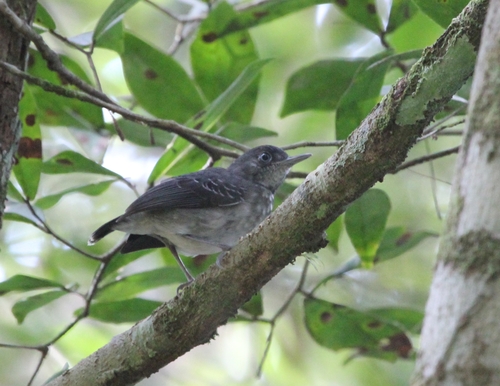 Nordamazonien-Ameisenschnäpper
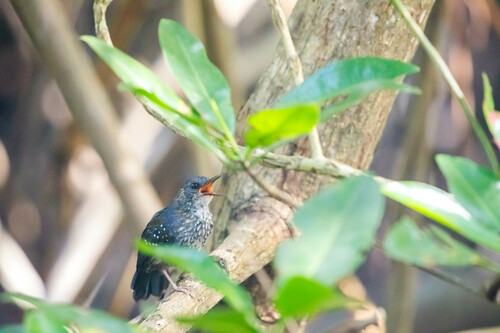 Silberameisenschnäpper
Kurz gesagt
The most reliable field mark between Black-chinned Antbird and Silvered Antbird is overall size and bulk: Silvered is distinctly larger and heavier-bodied, with a noticeably longer length and mass. Adult male Black-chinned Antbirds show a sharply defined black throat, while Silvered Antbird males have a paler, scalloped throat and more extensive white underparts. Females of both species are similar, but Black-chinned females have a speckled throat and grayer, less brownish tones. In flight or perched, look for the Silvered’s bolder white-tipped wing coverts (males) and longer, heavier structure. Both species favor dense, waterside thickets, so context alone is not diagnostic.
Bestimmungstipps
- Size and bulk: Silvered Antbird is much larger and heavier than Black-chinned; this is often the first clue in direct comparison or with reference to nearby birds. Works for all ages and sexes.
- Adult male throat: Black-chinned males have a sharply defined black throat, unique among these two; Silvered males have a pale, scalloped throat with no solid black. This is the single best mark for adult males.
- Underparts (male): Silvered males show mostly white underparts with fine gray scalloping, especially on the throat and breast; Black-chinned males are gray below, paler than above, with a grayish white belly but never mostly white.
- Wing covert pattern (male): Silvered males have bold white tips (or small white dots in some subspecies) on the wing coverts, forming a clear wing bar; Black-chinned has blackish coverts with gray and white edges but lacks bold white tips or dots. This is visible in perched birds and sometimes in flight; works best for adult males.
- Female upperparts: Black-chinned females are leaden gray above, while Silvered females are grayish brown. This difference is subtle but consistent; check for brownish tones in Silvered.
- Female throat: Black-chinned females have a whitish throat with black and gray speckles, while Silvered females have a plain or lightly scalloped throat, never speckled. This mark is reliable for separating females.
- Female underparts: Silvered females have buffier or browner underparts, sometimes with cinnamon or ochraceous tones, especially on the sides and vent; Black-chinned females are grayer and less buffy.
- Bill color: In Black-chinned, males have a black bill; females have a black maxilla and gray mandible. Silvered bill color is not described, so this is only a weak separator.
- Tail pattern: Both have gray tails with white tips, but Silvered’s tail is longer and the white tips are more obvious in some subspecies; not always reliable.
- Supercilium (male Silvered): Silvered males have a paler gray supercilium, which Black-chinned lacks; subtle but can help in good light.
- Iris and leg color: Both have gray irises and blue-gray legs/feet, so not useful for separation.
- Juvenile/subadult confusion: Subadult male Silvered resembles adult female (grayish brown above), but Black-chinned females are always grayer and have a speckled throat.
- Flight views: Silvered’s larger size, longer tail, and bold white wing covert tips/dots may be visible in flight; Black-chinned is smaller and lacks these bold wing marks.
- Voice: If you hear a long, rapid trill with a sharp drop-off, it is Silvered Antbird. Black-chinned’s voice is not described, so only use this mark if the trill is present.
- Habitat/context: Both are found near or over water in dense thickets; do not rely on habitat alone for separation.
Größe
Silvered Antbird is significantly larger and heavier: 14–16 cm in length and 21–27 g in mass, compared to Black-chinned Antbird’s 11–12.2 cm and 12–18 g [wikipedia][wikidata]. The difference is obvious in the field—Silvered Antbird appears bulkier and longer-bodied, especially when seen side-by-side or with direct size reference. The Black-chinned is more compact and lighter overall.
Gefieder
- Adult males: Black-chinned Antbird males are leaden gray above with a sharply defined black throat and paler gray underparts; tail is slate gray with narrow white tips. Silvered Antbird males are darker gray above, with a paler gray supercilium, blackish gray wings and tail, and bold white tips on the wing coverts. Their underparts are mostly white with fine gray scalloping, especially on the throat, and gray flanks/crissum.
- Adult females: Black-chinned females resemble males above but have a whitish, speckled throat and mottled gray and white breast with olive-gray tinge. Silvered females are grayish brown above (not gray), with the same pattern as males but browner overall and cinnamon tips on the wing coverts. Underparts are variable but generally buffier or browner than Black-chinned.
- Subadult/immature: Silvered subadult males look like adult females (grayish brown, not gray), potentially confusing with Black-chinned females, but the latter always show a speckled throat and less brown overall. In Silvered, some subspecies have small white dots (not tips) on wing coverts (S. n. diaphora).
- Wing pattern: Silvered males have bold white tips or dots on the wing coverts (depending on subspecies), visible in perched birds and sometimes in flight; Black-chinned has blackish coverts with gray and white edges but lacks bold white tips or dots.
Verhalten
Both species forage low, usually near or over water, and are active in dense thickets. Black-chinned Antbird is more likely to be seen hopping on the ground or low in vine tangles, while Silvered Antbird’s heavier build may make its movements appear more deliberate. Both may join mixed flocks or attend army ant swarms, but these behaviors are not reliable for separation.
Lebensraum
Habitat is broadly similar: both species are found in dense, waterside thickets and undergrowth, often near or over water. Their ranges overlap widely in Amazonia and adjacent regions. Habitat alone is not a reliable separator, though Silvered Antbird’s range extends to Trinidad and is absent from southernmost South America, while Black-chinned is absent from Trinidad.
Stimme
Silvered Antbird’s song is a long, rapid trill of abrupt notes, starting with more emphatic, higher notes and then building in intensity before dropping off sharply. Calls include abrupt 'pit' notes and a long downslurred whistle. Black-chinned Antbird’s vocalizations are not described in the provided notes, so voice is only diagnostic if the Silvered’s distinctive trill is heard.
Nordamazonien-Ameisenschnäpper · Silberameisenschnäpper · Meine schwierigen Vögel