

キョクアジサシ 対 サンドイッチアジサシ
Sterna paradisaea 対 Thalasseus sandvicensis
キョクアジサシとサンドイッチアジサシのクイズ
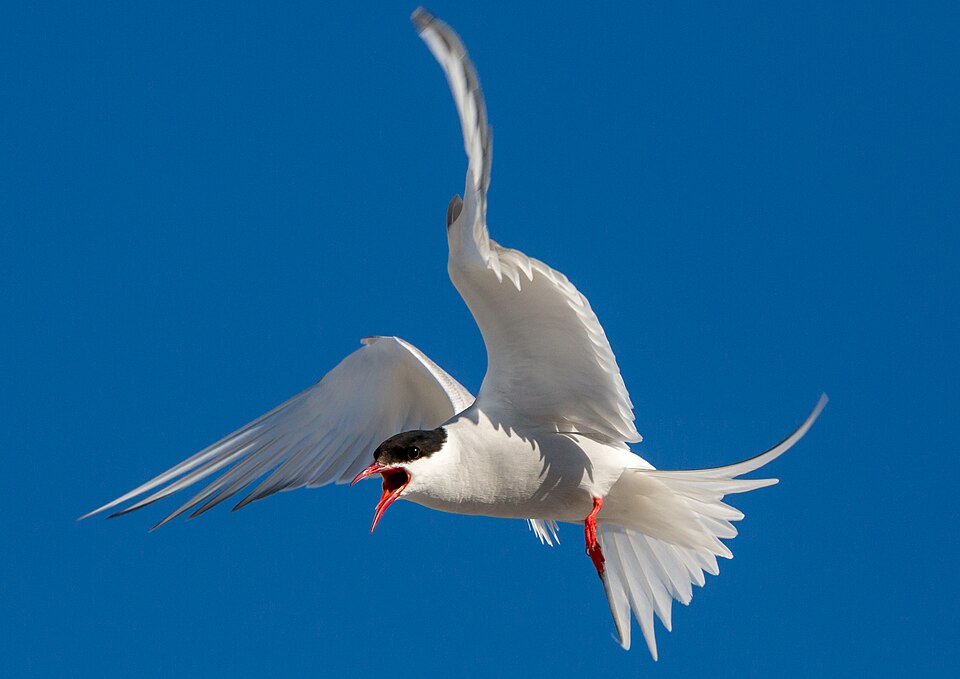 キョクアジサシ
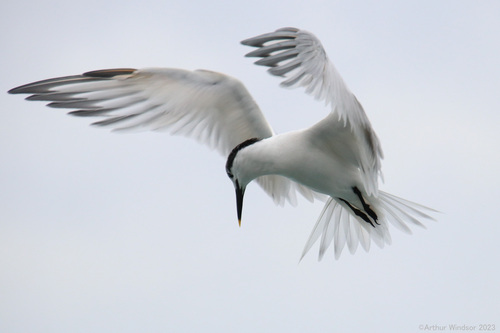 サンドイッチアジサシ
要点
The most reliable field mark to separate Arctic Tern from Sandwich Tern is the bill: Arctic Tern has a slender, all-red (orange-red) bill, while Sandwich Tern shows a longer, black bill with a distinct yellow tip. Juvenile and immature birds are especially confusing, but note that juvenile Arctic Terns have a black bill and legs, while juvenile Sandwich Terns have an all-dark bill (sometimes yellowish at the base) and a dark-tipped tail. In flight, Sandwich Tern is larger and paler, with a longer, less deeply forked tail and broader wings. Always check bill color and tail shape first, then compare overall size and structure.
識別のコツ
- Bill color is the fastest check: Adult Arctic Tern has a slender, all-red (orange-red) bill; Sandwich Tern has a long, black bill with a yellow tip. In juveniles, both can show dark bills, but Sandwich Tern's is always blackish (sometimes yellowish at base), while Arctic Tern juveniles are black-billed.
- Tail shape: Arctic Tern has a deeply forked, long white tail with long streamers (especially adults); Sandwich Tern's tail is less deeply forked and, in juveniles, has dark tips.
- Size and structure: Sandwich Tern is larger, bulkier, and heavier, with longer wings and a more robust build. Arctic Tern is smaller, more delicate, and lighter in flight.
- Leg color: Arctic Tern has short, red legs (black in juveniles); Sandwich Tern has longer, black legs in all ages.
- Upperwing pattern (juveniles): Both have a scaly pattern, but Arctic Tern juvenile shows a dark carpal bar and more extensive dark feather tips on mantle and wings. Sandwich Tern juvenile's scaly pattern is less pronounced on the crown and lacks the strong carpal bar.
- Crown and forehead (non-breeding): Both species develop a white forehead in winter, but Sandwich Tern's is more extensive, often leaving only a black nape and rear crown. Arctic Tern retains more black on the crown.
- Flight style: Arctic Tern is more buoyant and fluttery, with a lighter, more graceful flight and longer tail streamers. Sandwich Tern is steadier, with broader wings and a less deeply forked tail.
- Plumage tone: Arctic Tern is pale grey above and below, with translucent wingtips; Sandwich Tern is even paler, almost white in flight, but its primaries darken in summer.
- Juvenile tail tips: Only Sandwich Tern juveniles show dark tips to the tail feathers; Arctic Tern juveniles have a plain white tail (with short streamers).
- Bill shape: Sandwich Tern's bill is longer and heavier, with a slight droop; Arctic Tern's is shorter, straight, and more delicate.
- Perched posture: Sandwich Tern stands taller on longer legs; Arctic Tern sits lower and appears more compact.
- Vocalizations: Listen for the difference: Arctic Tern's call is nasal and rasping, while Sandwich Tern's is a loud, grating 'kear-ik'.
- Habitat and context: If seen in high Arctic or remote northern coasts, Arctic Tern is more likely; on southern temperate beaches or estuaries, expect Sandwich Tern.
- Seasonal context: In late summer and autumn, both species can show white foreheads, but bill color and tail shape remain reliable.
- Pitfalls: Immature birds are most often confused; always use a combination of bill color, tail shape, and size. If you can't see the bill tip color, check for tail fork depth and leg color as backup.
大きさ
Sandwich Tern is significantly larger and heavier than Arctic Tern. Arctic Tern measures about 33–36 cm in length with a wingspan of 76–85 cm, and weighs around 114 g [wikidata]. Sandwich Tern is 36–41 cm long, with a wingspan of 95–105 cm, and weighs 200–300 g [wikipedia]. In the field, Sandwich Tern appears bulkier, with longer wings and a more robust presence, while Arctic Tern is more delicate and buoyant.
羽色
Juvenile Arctic Terns show a 'scaly' pattern on the wings and mantle, a dark carpal bar, and short tail streamers; their bill and legs are black. Juvenile Sandwich Terns also have a scaly upperwing and back, but their crown is less dark than Arctic Tern juveniles, and they have a dark-tipped tail and all-dark bill (sometimes yellowish at the base). In adults, Arctic Tern is pale grey above with a black crown and nape, white cheeks, and a deeply forked white tail. Its upperwing is pale grey with translucent wingtips and a narrow dark trailing edge. Sandwich Tern adults are paler overall, with pale grey upperwings, white underparts, and a black cap. Their tail is less deeply forked and shows dark tips in juveniles. In winter, both species develop a white forehead, but Sandwich Tern's is more extensive. The bill color is the most consistent difference: all-red in Arctic Tern (except juveniles, which are black), and black with a yellow tip in Sandwich Tern (adults; juveniles all-dark).
行動
Both species are agile, buoyant fliers, but Sandwich Tern appears heavier and more powerful, with broader wings and a less deeply forked tail. Arctic Tern is more graceful, with a lighter, more fluttery flight and longer tail streamers, especially noticeable in adults. When perched, Arctic Tern sits lower to the ground with shorter legs, while Sandwich Tern stands taller on longer, black legs. Both species hover and plunge-dive for fish, but Sandwich Tern often forages in larger, noisier groups.
生息環境
Arctic Tern breeds in Arctic and subarctic regions, often on remote coasts and islands, and migrates long distances to Antarctic waters. Sandwich Tern breeds on temperate and subtropical coasts, often on sandy or shingle beaches and islands, and is rarely found far north. Overlap is possible on migration, but Arctic Tern is more likely to be seen in high-latitude or offshore settings, while Sandwich Tern prefers warmer, more southern coasts and estuaries.
声
Arctic Tern gives a nasal, rasping call, especially in alarm or display. Sandwich Tern is very vocal, with a loud, grating 'kear-ik' or 'kerr ink' call, which is harsher and more piercing than Arctic Tern's. The difference is subtle at a distance but can be diagnostic if heard well.
キョクアジサシ · サンドイッチアジサシ · 苦手な鳥